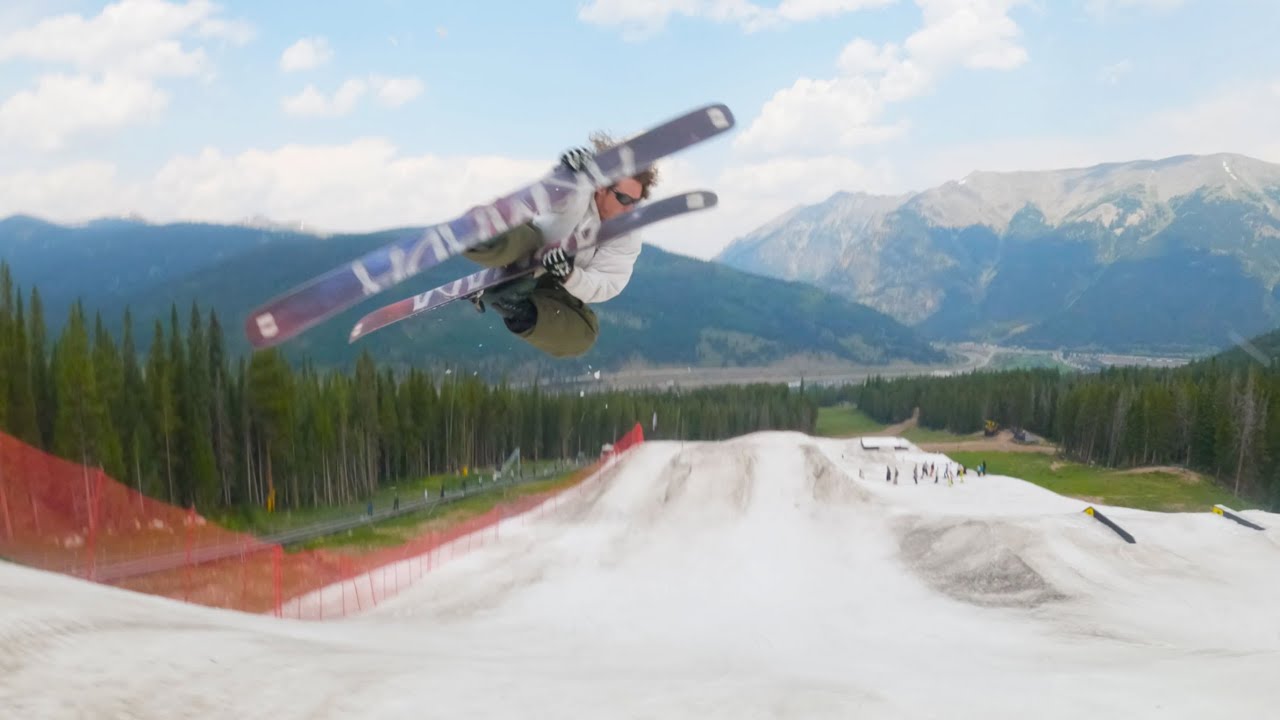
Konnor Ralph
Profile and significance
Konnor Ralph is an American freeski athlete who has rapidly moved from “new name on the start list” to a genuine finals-and-podium regular in men’s slopestyle and big air. Raised in Helena, Montana, he learned to ski at Great Divide Ski Area, then shifted into park skiing young and built the kind of repetition-based foundation that modern contest freeski demands. His official competition profile with FIS lists him as an active U.S. athlete (born January 27, 2003), and his bio with U.S. Ski & Snowboard traces a clear arc: local-hill progression, then a fast climb into World Cup podiums and Olympic finals.
Ralph’s significance for fans is that his results are already “real” at the sport’s most competitive level. He owns three FIS World Cup podiums across slopestyle and big air, then backed that up at the 2026 Olympic Winter Games by making finals in both events at Snowpark Livigno, finishing ninth in men’s slopestyle and fifth in men’s big air. That combination—podiums plus Olympic finals—puts him firmly in the upper tier of the next U.S. generation. He is not defined by one viral clip; he’s defined by repeatable scoring runs and the willingness to put high-risk tricks on the line when the window is small and the pressure is high.
Competitive arc and key venues
Ralph’s breakthrough into the top tier is easy to map through key venues and a short list of decisive performances. On March 16, 2024, he earned his first career World Cup podium with third place in men’s slopestyle at Tignes, a stop that often rewards athletes who can keep an entire run clean—rails included—when the field is deep and the course is fast. That podium mattered because it wasn’t a “friendly” event; it was a stacked World Cup final where small execution details separate the top 10. From there, his momentum carried into big air, where he captured his first World Cup big air podium on February 6, 2025 in Aspen Snowmass with a third-place finish.
The next major marker came on December 13, 2025, when he finished second in men’s big air at a World Cup in Steamboat Springs, scoring 179.50 and landing on a U.S. 1–2 with teammate Troy Podmilsak at Steamboat Resort. Those podiums show breadth: slopestyle scoring, big air pressure handling, and the ability to travel and deliver across very different builds. Underneath the World Cup story is a development layer that matters for context: his U.S. Ski & Snowboard profile highlights strong NorAm results, including a 2022 overall NorAm Cup win across slopestyle and big air. That kind of “farm system” success often predicts which athletes will eventually convert starts into podiums, because it proves they can compete well before the biggest spotlight arrives.
How they ski: what to watch for
Ralph’s skiing reads like modern contest freeski at full speed: high-difficulty rotation, but with an emphasis on keeping the run looking purposeful rather than chaotic. In big air, he has publicly been associated with a left triple cork 1800 mute—an example of a trick that only works if the approach is committed and the takeoff edge is precise. The useful viewer takeaway is that his best moments start before the jump: he looks calm on the in-run, sets a clean line, then lets the trick happen without visible last-second “muscling.” When that timing is right, landings become quieter, and quiet landings are what preserve speed and confidence for the next attempt.
In slopestyle, what stands out is run-building discipline. Olympic slopestyle isn’t won by one feature; it’s won by how well the skier connects rails to jumps without losing rhythm. At the 2026 Games at Snowpark Livigno, Ralph’s best score in the men’s slopestyle final landed him ninth overall—proof that he can deliver a complete run under Olympic pressure. Watch the transitions if you want to understand why he scores: how quickly he re-centers after a landing, how smoothly he exits a rail, and whether his upper body stays quiet through speed. Those details are the difference between “huge trick, messy run” and “finals run that actually survives judging.”
Resilience, filming, and influence
Ralph’s career already includes the kind of resilience moments that reveal what a skier is made of. At the February 2025 World Cup big air in Aspen Snowmass, he fell on his first run and still climbed back into third with stronger later attempts—an extremely common pattern in big air, where the ability to reset matters as much as the trick itself. His Steamboat result later that year adds another layer: big air finals often reward the athlete who can deliver two strong jumps that are distinct, high-difficulty, and clean. Finishing second at Steamboat Resort shows he can manage that puzzle in a field that keeps escalating until the last skier drops.
Influence, at this stage, is mostly “performance influence”: younger park skiers watch who is landing what in real contests, not just in perfect edits. Ralph’s rise has happened in the most visible, measurable way—World Cup podiums and Olympic finals—so he naturally becomes a reference point for what today’s scoring standard looks like. Even if a fan never memorizes trick names, Ralph’s arc reinforces the core freeski lesson: the athletes who last are the ones who can repeat a high level across seasons, across venues, and across formats. That repeatability is what turns a talented skier into a consistent contender.
Geography that built the toolkit
Montana is a meaningful part of Ralph’s story because it’s not the most obvious pipeline for elite slopestyle and big air. He learned on the smaller-mountain, community-driven terrain of Great Divide Ski Area, which often builds tough fundamentals: you learn to make the most of what’s in front of you, and you learn to repeat features until they’re dialed. That background also makes his later results feel earned rather than prepackaged. His FIS athlete listing connects him to Wy’East Mountain Academy, a detail that fits the common U.S. progression path: as the level rises, athletes seek training environments that maximize time on snow and offer daily access to park-building and coaching structure.
As his career moved into the World Cup and Olympic lanes, his venue map expanded into freeski’s most decisive locations. Tignes became the stage for his first World Cup podium in slopestyle, while Aspen Snowmass became the site of his first World Cup podium in big air. Steamboat Resort then provided a high-pressure big air final where he scored second in a deep field. Finally, Snowpark Livigno tied it all together at the Olympics, where he made finals in both slopestyle and big air. That geography matters because it proves adaptability: different speeds, different snow, different builds—same ability to score.
Equipment and partners: practical takeaways
Ralph’s verified partner list is refreshingly clear. U.S. Ski & Snowboard lists LINE Skis as his equipment sponsor and Jiberish as a sponsor. While public sources do not consistently confirm a precise ski model or binding setup, his disciplines make the functional requirements obvious: a symmetrical, switch-friendly freeski platform that stays predictable on takeoff, stays stable on landing, and holds up to rail impacts and repeated jump sessions. The deeper lesson is that consistency in equipment supports consistency in performance—especially in big air, where any uncertainty in pop or landing feel turns into hesitation.
For progressing skiers, the practical takeaway is to copy the logic, not the logo. Big air and slopestyle are repetition sports. You want boots that fit so well you stop thinking about them, and you want a ski-and-binding setup you can trust when you’re landing hard at speed. The trick progression that shows up in Ralph’s results—triple-cork level difficulty in big air, plus full slopestyle finals runs—depends on doing thousands of “boring” reps with the same stance and the same feel. If you want to evaluate your own setup the way an athlete would, ask a simple question: does this gear help me repeat the same takeoff and the same landing over and over? If the answer is yes, you’re building the foundation that athletes like Ralph use to turn potential into podiums.
Why fans and progressing skiers care
Konnor Ralph is worth following because his career is already delivering the benchmarks that predict long-term stardom in freeski. Three World Cup podiums in two disciplines, plus Olympic finals in both slopestyle and big air, is not a “maybe.” It’s a measurable sign that he can perform when the field is strongest and the stakes are highest. His ninth-place finish in Olympic men’s slopestyle and fifth-place finish in Olympic men’s big air at Snowpark Livigno make him a legitimate Olympic-era name, even without a medal yet. That “finals presence” matters because it’s the platform from which medals are usually built: the athlete is already in the room, learning how the moment feels.
Progressing skiers should care because his skiing highlights the parts of freeski that actually translate into improvement. Tricks matter, but the hidden skills matter more: speed control, switch comfort, clean landings, and the ability to reset after a miss. Ralph’s rise from Great Divide Ski Area to World Cup podiums at Tignes, Aspen Snowmass, and Steamboat Resort shows what the pathway looks like when it’s built the right way—one consistent season at a time. For fans, he’s exciting because the ceiling is obvious. For skiers who want to progress, he’s useful because the blueprint is clear: master the basics, repeat them under pressure, then let the difficulty climb without losing style.