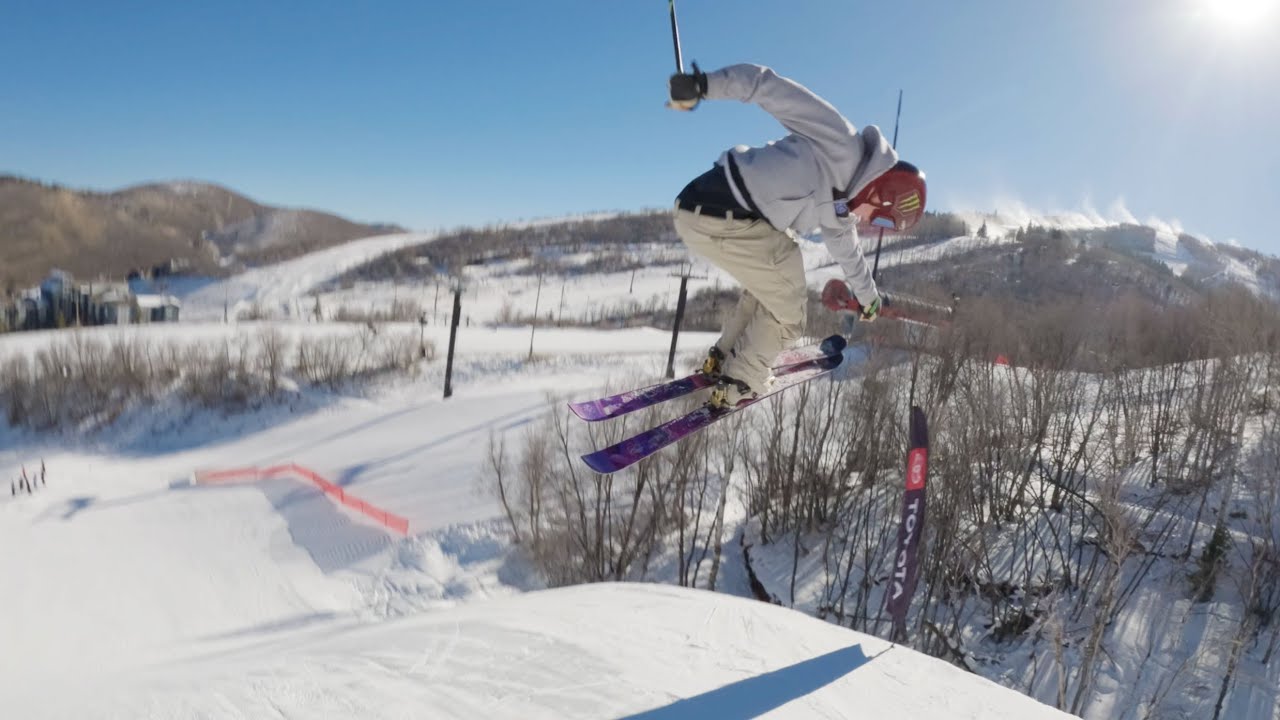
Henry Townshend
Profile and significance
Henry Townshend is a United States freeski athlete from Park City, Utah, best known for slopestyle and for the fast climb from domestic podiums into the World Cup conversation. He came onto the broader radar with a defining junior achievement: gold in men’s freeski slopestyle at the 2024 Winter Youth Olympic Games, delivered with the kind of pressure-proof first-run performance that separates “promising” from “ready.” From there, his résumé has stacked in the most credible way possible for a young freeski competitor: verified wins at U.S. nationals, consistent NorAm results, and then World Cup starts that quickly turned into a top-seven finish.
In the U.S. pipeline, Townshend represents a modern slopestyle profile: a rider raised on terrain-park repetition, then tested on international courses where judges reward both execution and run composition. He is also part of Monster Army, an athlete development program that often shows up around emerging action-sports talent. That detail matters because it fits the stage of his career: an athlete who is already winning meaningful events, while still building the volume of elite finals that turns an early breakthrough into a long-term presence.
Competitive arc and key venues
Townshend’s competitive arc is unusually easy to track because it is anchored by major, date-stamped results. In April 2023, he won men’s freeski slopestyle at U.S. National Championships at Copper Mountain, a venue that frequently rewards athletes who can stay composed on big, contest-style features. In January 2024, he captured Youth Olympic gold in slopestyle at Welli Hilli Park in Gangwon, South Korea, winning with a 90.25 score and putting the winning run down on his first attempt. In March 2024, he backed up that headline moment with a silver medal in slopestyle at the FIS Junior World Ski Championships in Livigno at Mottolino, a result that signals he can translate his skiing to international courses and judging.
The 2024–25 season then reads like the classic step from “junior standout” to “senior start lists.” Townshend earned his first World Cup start and simultaneously built a serious NorAm campaign, finishing second overall in the North American Continental Cup standings for the season. His NorAm highlights include a slopestyle win at WinSport in Calgary in March 2025, plus additional high finishes at Stoneham and in the Aspen circuit. Those results matter because NorAm is not just practice; it is the proving ground where the same run has to work across different course styles, snow conditions, and judging panels.
By late 2025 and early 2026, the venue list shows he is now a regular presence on the elite circuit. He has World Cup starts that include Stubai Glacier, Steamboat, Snowmass, and LAAX. The clearest “arrival” marker is January 2026 at Snowmass, where he finished seventh in World Cup slopestyle—exactly the kind of result that changes expectations for the rest of a season.
How they ski: what to watch for
Townshend competes in freeski slopestyle and also appears in big air start lists, so the cleanest way to understand his skiing is to watch how he builds a contest run rather than hunting for a single signature trick. In slopestyle, the best athletes don’t just land difficult elements; they manage risk across an entire course. That means rails that look controlled rather than frantic, jumps that maintain speed without over-checking, and landings that keep the run flowing so the next feature is attacked on time. His record—winning national championships, then winning Youth Olympic gold, then reaching a World Cup top seven—strongly suggests he can do the hard part repeatedly: show up with a run plan, and execute it under bright-light pressure.
When you watch him, pay attention to how “quiet” the skiing looks when the course is demanding. Strong slopestyle competitors keep their upper body stable through takeoffs and landings, stay stacked over their feet on rails, and make small corrections early instead of dramatic saves late. Another useful cue is pacing. Athletes who are still adjusting to World Cups often look rushed at the bottom of runs; athletes who belong look like they have time. Townshend’s ability to win the Youth Olympic title on a first-run score is a good reminder that composure is part of his competitive skill set, not an afterthought.
Resilience, filming, and influence
Freeski careers are often defined by how athletes handle the gap between junior success and senior consistency. Townshend’s timeline suggests a strong approach to that transition. After the Youth Olympics breakthrough, he didn’t disappear into a single highlight moment; he followed it with a Junior Worlds slopestyle silver and then a season where he climbed the NorAm ladder while earning World Cup starts. That is the kind of resilience coaches look for because it proves the athlete can adapt to different courses and still produce repeatable scoring runs.
He has also spoken publicly about long-term goals that extend beyond contest fencing, including an eventual interest in film skiing later in his career. That matters because it hints at a style mindset: not only landing what scores, but developing skiing that still looks good when the camera lingers. If he continues to pair World Cup experience with that broader freeski perspective, his influence could grow in two directions at once—results that put him in finals, and a style identity that fans recognize even when they don’t know the scoreboard.
Geography that built the toolkit
Being raised in Park City is a meaningful detail in a U.S. freeski biography because the town has a deep competition and club culture, and it consistently produces athletes comfortable with structured training. Townshend came through Park City Ski & Snowboard, a club system that emphasizes progression through coaching, repetition, and a season-to-season pathway. In practical terms, that kind of environment tends to produce slopestyle athletes who are disciplined about run-building and who understand that “training days” are where contest days are won.
His competition geography also helps explain his toolkit. U.S. venues like Copper Mountain and the Aspen/Snowmass corridor demand speed control and clean takeoffs on contest-sized features. International stops like Stubai Glacier and LAAX add another layer: different snow, different course design philosophies, and a deeper field where small execution errors get punished. The fact that he has already produced a top-seven World Cup result suggests he is learning quickly how to keep his skiing “portable” across continents.
Equipment and partners: practical takeaways
There is not enough reliably verified public information to list a complete sponsor roster or specific ski-and-boot models for Townshend, and it would be wrong to guess. What is clearly documented is his connection to Monster Army, which aligns with the stage of his career as a rising freeski competitor. Beyond that, the most useful equipment discussion is functional: slopestyle and big air place huge demands on consistency. Athletes at his level need boots that stay locked in for edging and takeoffs, and skis that feel predictable in switch, on rails, and on jump landings that can vary from soft to firm within the same day.
For progressing skiers, the practical takeaway is that contest success is rarely about “mystery gear.” It is about reducing variables. If you want to ski slopestyle with real confidence, prioritize boot fit, dependable binding function, and a tune that matches your park conditions. Townshend’s pathway—club development, national wins, NorAm consistency, then World Cup top results—reflects a system where reliability and repeatable fundamentals matter as much as raw trick capacity.
Why fans and progressing skiers care
Fans should care about Henry Townshend because he is already past the “one viral moment” stage and into the more interesting phase: turning early titles into sustained elite performance. Youth Olympic gold and a Junior Worlds podium are meaningful signals, but the real story is how quickly he has translated that into the adult circuit with a World Cup top seven at Snowmass. That is the difference between a junior champion and a future World Cup finalist.
Progressing skiers should care because his career path is a clear blueprint for modern freeski development. He shows how slopestyle success is built through repetition, run structure, and the ability to execute under pressure, not just through chasing the hardest single trick. If you watch his competitive arc—Copper Mountain to Welli Hilli Park to WinSport to the World Cup circuit—you’re watching a rider prove that clean skiing scales. That is why his next seasons will be worth tracking, whether you care most about medals, style, or the moment both finally line up in a finals run.