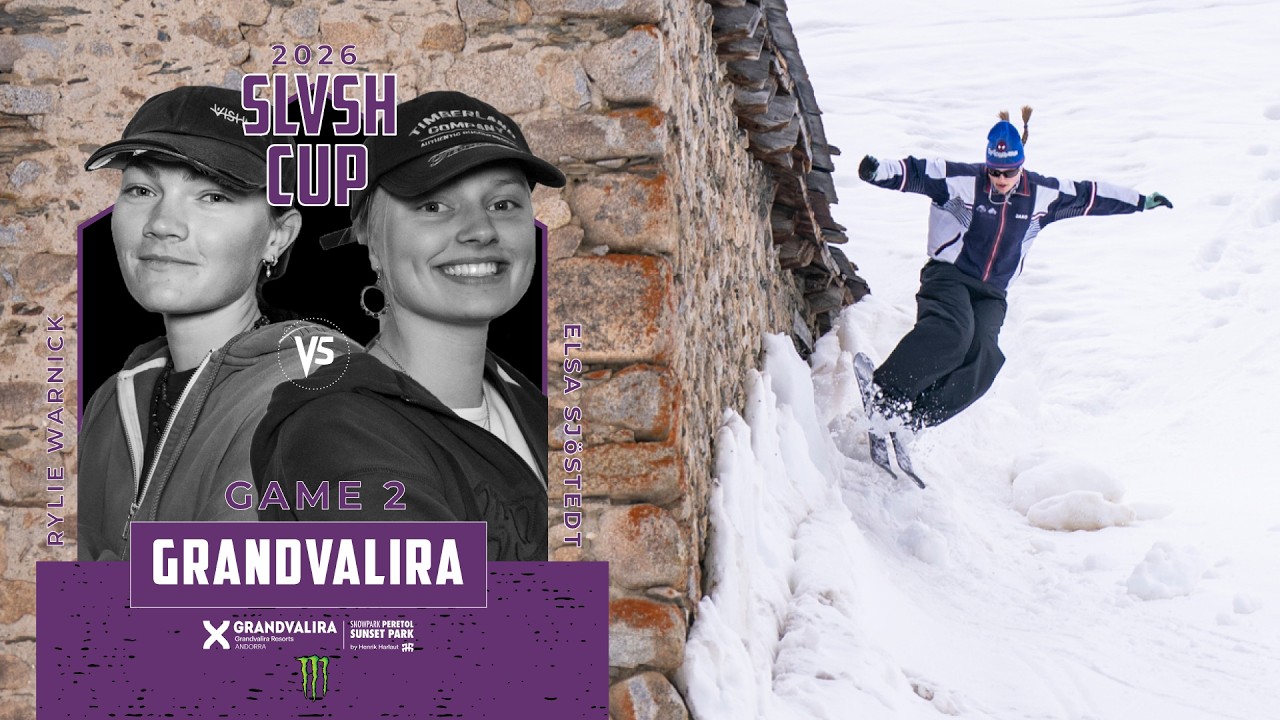
Elsa Sjöstedt
Profile and significance
Elsa Sjöstedt is an emerging Swiss freeski athlete whose public record shows a real World Cup and European Cup pathway, but whose profile is still more development-stage than fully established international elite. Swiss-Ski identifies her as a B-team athlete, and her official athlete pages place her in Verbier, with a birth date in October 2003 and a club connection to SC Verbier. What makes her worth following is not a major championship medal or an X Games résumé. It is the combination of structured contest progression, credible senior-level results in both slopestyle and big air, and a parallel creative identity that reaches beyond course tape into street-oriented skiing. She sits in a useful category for readers of a freeski site: an athlete who is already clearly real, already relevant, and still very much in the phase where the shape of the career is being built in public.
Competitive arc and key venues
Sjöstedt’s competitive story is strongest when viewed as a progression rather than as a podium list. She switched out of alpine skiing in her mid-teens and moved quickly into freestyle, an unusually fast transition that helps explain both the promise and the unevenness in her record. Her own public athlete-funding page described an early breakthrough phase that included a missed Youth Olympic start in 2020 after injury, followed by European Cup top-six results at Corvatsch. Swiss-Ski’s athlete information then traces the next major steps: World Cup debut in big air at Chur in October 2021, continued World Cup exposure through Silvaplana and other park-and-pipe stops, and a stronger 2023-24 season in the European Cup structure. Swiss-Ski’s 2024 season report is especially useful because it confirms she finished third overall in the women’s European Cup standings. At the Swiss championships in 2024, official results show her as vice-champion in slopestyle and bronze medalist in big air. On her recent result trail, official Swiss-Ski snippets also show a 14th-place World Cup result at Chur in October 2024 and another 14th-place World Cup placing at Silvaplana in March 2024, while Corvatsch produced a 4th-place European Cup slopestyle finish in April 2024. Put together, that is enough to show a serious athlete with repeatable competitive credibility, even if she has not yet broken into World Cup podium territory.
How they ski: what to watch for
The most useful way to understand Sjöstedt’s skiing is to see her as a rider whose public identity balances slopestyle discipline with a freer, more creative edge. Her contest results suggest an athlete who is more than a pure big air specialist. Slopestyle asks for a full run, not just one standout trick, and her stronger results in that format suggest she can build lines, handle rail sections, and manage rhythm under judged pressure. At the same time, the public image around her does not read as strictly competition-first. Phaenom describes her skiing as fluid and creative, which fits the broader picture: an athlete who still competes on the World Cup track but also leans toward street projects and a more individual style. For viewers, the key things to watch are how she links rails and jumps inside a full run, whether her contest skiing keeps getting cleaner at senior level, and how comfortably she moves between structured slopestyle and more open-ended skiing environments. She does not yet have the results depth to be called a top-tier big air or slopestyle name, but she has enough range to stay interesting in both lanes.
Resilience, filming, and influence
Sjöstedt’s public story has a real resilience angle, and that gives her more substance than a simple results table would. Her early freestyle years moved fast, but they were not smooth. Injury disrupted her Youth Olympic opportunity, and she has also spoken publicly about concussion setbacks that interrupted momentum and confidence. That matters because her profile only makes sense if it includes the stop-start nature of development. Instead of disappearing after those interruptions, she remained in the Swiss system, progressed into the B team, and put together her strongest verified senior season in 2023-24. The film and culture side adds another layer. Her Phaenom profile places her in the SuperUnknown orbit and notes ambitions in street skiing with Cute Café, while recent coverage of Cute Café’s second movie shows her inside a women-led Swiss street project with real visibility. That combination matters because it broadens her importance beyond contest placements alone. She is not only trying to climb results lists. She is also helping represent a younger Swiss women’s scene that is more willing to mix World Cup competition with street creativity and crew-based filming.
Geography that built the toolkit
Geography explains a lot about why Sjöstedt’s profile looks the way it does. She grew up in Valais and lives in Verbier, a setting that naturally exposes a skier to steep alpine terrain, a deep mountain culture, and a wider sense of what skiing can be beyond park repetition. That does not automatically make someone a backcountry or freeride athlete, but it does tend to shape confidence and imagination. Then there is the competition geography. Corvatsch and Silvaplana matter because they are central Swiss freestyle venues where many European contest athletes build points and habits. Chur matters because it gave her a World Cup debut and later one of her better recent World Cup placings. Mammoth Mountain matters because it appears in the public record around her trick-based recognition and reflects exposure to a very different park environment from home. Altogether, her map is useful: local Verbier roots, Swiss competition hubs, and selected international park stops that widen the toolkit.
Equipment and partners: practical takeaways
There is not a fully documented public hardgoods setup that would justify pretending her exact skis, bindings, and boots are cleanly known from official federation profiles. The more reliable partner picture comes from brand-side athlete material. Phaenom has published an athlete profile for her, and Movement has also publicly placed her among its freestyle athlete mix. Those signals are useful because they fit her overall profile: a skier with one foot in structured competition and another in a more style-driven creative lane. For readers, the practical takeaway is not to chase a fully mapped gear list that is not publicly complete. It is to notice the type of support she is attracting. Brands seem to value both her competitive growth and her broader freeski identity, which usually says something positive about versatility, image, and long-term potential.
Why fans and progressing skiers care
Elsa Sjöstedt matters because she represents a very current kind of freeski athlete. She has enough official results to be taken seriously, enough Swiss-Ski backing to show she belongs in the system, and enough style-based visibility to matter outside pure rankings. Third overall in the 2023-24 women’s European Cup standings, a Swiss vice-title in slopestyle, a Swiss bronze in big air, World Cup starts and top-15 level finishes, and visible involvement in street-oriented projects together form a profile that is credible and useful. She is not yet at the level where a higher importance score would be justified, because there is no World Cup podium, Olympic final, or X Games résumé to point to. But she is clearly beyond no-name status. For fans, she is worth watching because her path is still open in multiple directions. For progressing skiers, she offers a realistic and modern example of how contest skiing, creativity, and resilience can all belong to the same career.