Carter Durlacher
Profile and significance
Carter Durlacher is a Canadian freeride skier from Whistler, British Columbia, developing inside one of North America’s deepest junior freeride pipelines. On the Freeride World Tour Junior platform he is listed as a 17-year-old Ski Men athlete based in Whistler, and his results already include a milestone that immediately puts a young freerider on the radar: a first-place finish at the 2026 YETI FIS Freeride Junior World Championships in Kappl, Austria.
Why does that matter for freeski fans? Junior freeride is not “practice freeride.” The terrain is real, the variables are endless, and the scoring rewards decision-making as much as amplitude. Winning at junior worlds signals that an athlete can execute a complete run on unfamiliar snow and terrain while being judged against top juniors from multiple regions. That blend of composure, line planning, and clean skiing under pressure is often what separates a promising local talent from someone with a realistic pathway toward higher freeride circuits.
Competitive arc and key venues
Durlacher’s competitive footprint spans the IFSA junior ecosystem in Western Canada and the Freeride World Tour Junior pathway that links regional results to international championships. A clear early highlight came at Kicking Horse Mountain Resort in Golden, where he won the U15 Ski Men category at the 2024 Kicking Horse IFSA Junior event. Kicking Horse is not a forgiving venue: steep fall lines, natural features, and consequences that reward calm skiing and punish rushed decisions. A win there is a meaningful data point because it suggests the ability to perform when the hill demands commitment.
As he moved into older age groups, he continued appearing on podiums in his home zone. At an IFSA freeride ski event held in Whistler in early January 2025, he finished third in the U19 men’s field. For a Whistler athlete, that kind of local podium still carries weight: home events tend to be stacked with riders who know the terrain extremely well, so the differentiator often becomes run construction, execution quality, and mental steadiness rather than simple comfort on the hill.
The most internationally defining result on his record is Kappl. His Freeride World Tour Junior results list a first-place finish at the 2026 YETI FIS Freeride Junior World Championships in Kappl, a championship stop that asks athletes to read a face quickly, adapt to a different snowpack, and deliver a complete run with no reset button. Add in the fact that IFSA’s Hall of Champions listings for the 2024 junior season place him second overall in U15 Ski Men, and you get a picture of consistency behind the highlights: repeated strong performances across a season, not just a single breakthrough day.
How they ski: what to watch for
Freeride competition is freeskiing on natural terrain, and it is easiest to appreciate when you watch it through the categories the judges actually care about. Organizers commonly describe the core criteria as line choice, control, fluidity, technique, and style/energy. Unlike slopestyle or big air, where the course and feature set are standardized, freeride asks the athlete to choose the canvas first, then paint a run that looks deliberate from top to bottom.
When you watch Durlacher, start with line choice and the logic of the route rather than hunting only for the biggest air. A strong freeride line links features with intent, and the best runs look “pre-written” even when the terrain is chaotic. Then shift to control and technique in the moments that are hardest to fake: the traverse into a feature, the speed management before a takeoff, and the first two turns after a landing. Clean exits matter because they show that the skier planned not only the jump, but what happens immediately after it—where many runs lose momentum and score.
Fluidity is the visible marker of confidence. In freeride, it often means continuous movement with minimal hesitation, even when the snow changes texture or the terrain forces fast adjustments. Style is more subtle than in park skiing: it can be a quiet upper body, strong absorption through the legs, and an overall sense that the athlete is driving the run rather than surviving it. On venues like Kicking Horse Mountain Resort and Kappl, those qualities are especially important because the hill itself is already “big”—the scoring edge often comes from how cleanly the skier handles the details.
Resilience, filming, and influence
Junior freeride seasons are built around travel, weather windows, and the emotional swing between training days and a single judged run. The sport demands resilience because conditions are rarely perfect: visibility can flatten, wind can affect takeoffs, and a line that looked smooth in inspection can ski differently once speed and adrenaline enter the picture. Athletes who keep progressing tend to be the ones who can stay disciplined—sticking to the planned shape of a run while still adapting in real time when the mountain changes the rules.
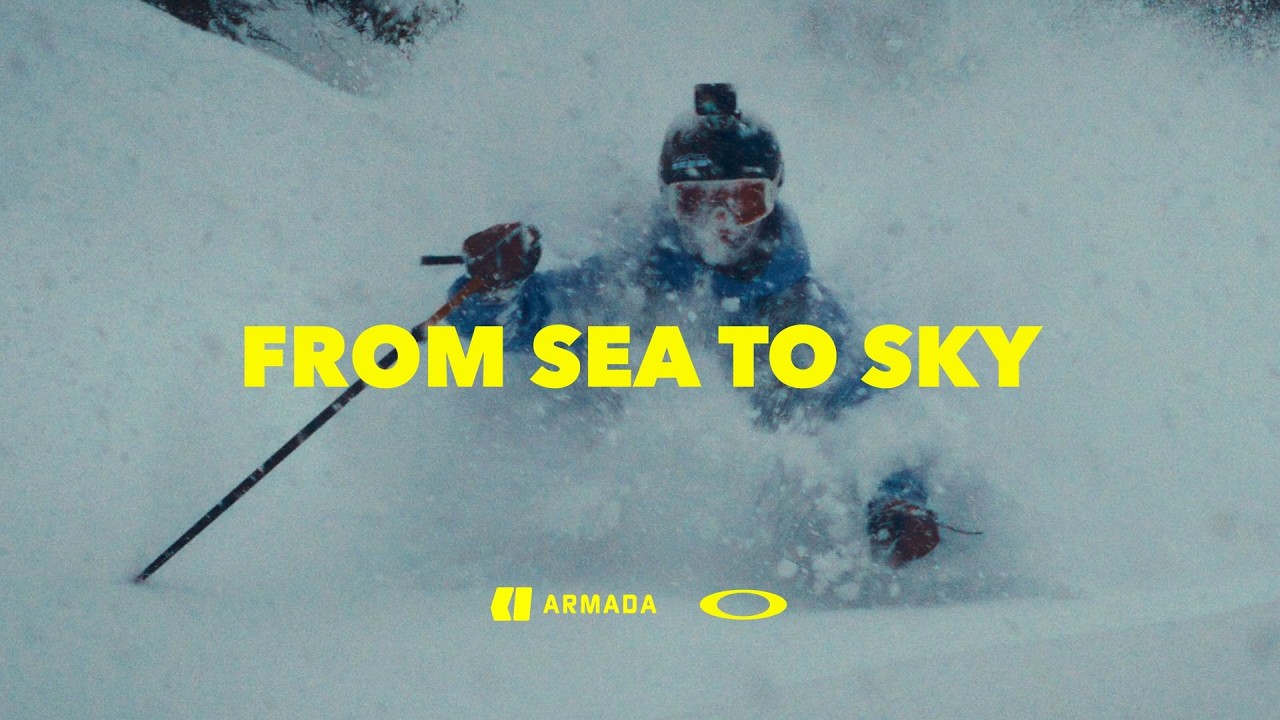
Durlacher has also signaled interest in storytelling beyond competition. In his public bio, he references a first ski film project titled “From Sea to Sky,” framed as a story-driven approach to skiing. For an emerging freerider, filming is not just a highlight reel; it is a progression tool. It encourages repetition, forces honest review of technique, and helps an athlete define what they want their skiing to represent. In a sport where scores are one form of validation, a film project can be another way to build identity and connect with the culture of freeride.
Geography that built the toolkit
Being based in Whistler shapes a freerider’s development in a very specific way. The scale of Whistler Blackcomb and the surrounding Coast Mountains exposes young athletes to steep alpine faces, technical entrances, tight trees, and storm-day decision-making—often within the same week. Coastal snowpacks can change quickly with temperature and moisture, which pushes skiers to become adaptable: reading texture, managing speed when visibility is poor, and choosing terrain that matches the day’s stability and conditions.
The move from coastal British Columbia to the Rocky Mountain environment at Kicking Horse Mountain Resort adds another layer. Kicking Horse is steep by default and demands early commitment, with natural features that reward clean takeoffs and confident landings. Then a European venue like Kappl in Austria can introduce different snow feel and pacing: athletes often need sharper precision, tighter line management, and a run plan that stays readable even when the face skis firmer than what they train on at home. When a young skier posts top results across those environments, it suggests a toolkit that is expanding in the right direction.
Equipment and partners: practical takeaways
In public posts tied to his season and film promotion, Durlacher has tagged brands such as Oakley, Armada Skis, and GoPro. A social tag is not the same as a formal sponsorship announcement, but it does highlight something practical: freeride performance and freeride storytelling both depend on equipment choices that prioritize function in difficult conditions.
For progressing skiers, the useful takeaways are straightforward. Vision is safety and speed in freeride terrain, so goggle fit and lens choice matter more than most people want to admit—especially in flat light where hesitation can destroy a run’s rhythm. Ski and boot setups in freeride generally reward predictability: gear that stays composed when the snow turns variable, holds an edge when the surface gets firm, and does not punish you for making fast, corrective turns. If you film your skiing, camera placement and stability matter too; the goal is not just to record a big moment, but to capture enough detail to review line choice, speed management, and the quality of turns before and after features.
Why fans and progressing skiers care
Carter Durlacher is worth tracking because his results show a young athlete crossing from strong regional performances into international relevance. Winning at the 2026 YETI FIS Freeride Junior World Championships in Kappl and winning at Kicking Horse Mountain Resort at a major junior stop are the kinds of markers that often precede a push into higher-level freeride circuits. He is still early in the process, but the trajectory is clear: a credible competition résumé anchored by meaningful venues.
For viewers, he represents the modern junior freeride pathway—competition credibility, development inside the Whistler training ecosystem, and a willingness to build a personal story through filming. For skiers trying to improve, his path reinforces a lesson that applies at every level: freeride success is built on line planning, repeatable control, and clean technique as much as it is built on a single big feature. Watch his runs with those criteria in mind, and you will understand not only whether the skiing looks exciting, but why it scores.