Anri Kawamura
Tokyo, Japan | Active: 2019-present FIS record | Discipline: Moguls, Dual Moguls, Slopestyle and Big Air | Known for: World Cup moguls wins, Beijing 2022 final, Red Bull Japan
Deer Valley Under The Lights
The mogul lane at Deer Valley dropped fast under Utah lights, the bumps stacked tight enough to punish one late edge. Anri Kawamura came in as a 17-year-old already carrying World Cup pressure, then skied like the hill belonged to her. On January 14, 2022, she won the women’s moguls World Cup there, one week after winning at Tremblant and one month after her first victory at Idre Fjäll. The Beijing Olympics were close enough to shape every conversation. Kawamura did not arrive as a long-shot teenager. She arrived as one of the fastest-rising mogul skiers in the world.
Yuzawa Before The World Cup Noise
Kawamura was born on October 15, 2004, and her FIS profile lists Tokyo as her residence, Japan as her nation, TEAMJOCKS as her team, and active status under FIS code 2534852. Her skiing life started much earlier than the results page. In a STEEP interview, she said she began skiing at three and started moguls at four, after skiing in Yuzawa with her parents and grandparents.
That childhood detail matters because moguls are not built late. The sport depends on years of repeated impact: knees absorbing troughs, hips staying quiet over uneven snow, eyes reading the next two bumps while the skis are still finishing the last turn. Kawamura’s strengths were already visible in the way Japanese media described her before Beijing: sharp, accurate, stable turns developed from childhood rather than a style borrowed from one fast World Cup season.
Ruka At Fifteen Against Perrine Laffont
The senior warning shot came at Ruka, Finland, on December 7, 2019. Kawamura made her World Cup debut and finished second in moguls behind Perrine Laffont. That was a difficult place to arrive quietly. Ruka’s early-season course is cold, steep and unforgiving, and Laffont was already the reference point in women’s moguls.
For Japan, the result immediately changed expectations. Kawamura was still in junior high school age range, but she had entered a World Cup final and left with a podium. The run did not make her the finished athlete. It did something more useful: it proved that her turn quality could survive senior speed. In moguls, speed is not only time. It is the ability to stay tall enough for clean airs while the bumps try to fold the body forward.
Krasnoyarsk Gold And The Junior Reset
The 2021 season gave Kawamura a strange combination of senior pressure and junior recovery. At the Almaty World Championships, her moguls result was 20th, and she did not start the dual moguls event. Later that month, at the Junior World Championships in Krasnoyarsk, Russia, she won gold in moguls and placed fourth in dual moguls.
That junior title was not just a consolation prize. It showed that the early World Cup podiums had not been a fragile accident. She could reset after a senior championship disappointment, return to an age-group field, and win the event she was expected to win. The 2020-21 World Cup season had already put her second in the women’s moguls standings behind Laffont. Krasnoyarsk gave the same story a title: junior world champion with senior podium speed already in her legs.
Idre Fjäll Started The Olympic Surge
The 2021-22 season turned Kawamura from prospect into Olympic threat. On December 11, 2021, she won the moguls World Cup at Idre Fjäll, Sweden. She followed with second at Alpe d’Huez on December 17, first at Tremblant on January 7, third at Tremblant one day later, second at Deer Valley on January 13, and first at Deer Valley on January 14.
That sequence is dense enough to define a season by itself. Idre Fjäll rewards rhythm in cold Swedish conditions. Alpe d’Huez adds French Alps altitude and a different judging panel. Tremblant brings a Canadian course where speed and absorption matter. Deer Valley puts the sport on one of its most public World Cup stages. Kawamura was not winning in one country or one snow texture. She was repeating podium-level skiing across the main moguls map.
Beijing Final And The Missing Medal
At Beijing 2022, Kawamura qualified fifth in women’s moguls and finished fifth in the Olympic final. The result can be read two ways. A 17-year-old Olympic finalist from Japan had reached the medal round in her first Games. At the same time, fifth place was below the standard she had set during the World Cup run into Beijing.
The field was brutal. Jakara Anthony won gold, Jaelin Kauf took silver, Anastasiia Smirnova earned bronze, and Perrine Laffont finished fourth. Kawamura landed behind four women who all carried either Olympic, World Cup, or world-championship weight. Her fifth place still meets the threshold for a major contest profile. It also explains why her page should not be framed as a finished triumph. Beijing was a high result and a missed opportunity at the same time.
How Kawamura Wins In The Bumps
Kawamura’s technical identity begins with turns. In moguls, judges split the run between turns, air and time, and the turn score carries the largest share. Her best skiing has a narrow upper body, quick absorption, compact knees through the troughs, and clean ski direction before each jump. She does not look like a skier surviving the course. She looks like a skier trying to reduce the course to a metronome.
The airs complete the package: upright body control, jump timing, and enough amplitude to keep pace with skiers such as Laffont, Kauf, Anthony and Hinako Tomitaka. Dual moguls added another test. In that format, the skier is not only judged against a score but against the athlete in the lane beside her. Kawamura’s Val St. Côme weekend in 2023 proved she could hold line pressure and race rhythm while still keeping the air package clean.
Val St. Côme Twice In One Weekend
January 2023 gave Kawamura one of the cleanest peaks of her World Cup career. At Val St. Côme, Quebec, she won the women’s moguls event on January 27, then won dual moguls on January 28. FIS described the second win as her going back-to-back at the Canadian stop, with Walter Wallberg taking his first World Cup win on the men’s side.
The location matters because Val St. Côme is not a neutral stage. The Canadian crowd understands moguls, the slope rewards speed, and the dual event turns skiing into direct confrontation. Kawamura’s double showed range inside her own discipline. Single moguls asked for one complete judged run. Dual moguls asked for the same technique under visible pressure, with the opponent’s speed always in peripheral vision. She won both.
Injury, Rehab And The Long Pause
The rise did not stay linear. FIS published a 2023 update noting that Kawamura had returned to snow after injury, rehabilitation and months away from competition. Her own public injury post described damage to the MCL and meniscus. After a 2021-22 season built almost entirely on podiums and a 2023 Val St. Côme double, the pause changed the next part of her career.
The FIS results page shows the effect clearly. After Chiesa in Valmalenco in February 2023, where she placed third in World Cup dual moguls, the moguls World Cup trail stops for a long stretch. That absence is part of the biography, not a footnote. Moguls place huge load on knees through repeated absorption, landings and lateral corrections. Returning from that kind of injury is not just fitness work. It means rebuilding trust in every bump.
Red Bull Japan And The Helmet Shift
Kawamura announced a Red Bull Japan athlete contract in 2022, with ski jumper Ryoyu Kobayashi welcoming her into the brand’s athlete group. That partnership changed the visual side of her career. Moguls can be a conservative discipline in image terms, often defined by national uniforms and timing gates. The Red Bull helmet placed her inside a broader action-sports language.
The timing was logical. She had just completed a breakout World Cup season and an Olympic final. Red Bull’s own athlete materials frame her as a moguls specialist and junior world champion, placing her among top performers on the FIS World Cup circuit. The sponsor line also matters for skipowd.tv because it gives viewers a recognizable visual cue: Kawamura is not only a Japanese team athlete, but one of the few mogul skiers with a global action-sports brand identity.
Oze-Tokura And The Slopestyle Detour
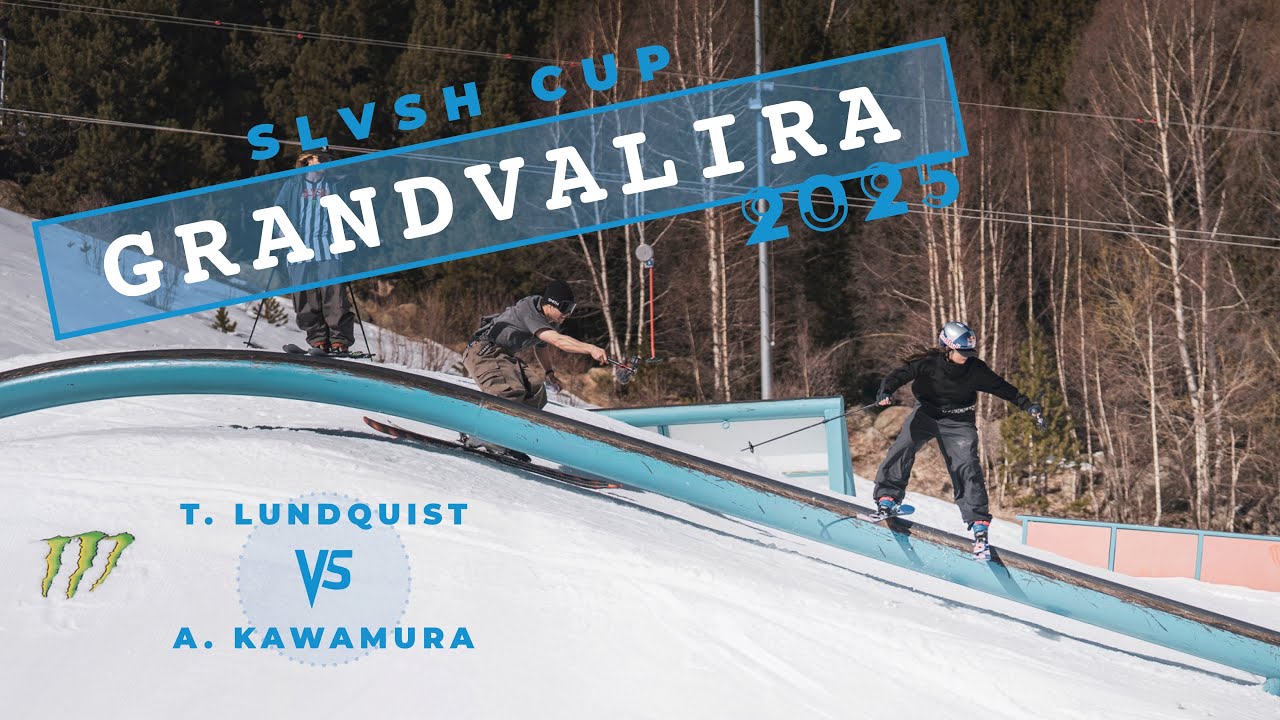
The most unusual current detail is not another moguls podium. It is the 2025 FIS record. Kawamura placed third in a FIS freeski slopestyle event at Mayrhofen on February 9, 2025, then won Japanese national titles in freeski slopestyle and big air at Oze-Tokura on February 22 and 23. She also won an Asian Cup slopestyle event at Oze-Tokura on February 24.
That does not erase the moguls résumé. It changes the current frame. A skier who built her name on turn scores, dual moguls pressure and Olympic bumps was now appearing in park-and-pipe categories: rails, jumps, grabs, course flow and big air execution. The factual endpoint is precise enough to avoid speculation. Kawamura’s latest official FIS results place her in slopestyle and big air, while her major international résumé remains rooted in moguls: Ruka, Idre Fjäll, Tremblant, Deer Valley, Beijing, Alpe d’Huez and Val St. Côme.