Overview and significance
Buck Hill is a compact but influential ski and snowboard area in Burnsville, Minnesota, just south of Minneapolis and directly overlooking Interstate 35. With roughly 45 acres of skiable terrain, around 16 marked runs and about 300 feet of vertical drop, it looks like a classic Midwest bump from the highway. On snow, however, it has decades of race heritage, surprisingly dense terrain, and a quietly strong freestyle scene that make it a key hill in the Twin Cities area and far more than a roadside curiosity.
Opened in the mid-1950s, Buck Hill is one of the region’s longest-running ski areas and has a reputation as a “factory hill” for alpine racers. Its coaching programs and race-focused terrain produced a string of high-level athletes, including World Cup and Olympic medalists, proving how much performance you can squeeze out of a small vertical when training is consistent and terrain is used intelligently. Today the hill balances that tradition with parks, tubing and beginner programs, operating as a year-round action-sports centre with skiing, snowboarding, biking, camps and live music.
For freeskiers, Buck Hill is important because it distils the core Midwest recipe: short runs, full-coverage night skiing, efficient lifts and terrain parks you can lap until your legs give out. It is a place where after-school and after-work sessions matter as much as weekend days, and where local crews treat the hill like an outdoor gym—working on rail tricks, carving, and race technique in quick, high-frequency laps rather than chasing big-mountain exposure.
Terrain, snow, and seasons
Buck Hill uses the east face of a single bluff that rises above Burnsville. The summit sits a little above 1,200 feet, the base around 900 feet, and the vertical drop comes in just over 90 metres. Within that modest frame, the resort lays out parallel fall-line runs with only short connectors and minimal wasted distance, so every chair ride or rope-tow lap produces a full top-to-bottom descent rather than a long traverse or flat runout.
The official trail count hovers around 16 runs, with a mix of greens, blues and a handful of black-rated pitches. The gentlest terrain clusters along the edges of the hill and near the magic carpets, where broad, low-angle slopes provide space for first turns and beginner lessons. Intermediates have multiple blue runs that maintain a consistent pitch—perfect for honing edge control and confidence at speed. The steeper centre lines, used heavily by the race program, offer firm, straightforward fall-lines where gates can be set from top to bottom without complicated terrain breaks.
Naturally, Minnesota’s snowfall is not on mountain-resort levels. Buck Hill typically sees around 60 inches of natural snow in a season, so snowmaking is essential. Modern systems blanket the main runs and learning zones, and grooming teams work nightly to reset surfaces into grippy corduroy for the next day and evening. Conditions are classic Upper Midwest: often firm and fast, with the occasional soft overlay when fresh snow falls. This predictability is valuable for both racers and park riders, who benefit from consistent speed into jumps, rails and training lanes.
The season usually runs from late November or early December into mid-March, with variations depending on temperature and early storms. Because the hill is low and close to the city, cold nights are more important than huge storm totals. When temperatures cooperate, Buck Hill can open early with machine-made snow and stay in good shape through frequent grooming even when nearby fields are brown.
Park infrastructure and events
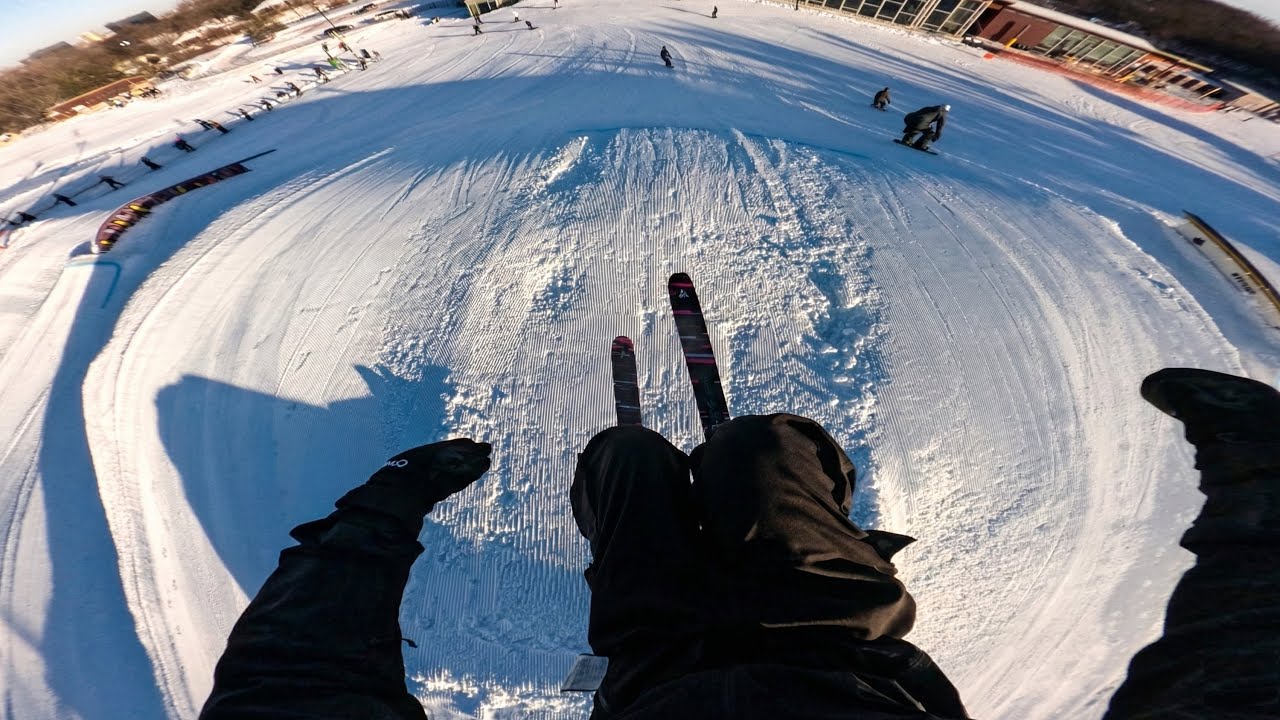
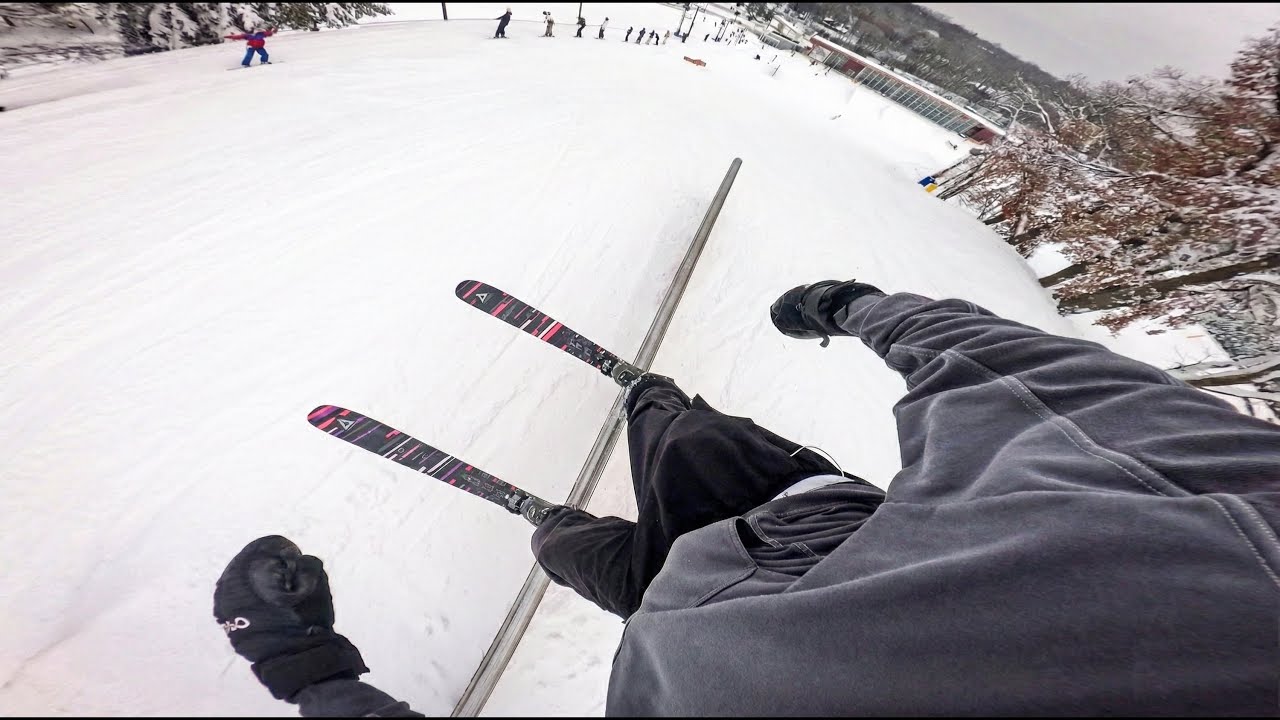
Although Buck Hill’s history is rooted in racing, its terrain parks are now a core part of its identity. The trail map highlights several freestyle zones across the front of the hill, including a rope-tow-served park that anchors the main setup. Features are typically laid out in multiple lines with boxes, rails, tubes, wallrides, hips and small to medium jumps, allowing riders to stitch together several hits per run.
Progression is built into the design. Near beginner areas, small boxes, mellow ride-on rails and gentle rollers give new park skiers a low-consequence environment to learn stance, approach and basic slides. As you move into the primary park lanes, features become more technical: longer rails, step-on and step-off options, close-outs, redirect walls and tabletops with defined takeoffs and properly shaped landings. The rope tow is critical here; it allows riders to lap specific features quickly, repeating the same rail or jump over and over to dial in tricks and build consistency.
Historically, Buck Hill has also offered a halfpipe and multiple distinct park zones when snow and resources allow, giving local crews varied canvases to work with through the season. Events—from pre-season and in-season rail jams to local park series—keep the freestyle scene active, and the hill’s compact layout makes it easy for spectators to watch sessions directly from the base or nearby chairlifts. For many Twin Cities riders, early edits and rail tricks are filmed here under the lights, with the interstate traffic in the background reminding you how close you are to the city.
Access, logistics, and on-mountain flow
Buck Hill is one of the most accessible ski areas in the United States. It sits directly next to Interstate 35 in Burnsville, about 15 miles south of downtown Minneapolis. From most of the metro, you can be parked at the base in under 30 to 40 minutes during normal traffic, making it a textbook after-school and after-work hill. There are no mountain passes, no long canyons and no complex navigation—just a highway exit and a short frontage road to the main parking area.
The base area is straightforward and compact. A main chalet houses ticketing, rentals, a shop, food and a bar, with large windows looking out onto the slopes. The tubing hill, magic carpets, beginner lifts and main chairs are all only a short walk away, so families can spread out across different activities while still sharing the same base. Because the terrain fans out from a single ridge and drains back to a common bottom, it is almost impossible to get lost or end up far away from your group.
On the hill, flow depends on your focus. Skiers who want mixed laps use the chairlifts to run full top-to-bottom groomers, mixing in side hits and occasional forays through park features. Park crews and racers gravitate toward the rope tows and race lanes, where lap times are shortest. With most runs lit and night skiing offered every evening, the busiest periods often start at dusk rather than in the morning, and many locals treat Buck Hill as a place for focused two- to four-hour sessions rather than all-day marathons.
Local culture, safety, and etiquette
The culture at Buck Hill combines long-standing race tradition with modern freeride and park energy. You will see junior race teams and development programs training gates early in the evening, followed by park crews lapping rails and jumps late into the night, all with families and casual skiers sharing the same lifts. The hill is independently owned, and that family-run feel comes through in staff interactions and the emphasis on development teams and camps.
Because the terrain is compact and traffic can be dense in places, especially on busy nights, safety and etiquette matter. On the groomers, riders are expected to control speed, yield to those downhill, and pay attention to slow zones near the base area and beginner corridors. In the parks, a clear Park Smart approach is standard: inspect features before hitting them, call your drop at the top of the line, and clear the landing area quickly after each trick. Rope-tow lines work best when people queue fairly and avoid cutting; keeping your skis or board straight and your hands positioned correctly on the rope prevents tangles and sudden stops.
Weather adds another layer. Midwest winters can swing from deep-freeze to thaw and back again in a few days. That means surfaces may range from soft and forgiving to very firm, even within the same week. Helmets are common across all ages, and riders who spend a lot of time in the park or on steeper pitches keep their edges well tuned to stay in control on harder snow.
Best time to go and how to plan
The prime window for freeskiers at Buck Hill usually runs from late December through late February. By that point, snowmaking has fully covered the hill, parks are built out, and cold night temperatures preserve surfaces between sessions. Early season in late November and early December can be fun for first turns and early rail jams, but terrain is more limited as the resort focuses on building a solid base. March tends to bring longer daylight, softer afternoon snow and a more relaxed pace as the season winds down, which can be great for casual laps and spring-style park sessions.
Planning a visit is mostly about matching your schedule to the resort’s operating hours and your goals. Metro locals often invest in a season pass and treat Buck Hill as their regular training venue, dropping in for a couple of hours whenever conditions and free time line up. Visitors from farther away might time a weekend around a specific event or just aim for a cold, clear stretch when night skiing conditions are at their best. Dressing for sub-freezing temperatures, especially during evening sessions, is crucial: layered clothing, good gloves, face protection and warm boots can make the difference between cutting a session short and lapping until closing.
Why freeskiers care
Freeskiers care about Buck Hill because it proves how much progression you can pack into a small vertical when the focus is right. The combination of short runs, rope-tow-served parks, consistent snow surfaces and year-round programs turns the hill into a high-efficiency training ground. Whether you are working on carving fundamentals for racing, learning your first rail tricks or stacking night clips under the lights, Buck Hill offers the repetition and community needed to move your skiing forward.
It is also part of a broader Midwest story. Alongside nearby hills in the Twin Cities corridor, Buck Hill anchors a culture where skiing is woven into everyday life rather than saved for rare big trips. For the skipowd.tv audience, that makes it a notable node on the map: a small, bright patch of snow above a busy highway where future racers, park kids and lifelong local skiers all share the same few hundred feet of vertical—and manage to turn it into something much bigger.