Stelvio
Alps
Italy
Passo dello Stelvio is a summer glacier ski area between Lombardy and South Tyrol in Italy | Known for: skiing between 2758 and 3450 metres, 20 kilometres of pistes, national-team training and historic preseason freeski camps | Season: late May to early November when glacier and road conditions permit | Best for: high-altitude training, summer piste skiing, technical repetitions and preseason snow access
Monte Cristallo Reaches 3450 Metres Above The Pass
Passo dello Stelvio operates in a mountain environment unlike a normal winter resort. The famous road pass sits at approximately 2758 metres, while the summer ski terrain climbs toward Monte Cristallo at about 3450 metres. Official operator SIFAS describes more than 20 kilometres of skiing across this altitude range, surrounded by the Ortles-Cevedale group. The result is one of the highest and most distinctive seasonal ski areas in Italy.
The resort effectively works backwards compared with most Alpine destinations. Snow access begins when the Stelvio road reopens after winter, typically around the end of May, and continues into autumn rather than operating through January and February. The surrounding pass is buried and inaccessible for normal resort operations during the heart of winter, so Stelvio's identity is tied to summer and preseason training instead of conventional holiday skiing.
This unusual calendar is the first reason the glacier has mattered to European skiing for decades. When lower resorts are green, athletes can still make turns above 3000 metres. The terrain itself is predominantly broad glacier piste rather than steep freeride terrain, making consistency and repetition more important than vertical scale.
Two Cable Cars Lead To Four Glacier Surface Lifts
The official ski-area map shows a compact six-lift system. The first cable-car stage climbs from Passo Stelvio to Trincerone at roughly 3050 metres. A second installation continues toward Livrio at about 3174 metres. Above that point, four surface lifts serve the glacier: Geister 1, Geister 2, Payer and Cristallo. The upper ski terrain extends toward approximately 3450 metres.
This layout gives Stelvio a clear vertical sequence. Skiers begin beside the road, upload through rocky high-Alpine terrain and then reach the main snow surface above 3000 metres. Runs documented on the official map include Geister 1, Geister 2, Geister to Trincerone, Livrio to Trincerone, Payer Turistica, Payer Agonistica and Cristallo. Payer Agonistica provides the more training-oriented red-piste option among a network dominated by blue glacier runs.
For athletes, the lack of a huge lift network is not necessarily a weakness. Surface lifts produce short, repeatable rotations close to dedicated training lanes. Teams can spend the morning working on a specific technical task instead of covering a large resort. Stelvio is therefore closer to a specialised glacier training centre than a destination built around exploring hundreds of kilometres.
Summer Skiing Starts When Most Alpine Resorts Stop
The planned 2026 operating calendar ran from May 30 to November 1. Normal lift operations were scheduled through the morning and afternoon for the cable-car system, while glacier surface lifts such as Payer and Cristallo concentrated skiing into the colder morning hours. During June and July, SIFAS also offered very early access from 5 a.m. by reservation for organised groups, with national teams, ski committees and FIS categories given priority.
That schedule explains the rhythm of Stelvio. Summer glacier snow is usually at its strongest after the coldest part of the night. Racers and technical skiers start early, complete high-volume training before solar heating becomes dominant and leave the glacier as the surface deteriorates. Long lunches and afternoon cruising are less central here than disciplined morning blocks.
The model has attracted ski clubs and national programmes because it creates snow access when conventional European winter venues are unavailable. In 2026, international and private race programmes again scheduled Stelvio camps through summer and early autumn, using the glacier for giant-slalom, slalom and technical freeskiing.
Prinoth X Camp Built A Freeski Course On The Glacier
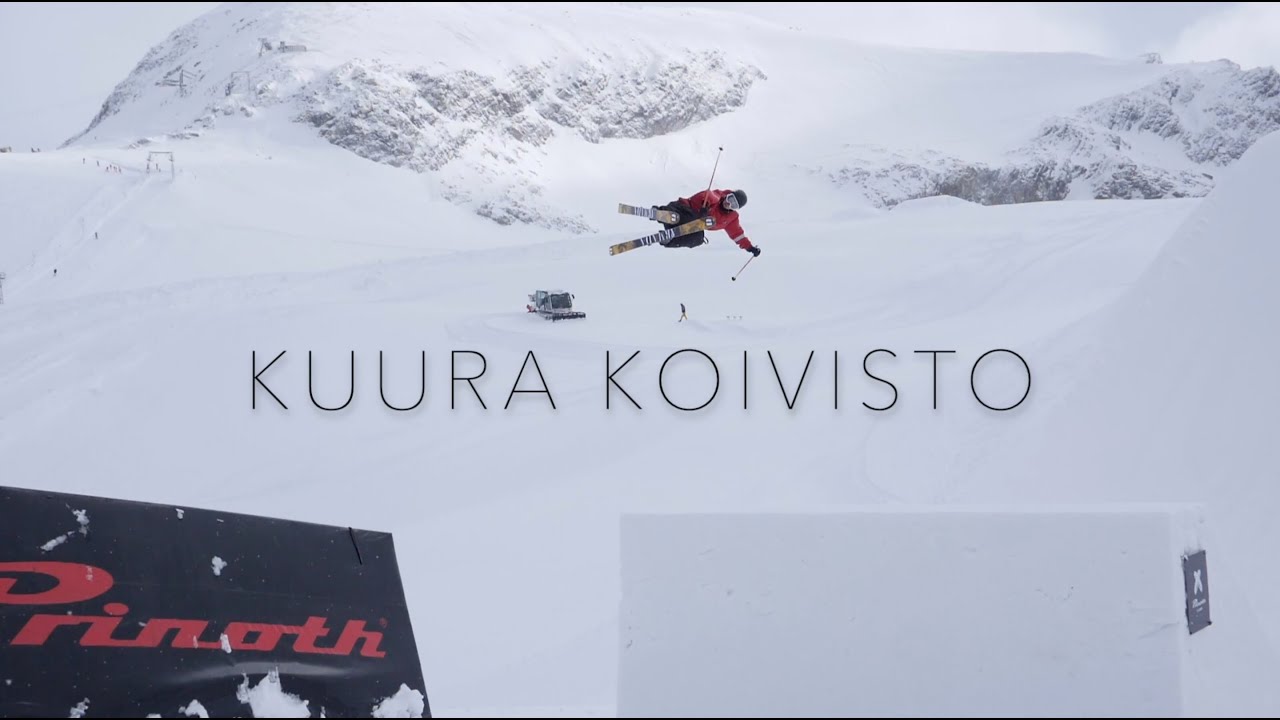
Stelvio also has a genuine freeski history beyond alpine racing. In 2018 and 2019, the Prinoth X Camp transformed part of the glacier into a dedicated preseason slopestyle training venue for freeski and snowboard athletes. The 2019 edition was documented by FIS Freeski Park and Pipe and used a course shaped by F-Tech Snowparks with multiple rail options, transitions and a jump line.
Italian and Austrian national-team riders used the setup during September and October, with several seven-day sessions scheduled before the winter World Cup season. Hourly reshaping and shuttle-assisted jump laps turned the glacier into a specialised athlete environment rather than a normal public terrain park. The concept returned in later years, including autumn slopestyle sessions designed specifically for freeski and snowboard training.
This history is important when evaluating Stelvio for freeskiing. The current public ski area should not automatically be described as a permanent large snowpark comparable with Saas-Fee or Les 2 Alpes. Stelvio's stronger role has been as a glacier platform where purpose-built training projects can appear when snow, operators and athlete demand align.
The Glacier Is A Training Ground Before It Is A Holiday Resort
Morning activity at Stelvio often reflects competition calendars. Race clubs reserve lanes, coaches set giant-slalom and slalom courses, and athletes accumulate turns before returning to dryland preparation later in the day. The operator explicitly provides reservation systems for teams and ski clubs, reinforcing the training-first character of the glacier.
This environment also benefits freeskiers even when no full slopestyle course is present. Hard morning snow rewards precise edging, short lift rotations increase repetition and the altitude exposes athletes to a demanding physical environment. Technical freeskiing between dedicated park camps can help maintain stance, carving control and ski-snow familiarity before winter parks open.
The comparison with Saas-Fee is useful. Saas-Fee has developed a stronger contemporary reputation around preseason park infrastructure and major freeski camps. Stelvio is more heavily associated with alpine-team training and a smaller glacier network, but its past X Camp builds prove that the terrain can support serious slopestyle preparation. The two glaciers occupy related but distinct positions in the European preseason circuit.
The August 2026 Closure Exposed The Glacier Limit
The 2026 season also demonstrated how vulnerable summer skiing has become. SIFAS suspended ski activity from August 15 after persistent heat, poor overnight refreezing and repeated thunderstorms degraded glacier conditions enough that the operator could no longer guarantee its required safety and snow-quality standards. The cable-car service remained available, but skiing stopped temporarily.
Operations resumed on September 4 after a twenty-day interruption, with skiing concentrated into an earlier morning window. The official Bormio live-status service recorded the Cristallo, Payer, Geister 1 and Geister 2 surface lifts operating alongside the two cable-car stages, although individual pistes remained dependent on conditions. The planned closing date remained November 1.
This interruption matters beyond one season. Stelvio's value depends on glacier preservation, overnight cooling and sufficient surface snow. A published May-to-November calendar is therefore a target rather than an unconditional guarantee. Athletes planning camps must check live conditions close to departure, especially during the hottest part of summer.
Glacier Terrain Requires More Than A Piste Map
Most public skiing takes place on prepared glacier pistes, but the surrounding high mountain remains serious terrain. The official map has historically identified a spring off-piste itinerary below the glacier, while the wider Ortles-Cevedale massif contains crevassed glaciers, steep faces and mountaineering routes. Leaving the controlled ski area changes the level of risk immediately.
Crevasses, hard glacier ice, whiteout navigation and rapidly changing weather are separate hazards from ordinary piste skiing. Tracks do not establish that a route is safe. Skiers moving beyond controlled runs need appropriate glacier and avalanche knowledge, equipment and professional guidance when conditions demand it.
Altitude is another factor even inside the marked area. Much of the skiing occurs above 3000 metres, so fatigue can appear faster than at a lower resort. Early starts, strong ultraviolet exposure and cold morning surfaces also make hydration, eye protection and sensible training volume part of a successful Stelvio day.
The Road From Bormio Is Part Of The Ski Area
Access depends on the Stelvio Pass road itself. From the Lombardy side, the route climbs from Bormio through a succession of high mountain hairpins to the pass at 2758 metres. From the northeast, the road descends toward the Val Venosta side through an even denser sequence of switchbacks. Seasonal opening is essential because the pass road normally closes through winter.
Accommodation and ski services are concentrated around the pass and in the Bormio area rather than in a conventional ski-in ski-out village beneath the glacier. The result feels more like a high-altitude training station than a polished winter resort. Riders arrive early, upload toward Livrio, ski during the strongest snow window and return down the pass after training.
That unusual operating pattern explains Stelvio's place in ski culture. The numbers are compact - roughly 20 kilometres of pistes and six principal lift installations on the official map - but the mountain reaches 3450 metres and can provide lift-served snow during months when almost every normal Alpine resort is closed. Combined with its national-team training role and the history of Prinoth X Camp freeski sessions, that gives Stelvio a specific 3/5 importance: not a major modern public park destination, but one of Europe's most recognisable summer and preseason ski-training glaciers.