Ski Dubaï
Arabian Peninsula
Dubai
Overview and significance
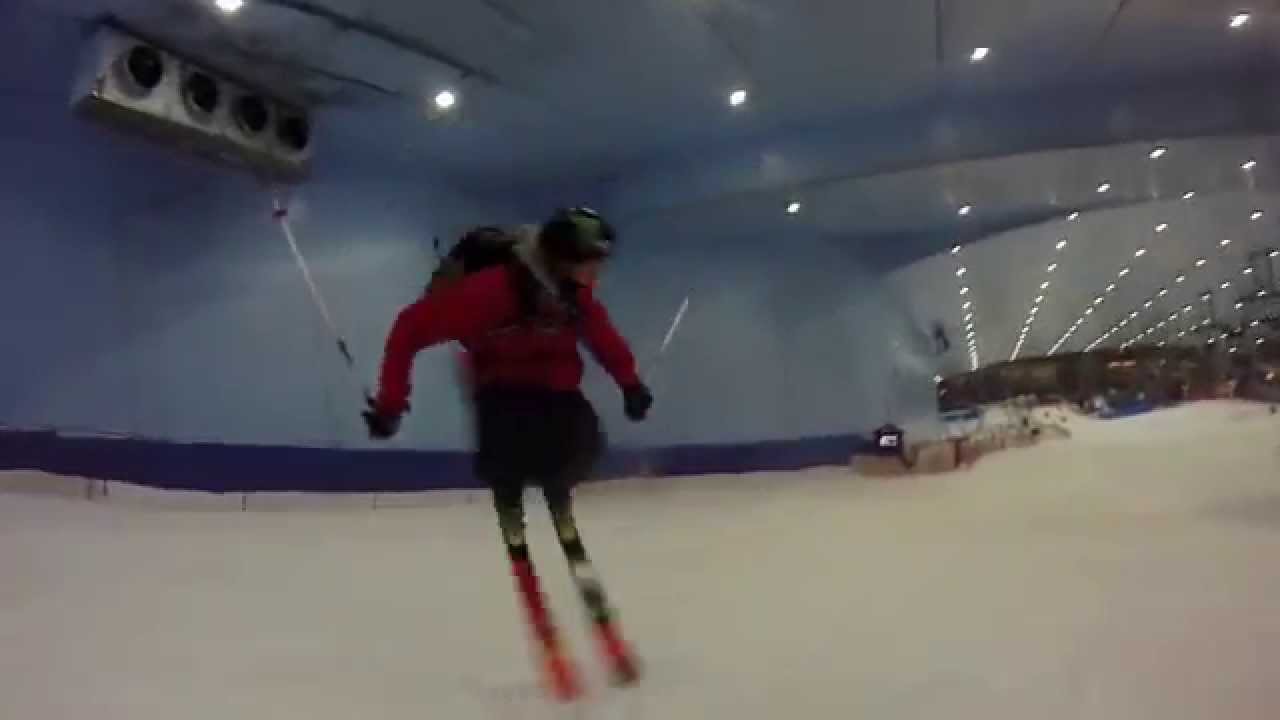
Ski Dubai is a full indoor ski resort built inside the Mall of the Emirates in Dubai, United Arab Emirates. Opened in 2005, it was the first indoor ski area in the Middle East and remains one of the largest in the world, with around 22,500 square metres of snow-covered space under a huge refrigerated dome. The main slope drops about 85 metres in vertical height and offers five runs of different steepness and length, including a 400-metre piste and what is widely described as the world’s first indoor black-diamond run.
Instead of mountain ridges and tree lines, the backdrop here is a massive engineered structure that keeps the snow between roughly –1 and –2°C while desert heat pushes well above 40°C outside. A four-person chairlift and surface lifts carry skiers and riders up the indoor “mountain”, while a separate snow park area adds tubing lanes, toboggan tracks and play zones. For visitors to Dubai, Ski Dubai is a headline attraction because it delivers a genuine ski experience in a city better known for dunes and skyscrapers.
For freeskiers, its significance is more specific: Ski Dubai offers a controlled environment where you can work on technique, rail tricks and small jumps all year round, with no weather surprises and consistent snow. It will never replace an alpine resort for big-mountain terrain, but as a training venue, a novelty stop on a long layover, or a way to mix urban travel with park laps, it plays a unique role in the global ski landscape.
Terrain, snow, and seasons
Because it occupies a single insulated hall, Ski Dubai’s terrain is compact and carefully planned. The indoor mountain rises about 85 metres from base to top, equivalent to roughly a 25-storey building. Within that height, engineers have carved five distinct runs, stepping from gentle beginner slopes to progressively steeper blue, red and black lines. The longest descent is about 400 metres, and you can feel the pitch change as you move across the face from easier to more advanced corridors.
For new skiers and riders, beginner areas sit on the gentler lower pitches, supported by short magic carpets and wide lanes where instructors can run drills without crowding. Intermediates tend to gravitate toward the central runs, which offer enough gradient to make proper turns without feeling intimidating. Advanced skiers can point their tips down the steeper line that earns the “black” label in this indoor context; while the vertical drop is modest, the pitch is real enough to demand good balance and edge control, especially on firm snow.
Snow quality is managed rather than left to the weather. Real snow is produced inside the hall, with fresh top-ups blown in colder night hours and groomers working the surface into a consistent layer. Temperatures are held just below freezing during operating hours, which keeps things firm but edgeable. Because there is no sun, wind or natural storm cycle, conditions change mainly with grooming schedules and traffic, not with the forecast. That predictability is a major asset for technique work: if you want to repeat the same movement pattern hundreds of times, the snow will feel similar from one lap to the next.
There is no conventional “season” here. Ski Dubai operates year-round, shifting only its daily timetable between weekdays, weekends and holidays. For riders used to thinking in terms of winter and summer, that means you can plan visits in the middle of August as easily as in January, and you can build a Dubai stop into travel plans whenever it suits your schedule.
Park infrastructure and events
Despite its small footprint, Ski Dubai includes a dedicated freestyle zone with boxes, rails, small jumps and other park features. Official descriptions highlight a “freestyle zone” and park features that can be reconfigured, with boxes, rails and kickers set up along part of the main slope. In some seasons, the layout has included a short halfpipe or mini-pipe segment, as well as rail lines tucked along the side of the hill.
The focus is progression rather than huge slopestyle lines. Typical setups include low boxes and beginner rails close to the top or side of the slope, where riders can learn to approach features straight, slide in a controlled way and ride away cleanly. Farther down or in more advanced sections, the park crew adds longer rails, down rails, simple kinked shapes and modest tabletops that encourage spins on and off without requiring big-mountain speed. Because the slope itself is only a few hundred metres long, the park is designed to maximise hits per lap rather than build giant jump lines.
Ski Dubai also runs regular themed sessions around its freestyle terrain. Monthly Freestyle Night events invite more advanced skiers and snowboarders to lap rails and jumps in a park-focused atmosphere, often with music, spotlights and a social vibe. These evenings are meant to bring together local crews, coaches and visitors in a setting that feels more like a night-park mission than a standard tourist outing. For riders who live in the region, these events create a small but real freestyle community in a city far from any natural mountains.
Access, logistics, and on-mountain flow
Logistics at Ski Dubai revolve around the fact that the resort sits entirely inside a shopping mall. The snow dome is built into the side of the Mall of the Emirates on Sheikh Zayed Road, one of Dubai’s main arteries. You reach it through the mall itself, following signage to the snow park entrance on the lower levels. For most visitors, the simplest options are the Dubai Metro (Mall of the Emirates station), taxi drop-off at the mall, or driving and using the mall’s extensive parking facilities.
Tickets and passes are sold in time blocks rather than full ski days: slope sessions of a couple of hours, full-day slope access, and combinations that include snow park rides or penguin encounters. Rental equipment is baked into most packages, including skis or snowboard, boots, outerwear and basic accessories. Many visitors simply arrive in normal clothes and change into provided gear; bringing your own hat and gloves is still recommended for comfort and hygiene.
Once you are on snow, the flow is straightforward. A four-seat chairlift runs up the length of the main slope, with a tow lift and magic carpets supporting specific zones. You typically ride the chair, choose a lane on the way down, and repeat. Because the run is short, laps are quick, which is ideal for drills or repeated attempts on the same rail or jump. The snow park area, with its tubing and play features, is accessed from separate gates and conveyors, so families and non-skiers can enjoy the snow without crowding the main slope.
The indoor layout also affects how you manage your energy. Temperatures are cold enough that you need proper layers, but there is no wind chill or prolonged chairlift exposure. Breaks are as simple as ducking into the adjoining café with large windows looking over the slope, then clipping back in and returning to the lift when you are ready for more laps.
Local culture, safety, and etiquette
The culture at Ski Dubai is a blend of tourist attraction, local training ground and novelty experience. On any given day you might see first-time skiers from warm-weather countries, Dubai residents using the facility as a weekly practice slope, and more confident park riders sessioning rails. Staff are used to working with total beginners, and ski and snowboard schools run continuous group and private lessons for children and adults.
Safety is emphasised through clear signage and structured zones. Slope marshals monitor speed, enforce directional rules and keep learners out of areas that are too steep for their level. Because the slope is relatively narrow and busy compared with a big outdoor resort, speed control and predictable line choice are especially important. Advanced riders are expected to adapt their pace to the traffic and to give generous space to learners making their first turns.
In the freestyle zone, standard park etiquette applies even though the features are smaller than at major mountain parks. Riders should always inspect features before hitting them, call their drop, and avoid stopping on landings or blind knuckles. Helmets are strongly recommended for everyone and are mandatory for lesson groups and younger riders. Outside the snow hall, there is also an environmental angle to consider: Ski Dubai has become a symbol of extreme engineering and energy use, and discussions around sustainable design and operational efficiency are part of the broader conversation about how indoor snow facilities fit into a warming world.
Best time to go and how to plan
Because Ski Dubai operates all year, the “best” time to go depends more on your wider trip than on snow conditions. Many visitors target the hot months from late spring through early autumn, when stepping from 40°C desert heat into minus-degree snow feels particularly surreal and refreshing. For Dubai residents and regional skiers, weekday mornings and early afternoons outside school holidays tend to be quieter, giving more space on the main slope and around the park features. Evenings, weekends and peak tourist periods are livelier and can be crowded, but also deliver more of a buzzing, theme-park atmosphere.
Planning is simple compared with a mountain trip. You do not need avalanche forecasts or multi-day weather analysis; instead, you choose a time slot, buy the appropriate pass on the official Ski Dubai website at Ski Dubai, and make sure you have warm base layers to wear under the provided outerwear. If you want to focus on freestyle, check ahead for dates of Freestyle Night or other park-oriented events and select a pass that covers those sessions. For families, combo tickets that include both slope access and snow park attractions can make it easy to keep mixed-ability groups entertained.
Because Ski Dubai sits inside a major mall, it is easy to combine with other activities: food courts, cinemas, shopping and other attractions are all a few minutes’ walk from the snow. That makes it a convenient add-on to a city stay or a long layover, especially if you want to limit the amount of time you spend in transit while still getting real turns on snow.
Why freeskiers care
Freeskiers care about Ski Dubai not because it offers huge vertical or big-mountain lines, but because it compresses the essentials of technique and park riding into a controlled, always-on environment in one of the world’s most unlikely locations. A short slope, constant snow, and a small but well-defined freestyle zone create ideal conditions for repetition: you can drill switch entries, refine rail approaches, or work on grab timing without worrying about wind, visibility or rapidly changing snow.
There is also the cultural and visual side. Skiing under a metal roof in the middle of a desert city, with a chairlift running above tubing tracks and a snow park full of families, is unlike almost any other freeski environment. Clips filmed here carry a distinct “desert snow” aesthetic that stands out in edits, and for many riders, ticking off laps at Ski Dubai becomes a fun entry on their personal ski map. As a standalone destination, it is limited; as a training block, a novelty mission or a way to keep edges sharp between mountain seasons, Ski Dubai has earned a genuine place in the global freeski conversation.