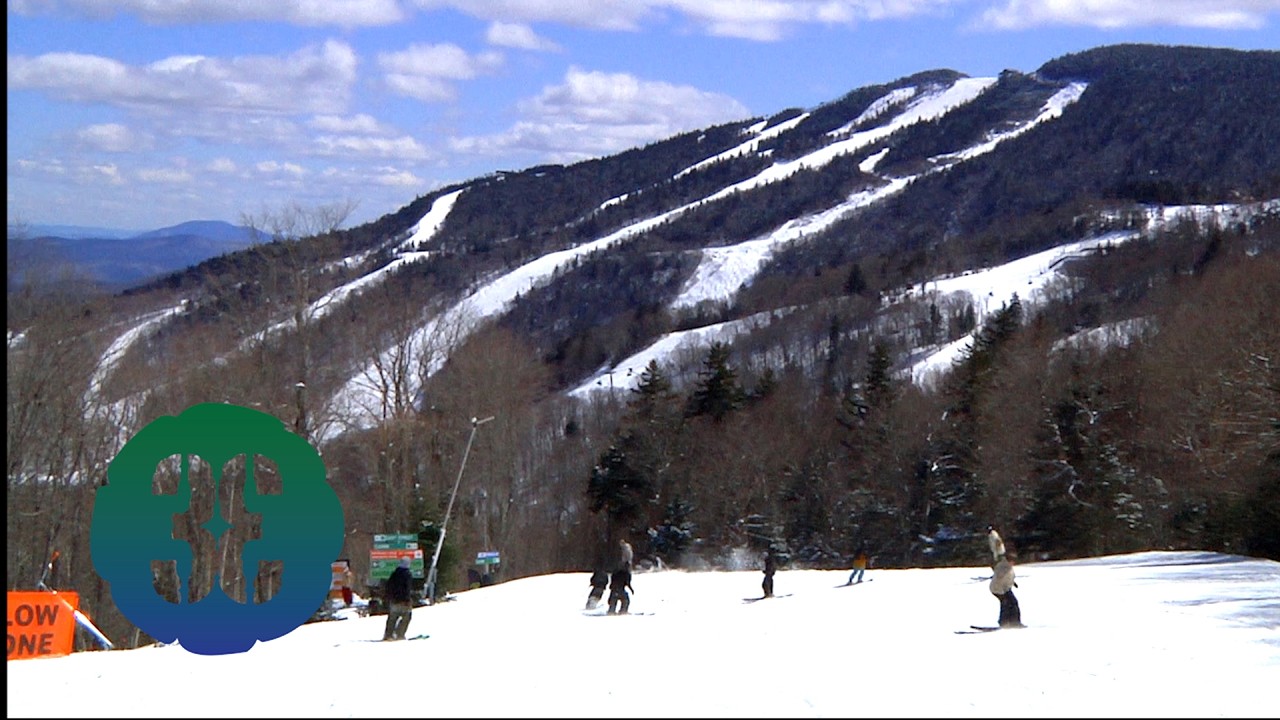
Killington Resort
Vermont
United States
Central Vermont resort known as the Beast of the East | Known for: 1,509 acres, 3,050 foot vertical, 155 trails, Killington Parks, The Stash, Dream Maker, Superstar spring skiing, World Cup race culture, and one of the longest seasons in the East | Season: early winter to late spring depending on snowmaking and Superstar operations | Best for: East Coast park riders, long-season skiers, groomer mileage, spring laps, race-event trips, and mixed-ability Vermont road trips
The Beast Of The East Still Sets The Scale
Killington Resort sits in central Vermont and remains one of the most important ski areas in the eastern United States. The official mountain stats place Killington Peak at 4,241 feet, with 3,050 feet of vertical drop from the 1,165 foot Skyeship base, 1,509 skiable acres, 155 trails, 73 miles of trails, and 19 lifts on Killington alone. When Pico Mountain is included in the broader Killington-Pico framing, the combined total reaches 1,977 skiable acres, 213 trails and 24 lifts. For skipowd.tv, the Killington page should focus on Killington Resort itself: the large multi-peak layout, the long season, the park network, the Superstar spring culture and the rare East Coast mix of everyday laps and world-stage race infrastructure.
Seven Mountain Areas And A Real Multi-Peak Day
Killington’s terrain is not one simple face. The resort’s official stats describe seven unique mountain areas when Pico is included, and the Killington side alone spreads across Killington Peak, Skye Peak, Ramshead, Snowdon, Bear Mountain, Sunrise and the Skyeship approach. That geography gives the resort a true East Coast big-day feeling. Ramshead works for learning, families and park progression. Snowdon adds classic intermediate and park access. Bear Mountain carries a stronger freestyle and spring-party identity through The Stash, Dream Maker and Superstar-adjacent energy. Skye Peak and Needles Eye help link long cruising and technical terrain, while the K-1 side gives summit access, views and the feeling that Killington is closer to a small ski city than a compact Vermont hill.
Great Eastern And The Three Thousand Foot Vertical Story
Killington’s vertical is one of its strongest public claims. The official history says the old long gondola from Route 4 to Skye Peak opened the way for the five-mile Great Eastern run and a 3,000 foot vertical-drop experience. The modern stats use a 3,050 foot vertical figure, which remains one of the defining numbers for the resort. For freeskiers, that vertical matters less as a single top-to-bottom challenge and more as a sign of terrain variety. A rider can use long groomers for speed and switch drills, Snowdon or Ramshead for park warmups, Bear for freestyle identity, and higher terrain for storm laps or spring corn. Killington rewards skiers who choose a lap pattern instead of trying to touch every peak without rhythm.
Six Hundred Acres Of Snowmaking Muscle
Killington’s long-season reputation is built on snowmaking as much as snowfall. The official mountain stats describe 250 inches of natural snowfall each winter, but the more important operating number is snowmaking over 600 skiable acres. Under ideal conditions, the system can move 9 million gallons of water per day, with almost 100 miles of pipe and 2,600 snowguns, including more than 1,000 low-energy guns. That explains the Beast identity better than any slogan. New England weather can bring powder, rain, thaw, refreeze, hardpack and spring slush in the same season. Killington survives that volatility through infrastructure. For park riders and spring skiers, that snowmaking base is what allows features, race surfaces and Superstar laps to exist when many smaller resorts are already struggling.
Killington Parks From Reason To Dream Maker
The resort’s current park language is Killington Parks, a network of terrain parks for different levels. The official park page describes everything from mellow boxes in Easy Street to large freestyle features in Dream Maker. Reason Park is the early-season park, often one of the first to open, accessed from North Ridge and built for shaking off the off-season with small, medium and large features. Mouse Run Park on Snowdon adds medium-to-large features, wood and metal elements and multiple line choices. Full House sits beside it as a welcoming progression park with extra-small and small rails and jumps. This distributed setup is important because Killington is too big for one park to carry the entire freestyle identity all season.
Timberline Lil’ Stash And Ramshead Progression
Ramshead gives Killington a strong progression zone. Timberline is described by the resort as a 1,000 foot playground with jumps, rails, transitions and creative features, built for repeat laps off Ramshead Express. Lil’ Stash is the younger sibling of Bear Mountain’s The Stash, giving newer freestyle riders a safer step before they move toward more technical natural-feature terrain. Easy Street adds extra-small and small features for riders learning to slide, pop and land cleanly. That ladder matters because Killington is a high-volume resort. A good park system has to protect beginners from being pushed too fast while still giving stronger riders enough feature density to stay interested. Ramshead is where that learning structure is easiest to understand.
The Stash And Dream Maker At Bear Mountain
Bear Mountain gives Killington its strongest freestyle personality. The official mountain stats list an 18-foot modified halfpipe, The Stash, Dream Maker and Stash Woods 1, 2 and 3 in the Bear Mountain park family. The Stash is the creative natural-feature anchor, where rails, logs, woods, banks and line choice make the park feel less like a standard slopestyle lane and more like a freestyle playground inside Vermont terrain. Dream Maker sits at the higher-skill end, built for riders pushing medium and large jumps, rails and boxes. That combination is why Killington belongs in the same East Coast freestyle conversation as Stratton Mountain Resort. Stratton has deep snowboard-event history; Killington has scale, long season, Bear Mountain park culture and a park network spread across the resort.
Spring Superstar And The King Of Spring Habit
Killington’s spring identity is central to its freeski value. The official history notes that lift-served June skiing was achieved in 1982, when the resort operated until June 15, and later describes Killington earning its “King of Spring” moniker. The Superstar area is the symbol of that culture. Spring at Killington is not just late leftovers. It is a deliberate season phase: deep snowmaking base, moguls, soft landings, parking-lot energy, lighter layers, tired legs and riders trying to stretch the winter as long as possible. For freeskiers, this matters because progression often improves when snow softens. Rails, side hits, park laps and spring jumps feel different when the fear of hard ice is replaced by forgiving corn and slush.
Dew Tour Years And The Freestyle Mecca Period
Killington’s freestyle history is not only current park signage. The official history says the resort had become a freestyle mecca in the 2000s and hosted top professional skiers and snowboarders at the Dew Tour from 2011 to 2013. That period gives the mountain a stronger park-era legacy than a normal large resort. The Dew Tour brought broadcast attention, high-level riders, competition builds and a sense that Killington could host more than regional park sessions. The current park network is different from the event builds of that era, but the cultural memory still matters. Killington is one of the East Coast places where freestyle was visible at national scale while still remaining accessible to everyday riders.
Superstar World Cup And The Race Surface Standard
The Stifel Killington Cup gives the resort a second world-stage identity. Killington began hosting the Audi FIS Ski World Cup in 2016, using its snowmaking power to turn Superstar into a race venue while many other resorts were still fighting early-season conditions. U.S. Ski & Snowboard says the Killington Cup returns on November 28-29, 2026 after a one-year 2025 hiatus due to on-mountain chairlift construction. The event is women’s giant slalom and slalom, not freeski, but it matters for every skier on the mountain. A resort capable of producing a World Cup race surface in late November also has the operational seriousness to build early terrain, maintain spring snow and support high-volume weekends.
Superstar Six And The New Lift Cycle
The 2025 lift work is an important current detail. Killington replaced the old Superstar Express Quad with a new high-speed six-person chairlift, the Superstar Six, and also upgraded the Skyeship Gondola with new cabins and maintenance infrastructure. That project forced the World Cup to move away for 2025, but it also strengthens the long-term Superstar story. For skiers, Superstar is more than one trail. It is the symbol of Killington’s late-season and race-season identity. Better lift reliability on that terrain matters for spring laps, World Cup weekends, advanced groomer days and the overall sense that the resort keeps reinvesting in the parts of the mountain that define its brand.
East Coast Snow Discipline And Park Smart Rules
Killington’s terrain park page uses Park S.M.A.R.T. language: Start small, Make a plan, Always look, Respect and Take it easy. That message belongs inside the article because Killington’s parks can be busy and feature-dense. Riders should inspect every setup, call drops, avoid blind landings, stay clear of park crew work zones and move quickly out of landings. The same discipline applies across the wider mountain. New England snow can be firm, fast and scraped by afternoon. A groomer that felt soft in the morning may become hardpack after traffic and temperature changes. Killington has enough terrain to spread skiers out, but its popularity means trail merges, park entrances and spring Superstar laps require predictable movement.
Base Area Strategy On A Large Vermont Mountain
Killington rewards smart base-area choices. K-1 works for summit access, gondola laps and central high-mountain movement. Ramshead is more useful for families, learning terrain and park progression. Bear Mountain is the better mental base when the goal is The Stash, Dream Maker or late-season Bear energy. Skyeship gives a lower access point and long-route logic. Snowshed serves beginners and resort services. That spread is part of the Beast experience, but it can also create friction for groups that start in the wrong place. A park-focused crew should park and plan around the active park zones. A family should avoid dragging beginners into advanced terrain just because the map looks connected. Killington skis best when the day has a purpose.
Where Killington Fits In Vermont Freeskiing
Killington sits at the top of Vermont’s scale conversation but not alone in the freestyle map. Stratton Mountain Resort has the Burton U.S. Open and snowboard history, plus a polished Southern Vermont park culture. Mount Snow and Carinthia Parks are the dedicated terrain-park face of southern Vermont, with a more concentrated freestyle identity. Killington is different. It is the Beast: bigger, longer-season, more multi-peak, more spring-oriented, with a park network distributed across different mountain zones and a World Cup race machine centered on Superstar. That makes Killington especially useful for skiers who want one Vermont trip to include parks, long groomers, spring laps, race history, glades and a real sense of resort scale.
Summer Gravity And Year-Round Beast Logic
Killington’s mountain identity no longer stops when skiing ends. The official mountain stats describe more than 30 miles and 35 trails of lift-operated mountain biking, an 18-hole golf course, hiking, scenic gondola rides and the Adventure Center. That year-round structure matters because it keeps the resort operating like a full mountain business, not just a winter hill. For freeskiers, the bike park and summer gravity culture are secondary to snow, but they explain why Killington has a broader action-sports audience. Riders who ski parks in winter may return for bike laps, jump lines, flow trails and summer events. The same terrain that needs snowmaking in November becomes a gravity playground in July.
Why Killington Resort Matters For Freeskiers
Killington Resort earns a 4 level profile because it combines East Coast scale, long-season snowmaking, real park infrastructure, race-event credibility and spring culture in one mountain system. The facts are strong: 1,509 acres, 155 trails, 73 miles of trails, 3,050 feet of vertical, 19 lifts, 600 acres of snowmaking, 2,600 snowguns, 250 inches of average natural snowfall, The Stash, Dream Maker, Timberline, Reason, Mouse Run, Full House, Lil’ Stash, Easy Street, Dew Tour history, Superstar spring skiing and the Killington Cup World Cup tradition returning in 2026. It is not a global freeride capital like Chamonix and not a pure park face like Carinthia, but it is one of the most important all-around freeski resorts in the eastern United States. Killington gives riders a long runway: early-season rails, midwinter park laps, big Vermont mileage, spring Superstar sessions and enough terrain to keep coming back all season.