Killington Resort
Vermont
United States
Overview and significance
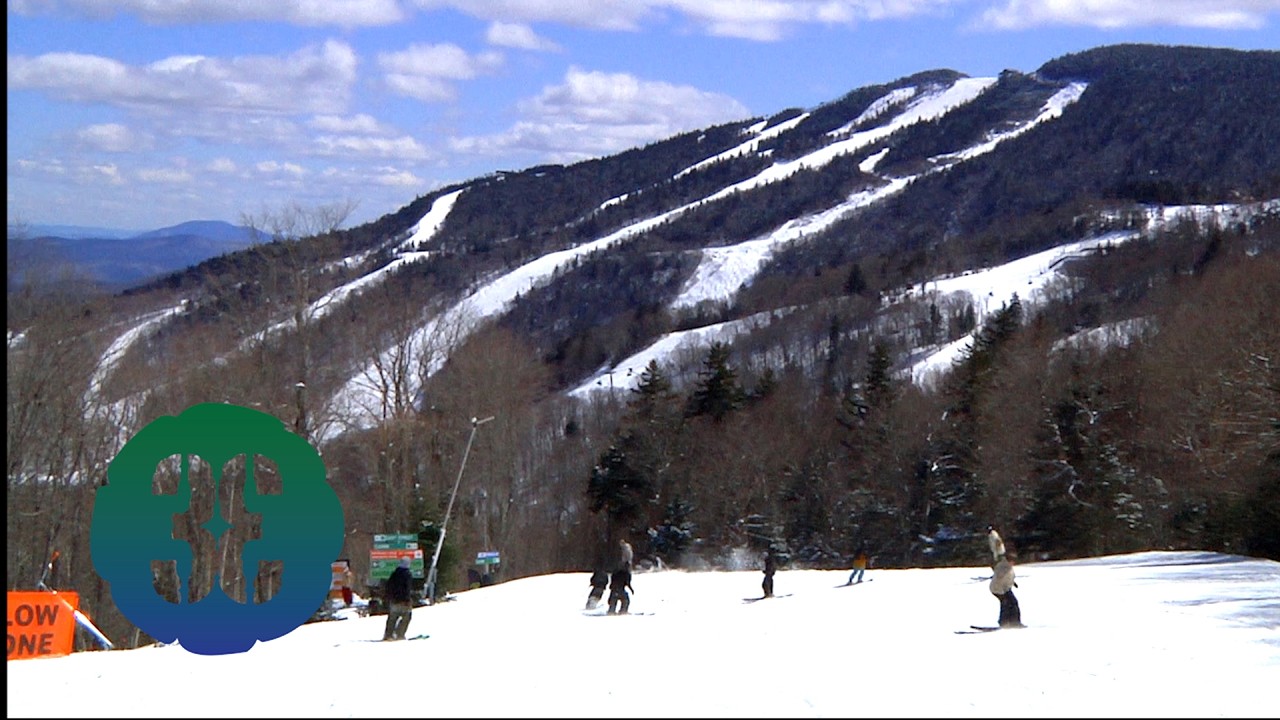
Killington in Vermont is widely regarded as the heavyweight of the U.S. East Coast: a sprawling, multi-peak resort with a reputation for big vertical, endless trail variety, and a winter culture built around showing up often rather than waiting for the perfect storm. It’s called “The Beast” for a reason. The scale makes it relevant to every type of skier, but its real significance for freeski audiences is how consistently it supports progression across an entire season—early-season snowmaking-driven laps, midwinter park and pipe focus, and a spring scene that keeps sessions alive after many regional hills have already wound down.
Killington also has something many resorts can’t claim: it is a recurring world-stage venue. The resort’s women’s alpine World Cup weekend, The Killington Cup, brings the best technical racers in the world to the Superstar Trail around Thanksgiving, placing Killington in the rare category of North American mountains that are both everyday ski factories and internationally broadcast competition arenas. That event gravity affects more than racing; it influences snowmaking priorities, course-quality grooming, and the overall sense that this is a mountain built to perform.
Terrain, snow, and seasons
Killington is a true multi-peak layout, and the terrain character shifts noticeably depending on where you spend your day. Publicly published stats commonly put the resort around 155 trails spread across roughly 1,500 skiable acres, with about 3,050 feet of vertical from base to summit. In practical terms, that means you can build very different “Killington days” without leaving the resort: long groomer mileage for speed and technique, pockets of steeper fall-line skiing when you want consequences, and plenty of wooded terrain when visibility goes flat or when fresh snow is best enjoyed off the main corridors.
Snow and surface quality follow the classic New England pattern: freeze-thaw cycles, wind, and temperature swings can turn a soft morning into a firm afternoon quickly, and that variability is part of the identity. Where Killington separates itself is how aggressively it leans into snowmaking to stabilize that reality. On its mountain stats page, Killington reports that under ideal conditions its system can deliver 9 million gallons of water per day to more than 250 snow guns, a scale that helps explain why early-season openings and late-season skiing are such a big part of the brand.
Season length is one of the core reasons people travel here. Ski Vermont explicitly frames Killington as having the longest season in the East, and the resort frequently emphasizes spring operations as part of its normal rhythm rather than as a bonus. For freeskiers, that matters because it expands the number of days you can realistically keep park legs and trick timing intact without switching to dry-slope substitutes.
Park infrastructure and events
Killington’s freestyle footprint is not a single park; it’s a network. The resort markets this as Killington Parks, and the key point for planning is that the park experience can be distributed across different parts of the mountain depending on the time of season and how builds are staged. That distribution is helpful in a busy resort because it spreads crowd pressure, allows progression lanes to exist alongside higher-consequence features, and keeps the overall flow from feeling like one congested choke point.
The signature freestyle landmark is The Stash, a tree-line freestyle zone that Killington describes as “freestyle riding in the woods.” The resort also states it was built with Burton and includes over 60 natural features. The Stash matters to freeskiers because it rewards creativity and line choice more than “perfect park form.” It’s where style can look different every lap: natural logs, transitions, and hits that feel closer to a playful glade session than to a fixed slopestyle course.
Beyond The Stash, Killington’s park ecosystem typically includes progression-oriented areas for learning boxes and small jumps, plus advanced zones where speed, amplitude, and consequence feel more like a destination park than a local hill. Because feature inventories and exact setups are weather- and season-dependent, the most reliable approach is to treat the parks as living terrain: plan for the style of zone you want, then confirm what’s open and how it’s riding before committing your whole day to one build.
Event-wise, the headline is the World Cup. The Killington Cup centers on women’s slalom and giant slalom on the Superstar Trail, and the official international framework is reflected on FIS event listings for Killington. While that’s alpine racing rather than freeski slopestyle, it still matters for freestyle travelers because it reinforces Killington as a venue with big-mountain operational competence: snow surfaces, lift operations, and crowd management are designed for large-scale, high-attention weekends as well as for regular midweek laps.
Access, logistics, and on-mountain flow
Killington sits in central Vermont, and its logistics are closer to a small city than to a single-base resort. There are multiple base areas, parking zones, and day-start options, and your choice at breakfast can shape the entire feel of the day. On its interactive map, the resort highlights parking access at K-1, Snowshed, Ramshead, Bear, Skyeship, and Vale, which is a useful mental model: Killington is a place where “where you park” can be as important as “what run you start on.” If your priority is park laps, starting near the zones that naturally feed the parks you want can save a surprising amount of time and frustration.
To keep the day smooth, use the resort’s base-area and shuttle planning tools rather than improvising. The base area map is designed to show how lodges and services connect, and it’s especially relevant for groups where not everyone is skiing the same intensity. It is easy to turn Killington into a “meet-up mission” where stronger riders disappear into different peaks and beginners stay near learning terrain, then everyone reconnects without drama if you’ve picked the right home base.
In terms of on-mountain flow, Killington rewards commitment. Because the resort is large, the worst version of the day is endless traversing and lift-hopping with no real rhythm. The best version is choosing a purpose—park repetition, steep laps, long groomers, or glade hunting—then building a lap pattern that keeps your speed and timing consistent. If you want the most reliable navigation, the simplest move is checking live lift and trail status in the morning and again midday, because conditions, wind, and priorities can shift what’s running and what’s worth lapping.
Local culture, safety, and etiquette
Killington’s culture is high-volume and high-frequency. It attracts locals who ski it like a home hill, weekenders who come for the “big resort” feel, families who want broad beginner terrain, and dedicated park crews who treat the mountain as a season-long training spot. That mix is part of what makes it feel alive, but it also means etiquette matters more than at smaller hills. On busy days, intersections and run merges can get chaotic, and the most important habit is staying predictable: hold your line, don’t stop below blind rollovers, and keep enough space that other riders’ mistakes don’t become your crash.
In freestyle terrain, Killington emphasizes formal safety messaging. The resort’s Park Smart / Smart Style page is the right tone-setter for anyone heading into parks and pipes: inspect features, start small, and treat signs and closures as non-negotiable. The more advanced the feature, the more valuable the “slow down and look” habit becomes—especially at a major resort where the rider next to you might be learning their first rail or sending something far above your comfort zone.
Spring brings a different safety profile: softer snow and longer days can encourage more attempts and longer sessions, and fatigue becomes the hidden risk. The best Killington park days are rarely the ones where you try the biggest thing you can imagine; they are the ones where you stack clean repetitions, keep landings clear, and leave with energy still in the tank for tomorrow.
Best time to go and how to plan
If you want early-season skiing in the East, Killington’s snowmaking culture is a major advantage. Planning around late November and December can pay off when other resorts are still building base depth, and the World Cup weekend can be a bucket-list spectator experience if you’re into ski sport history and big crowds. For most freeski travelers, though, the highest-value window is midwinter into spring: by January and February, terrain coverage and park builds tend to be more complete, and by March into April the combination of longer daylight and softer snow can make progression feel more forgiving.
Killington also openly leans into late-season operations. The resort frequently references the “Superstar Glacier” concept in its spring messaging, and you’ll see that theme reflected across updates and planning pages such as its historical open/close information. The practical planning tip is to treat spring like a different sport: aim for late morning through early afternoon when snow softens, and choose your laps based on surface quality rather than on the idea that you need to ski the whole mountain in one day.
To plan efficiently, base your trip around what you actually want to do. If your priority is park progression, choose lodging and arrival timing that makes it easy to start early, repeat laps, and take breaks without losing momentum. If you want variety, build a two-day structure: one day dedicated to park flow and one day dedicated to steeps, groomer mileage, and exploring different peaks. Killington is big enough that “one day for everything” often means you don’t do anything particularly well.
Why freeskiers care
Freeskiers care about Killington because it’s one of the rare East Coast resorts where scale, season length, and freestyle infrastructure intersect in a way that makes real progression possible. The mountain is large enough to offer variety without feeling repetitive, and the snowmaking capacity helps keep surfaces consistent enough to train rather than simply survive conditions. When a resort can support early-season laps, midwinter park builds, and late-season sessions, it becomes more than a vacation spot—it becomes a place you can actually improve.
It also carries legitimate venue weight. The fact that The Killington Cup returns as a world-stage race weekend, with the international framework reflected on FIS listings, signals a resort that invests in performance and presentation. Add a park network anchored by creative terrain like The Stash, plus a safety culture that explicitly pushes Park Smart behavior, and you get a mountain that suits modern freeski priorities: repetition, variety, and a long runway to get better.