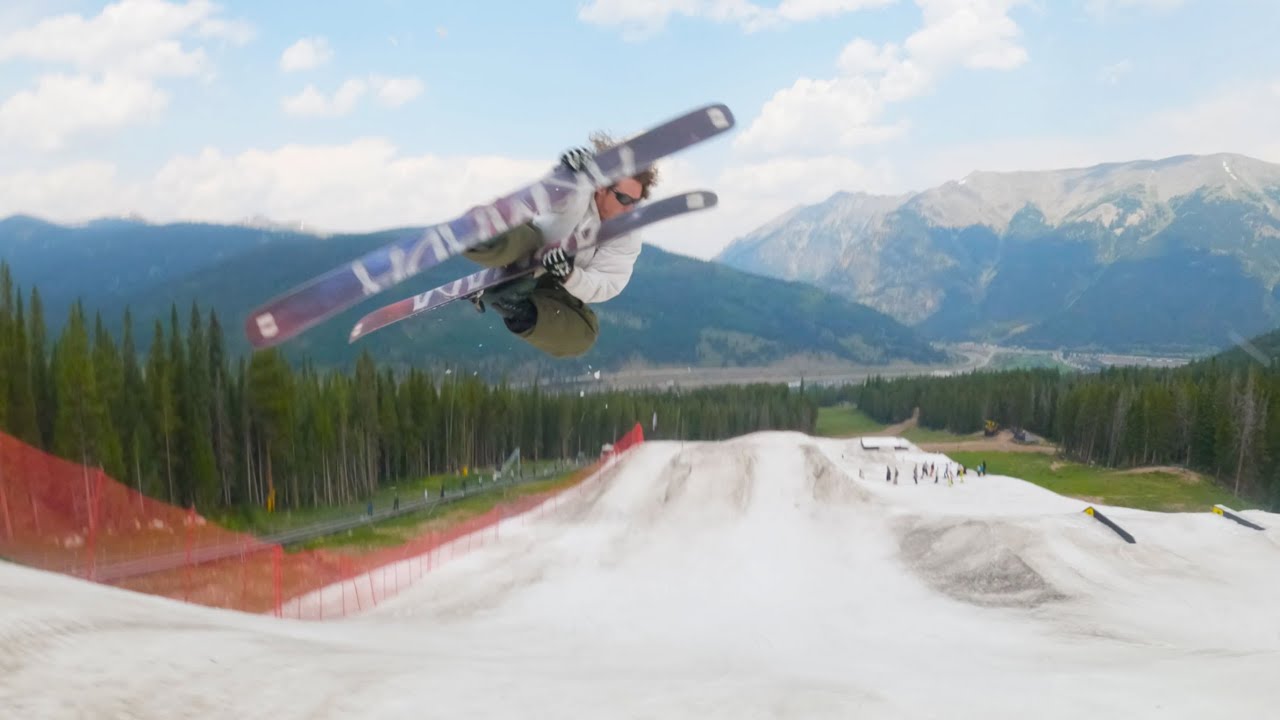
Copper mountain
Colorado
United States
Overview and significance
Copper Mountain sits in Colorado’s Summit County along the I-70 corridor, and it has earned a unique reputation as “the athlete’s mountain” for a reason: it combines big, high-alpine terrain with purpose-built park-and-pipe infrastructure that attracts everyone from first-time park riders to World Cup contenders. For freeskiers, Copper is rarely a one-note destination. It can be a technical training day where you stack repetitions in a structured freestyle zone, or a full mountain day where you chase wind-buffed steeps, bowls, and high-consequence lines depending on weather and visibility.
What makes Copper especially functional is how naturally organized it feels. The resort is widely known for a terrain layout that separates ability zones across the mountain—beginner-focused areas to the west, intermediate terrain in the center, and more advanced and expert skiing toward the east and backside. That built-in separation matters for flow and safety, but it also matters for filming and progression: you can keep a crew moving efficiently without constantly crossing high-speed traffic or getting stuck in the wrong pod for the day’s objective.
Terrain, snow, and seasons
Copper Mountain is a high-elevation Colorado resort with a base around 9,712 feet and a summit around 12,313 feet, delivering roughly 2,601 feet of vertical. The skiable footprint is commonly cited at about 2,465 acres, which is large enough to feel expansive, but still compact enough that you can learn the mountain’s logic and build efficient lap plans after a day or two. That combination—big terrain with understandable structure—is a key reason Copper works so well for mixed-ability groups and for riders who want to do both park laps and freeride laps in the same day.
On-snow feel is classic high Rockies: cold, dry periods that preserve chalky surfaces, interspersed with storm cycles that can refresh bowls and steeper zones quickly. Because much of the resort lives high and open, wind and visibility become part of the experience, especially when you push into alpine and backside terrain. The best Copper days often come from reading the weather like a coach would: start with lower-contrast, lower-risk laps when the light is flat, then move higher as visibility improves—or pivot back into freestyle terrain when the alpine turns into a white-room grind.
For advanced freeskiers who want in-bounds “big mountain” character, Copper’s bowls and steep zones are a major draw, with expert-only areas that feel closer to a controlled backcountry experience than to typical resort cruising. The resort is also known for access to serious expert terrain on Tucker Mountain, which is often discussed in the context of in-bounds big-mountain access. The key planning reality is that these zones can be conditions-dependent and operationally variable, so the smartest approach is to arrive with a primary plan and a credible backup plan rather than betting the day on a single “must ski” line.
Park infrastructure and events
Copper’s freeski identity is anchored by Woodward Copper, a progression ecosystem that connects indoor training, on-snow features, and a competition-grade pipe venue. The indoor hub—The Barn—is described by the resort as a 19,400-square-foot action-sports training facility built for year-round progression across multiple disciplines. For freeskiers, that matters because it turns “trying something new” into a repeatable process: tramp and foam-pit fundamentals, then snow execution when conditions are right.
On snow, Copper is one of North America’s most important halfpipe venues. U.S. Ski & Snowboard highlights the Woodward Copper halfpipe on the lower Main Vein trail as a premier early-season pipe, describing it as a 22-foot-tall Olympic-standard pipe that is nearly 550 feet long and about 70 feet wide with an 18-degree pitch. That scale isn’t just a flex—it shapes the way Copper skis. When the pipe is open and running well, it becomes a focal point for elite training, athlete energy, and spectator-friendly sessions that you can feel across the base-area vibe.
Event-wise, Copper sits on the calendar in a way that directly matters to freeskiers. It hosts the U.S. Ski & Snowboard Toyota U.S. Grand Prix stop, and it is also a recurring host for FIS freeski halfpipe World Cup action as well as FIS snowboard halfpipe World Cup competition. If your trip overlaps those windows, expect a very different mountain mood: athlete training lanes, concentrated attention on pipe operations, and a crowd that’s more invested in performance and progression than in pure vacation cruising.
Copper also plays a role in the American competitive pipeline. U.S. Ski & Snowboard lists Copper as a venue for the iHeart U.S. Revolution Tour, a development series built around halfpipe, slopestyle, and big air. For visiting freeskiers, that means Copper isn’t only “a good park.” It’s a place where the park-and-pipe environment is treated as a training and competition venue with a long runway of institutional experience behind it.
Access, logistics, and on-mountain flow
From a logistics standpoint, Copper Mountain is one of Colorado’s most accessible big-mountain resorts: it sits close to the I-70 spine, roughly 75 miles west of Denver, and within easy reach of nearby towns like Frisco. That accessibility is a major advantage for short trips, weekend filming missions, and weather-chasing—especially when you want the flexibility to move with storm timing rather than committing to a remote destination.
On-mountain flow is where Copper quietly outperforms a lot of bigger-name resorts. The three base areas and the “west-to-east difficulty” layout help you choose a pod with intent: you can build a beginner-to-intermediate progression day without accidentally ending up in a steep, high-speed funnel, and you can chase advanced terrain without constantly weaving through beginner bottlenecks. For freeskiers, it also means you can keep a park-focused plan clean: warm up in lower-consequence freestyle zones, then step up when you are ready, without spending half the day traveling across the hill.
If you are trip-planning around access and value, Ikon Pass includes Copper, which can be a decisive factor for riders stitching together multiple Colorado or North American stops in a single season. Even if you are buying day tickets, Copper’s structure makes it easier to “use the whole day” because you are less likely to waste time learning confusing connections or ending up far from the terrain you actually want to session.
Local culture, safety, and etiquette
“Athlete’s mountain” culture sounds like marketing until you feel it in the small details: the way people move with purpose, the way progression is normalized, and the way serious terrain is treated with serious respect. At Copper Mountain, it is common to see high-level training alongside regular guests, and that mixed environment works best when etiquette is strong. In freestyle zones, that means obvious basics—clear drop signals, no lingering in landings, and clean filming practices that do not block features. On a mountain where park and pipe can become a central venue, etiquette is not a nicety; it is what keeps the session safe and functional.
Safety at Copper is also shaped by altitude and exposure. With a base over 9,700 feet and extensive upper-mountain terrain, hydration and pacing matter more than many visitors expect, and weather can change quickly. Visibility and wind can turn “fun” terrain into “work” terrain, and the right move is often to pivot from alpine objectives into trees, groomers, or park sessions rather than forcing a plan that no longer matches the day.
In expert terrain, Copper’s hardest zones can feel legitimately consequential. Treat closures as final, respect patrol control work, and remember that “in bounds” does not mean “low risk.” If you are chasing Tucker-style steepness or backside lines, choose partners who match your decision-making, not just your stoke, and be honest about what you can exit safely when snow turns variable.
Best time to go and how to plan
Copper’s sweet spots depend on what you want. If halfpipe is the priority, early season can be a standout because the resort’s competition-grade pipe is widely promoted as an early-opening Olympic-standard venue, and major events can concentrate the energy and the build quality. If you are more interested in freeride terrain, midwinter storm windows can deliver cold, supportive snow on steeps and bowls—though wind and visibility will always be part of the equation at this elevation.
Spring at Copper can also be a powerful move for freeskiers who like a mixed day: you can chase corn cycles on groomers, hunt soft pockets in shaded zones, and keep freestyle progression rolling without the deep-winter cold penalty. The key planning habit is to stay flexible. Watch the resort’s daily conditions, and if you are traveling for a specific objective—pipe, park, or expert terrain—build at least one alternate objective so you can still have a high-quality day when weather or operations change the menu.
If you are timing a trip around competition viewing, check the schedules published by U.S. Ski & Snowboard and FIS for Copper’s World Cup and Grand Prix windows. Those dates can transform what the mountain feels like, from crowd patterns to how certain venues operate.
Why freeskiers care
Copper Mountain matters because it is one of the rare resorts where “progression” is built into the physical infrastructure and into the culture. You can show up as an intermediate park skier who wants safer repetition, or as an expert who wants a competition-standard pipe and a mountain with real steeps, and Copper can support both without feeling like you are forcing the place to be something it is not.
For traveling freeskiers, Copper is also a strategic choice: it is accessible, logically laid out, and event-connected in a way that keeps it relevant year after year. If your ideal trip includes both athlete-style training days and big-mountain skiing days—sometimes in the same week—Copper is one of the most dependable places in North America to build that blend into a single itinerary.