Ty Kargus
Profile and significance
Ty Kargus is a Canadian freeski athlete from Athabasca, Alberta, building his profile in slopestyle and big air through the national development pipeline and FIS competition circuit. Still in his teens, he represents the kind of athlete most fans first notice at NorAm stops, national championships, and high-level regional programs—right before the wider scene learns the name. His public competition record and team listings place him as an active competitor on Alberta’s Park & Pipe pathway, with slopestyle as his primary discipline and big air as a close partner event.
Why he matters right now is straightforward: Kargus is already showing measurable, verifiable progress against the fields that feed the top level. He has logged FIS starts at major North American venues, and his provincial and national highlight results suggest a rider who is translating training into contest outcomes. For a freeski audience, that’s the early signal that a skier could graduate from “one to watch” to “finals regular” as the trick level and consistency catch up with ambition.
Competitive arc and key venues
Kargus’s competition footprint is rooted in the Canadian and North American park-and-pipe circuit. He has represented Alberta at the 2023 Canada Winter Games, a key milestone for young Canadian athletes stepping into a national stage. From there, he has continued into FIS-level events and NorAm competitions that are widely treated as the proving ground for skiers aiming at the NextGen and national-team tiers.
On the venue side, his recorded results include appearances at Whistler Blackcomb, where he posted top-ten finishes in FIS slopestyle and a top-five in FIS big air during spring 2025. He has also competed at Copper Mountain, with a ninth-place finish in a NorAm Cup slopestyle in January 2026, and at Mammoth Mountain in March 2025, another important NorAm stop that tends to draw deep fields. His listed career highlights also include a fourth-place slopestyle result at Stoneham in 2024 on the NorAm side, plus national-level highlights such as winning junior big air in 2023 and earning an overall title at a Whistler championship event in 2024.
This mix of results is meaningful for evaluating an emerging freeski competitor. NorAm and FIS events are where athletes learn to deliver under pressure, manage qualification formats, and refine run strategy—skills that often matter as much as individual trick difficulty when you’re trying to turn talent into repeatable finals runs.
How they ski: what to watch for
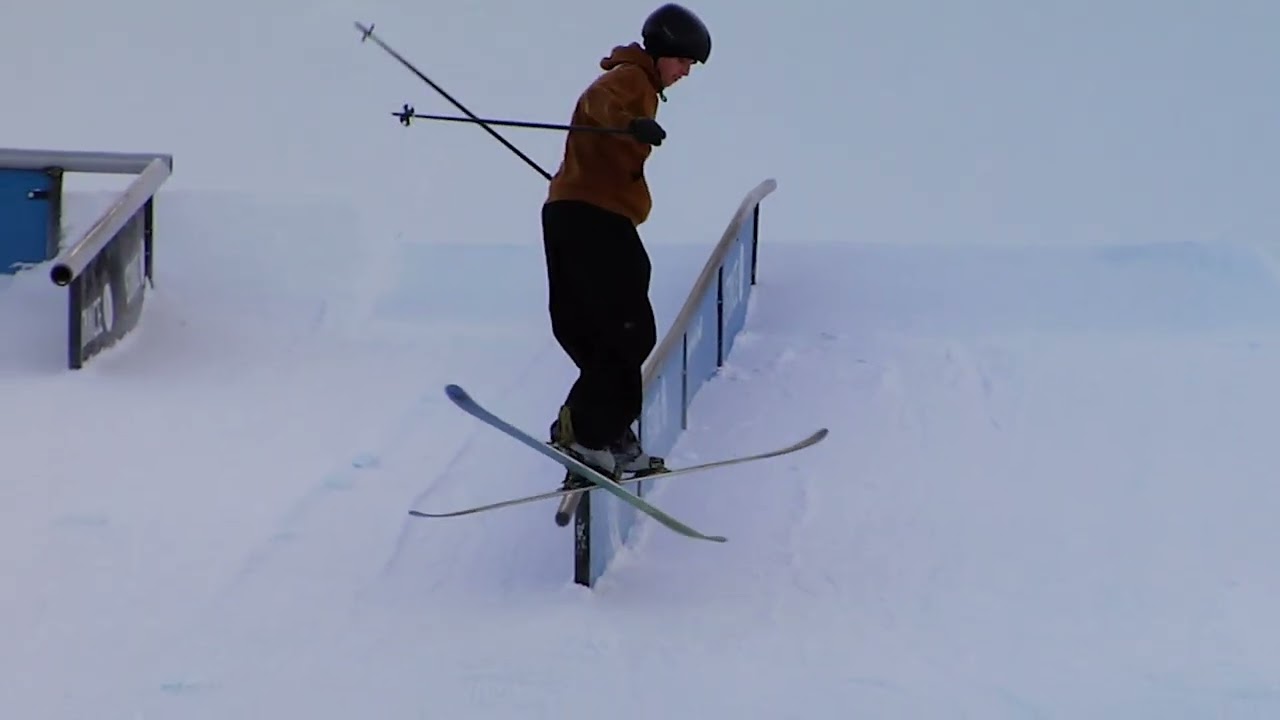
Even with limited public footage-based documentation, Kargus’s stated “favourite trick” is revealing: a switch 450 on to switch off a rail. That is a technical rail choice that highlights comfort in switch approach, rotational control onto a feature, and the ability to exit cleanly without losing line. In modern slopestyle, that particular combination points to a skier who understands how judges reward difficulty that still looks efficient and composed—especially when it’s done with clear body position and stable takeoffs.
When you watch him in slopestyle, the best way to evaluate his progression is to look for three contest fundamentals that translate across every course. First is speed management: does he enter features with enough pace to avoid “scrubbing” mid-run, and does he carry momentum without looking rushed? Second is trick clarity: are rotations and rail entries readable and clean, with landings that continue down the fall line instead of checking sideways? Third is run building: does he choose a coherent line where rails and jumps feel connected, rather than a set of disconnected single hits?
For big air, the emphasis shifts toward commitment and landing quality. A skier who is trending upward will usually show improved axis control, more confident grabs, and fewer “survival landings” as the season goes on. With Kargus, the practical indicator to watch is whether he can keep adding difficulty while maintaining the same calm, repeatable approach that wins qualifying rounds and keeps him in finals contention.
Resilience, filming, and influence
At this stage, Kargus’s influence is mainly developmental rather than cultural—he is not yet defined by major film segments or headline results, but by a steady climb through the athlete pathway. That matters in freeski because the sport’s next wave often becomes visible first through teams, scholarships, and the “support ecosystem” that keeps athletes training year-round. Kargus was named a recipient of the Sarah Burke Foundation’s 2025 Up and Coming Scholarship, an indicator that his competitive trajectory and commitment have been recognized within the Canadian freestyle community.
His Alberta team profile also offers a small but human detail that speaks to the grind behind emerging careers: outside skiing, he lists roofing as an interest. For many young freeski athletes, that kind of real-world anchor is part of the resilience story—balancing training, travel, school or work, and the slow accumulation of contest experience. It’s not a highlight-reel narrative, but it is often the reality behind athletes who eventually become consistent on tour.
In terms of influence on other skiers, the most immediate impact comes through example: making finals, earning top-ten NorAm results, and showing that a kid from a smaller hometown can translate local training into national and continental opportunities. That’s the kind of story that keeps younger riders motivated to stay in the pipeline long enough to break through.
Geography that built the toolkit
Kargus’s competitive identity is tied to Alberta’s training network, with his home club listed as the Calgary Freeriderz. That matters because Calgary’s environment is unusually well-suited to park-and-pipe development: athletes can train year-round with structured off-snow facilities and then move into on-snow camps and competition travel. A key geographic anchor in that system is Canada Olympic Park in Calgary, a legacy winter-sport facility that supports training across multiple disciplines and is commonly referenced as a hub for local progression.
From there, the broader geography of his results shows the classic North American freeski route: western Canadian resorts like Whistler Blackcomb for spring competition and training blocks, and U.S. destinations such as Copper Mountain and Mammoth Mountain for NorAm events. Each venue tests a different skill set—snow texture, feature style, weather, and course design—and athletes who climb quickly tend to be the ones who can adapt their skiing without losing confidence or speed.
That adaptability is especially important in slopestyle, where a skier may face radically different rail materials and jump shapes from week to week. The learning curve is steep, and Kargus’s spread of starts across Canada and the U.S. suggests he is actively building the “traveling toolkit” required to become reliable outside of home snow.
Equipment and partners: practical takeaways
Kargus’s listed sponsors provide concrete clues about his setup and support. He is associated with Faction Skis and Roxa ski boots, along with Skier’s Sportshop. For progressing freeskiers, the takeaway is not to chase exact models, but to understand why these categories matter in slopestyle and big air.
Slopestyle demands edge precision on rails and stability on landings, often in variable snow. Boots are the control center: if the fit is inconsistent, rail entries feel sketchy and jump takeoffs become less repeatable. A supportive boot and a dialed fit help a skier commit to switch approaches and rotational rail tricks—exactly the kind of technical direction implied by Kargus’s favorite rail move. Skis matter too, but at this level the biggest “performance upgrade” for most athletes is still consistency: a familiar mount point, tuned edges that match rail and jump needs, and a setup that feels identical from training to contest day.
Shop support also matters more than most fans realize. A reliable shop relationship is often the difference between a skier showing up with gear that feels perfect versus gear that feels “almost right.” In the contest environment—especially NorAm travel—“almost right” can be the difference between sticking a landing and sliding out at the bottom of the run.
Why fans and progressing skiers care
Ty Kargus is worth watching because the early markers are already on the board: national-team pathway selection, a scholarship recognizing his potential, and credible results across FIS and NorAm events at major freeski venues. He is not yet a household name, but he is in the zone where athletes often make their biggest leap—turning standout junior results into consistent performances against older, deeper fields.
For fans, he offers the fun of tracking a career in real time: seeing how a skier builds run strategy, adapts to different course designs, and gradually raises difficulty without sacrificing execution. For progressing skiers, he is a reminder of what actually moves the needle in freeski slopestyle and big air: clean switch fundamentals, rail precision, speed control, and the discipline to repeat high-quality runs when it counts. If Kargus hits his stated goal of pushing toward NorAm podiums in 2025–26, the next step is clear—more finals, more visibility, and a stronger claim on the NextGen conversation.