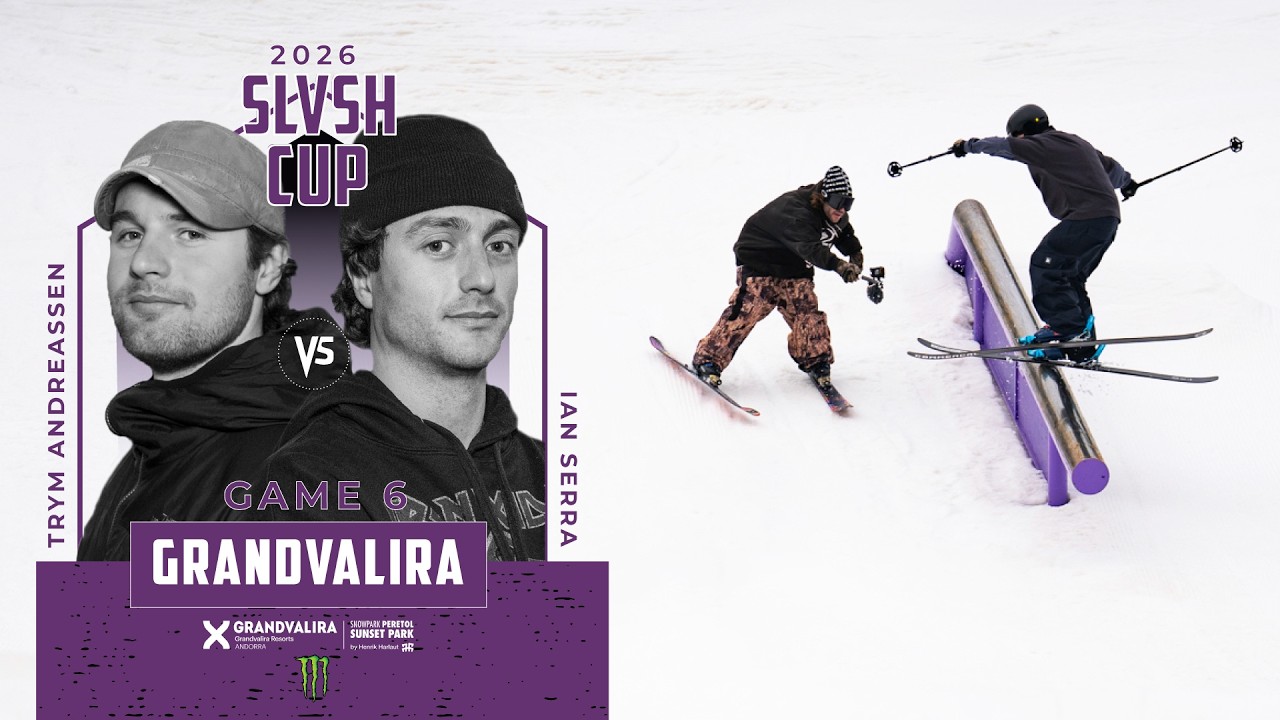
Trym Andreassen
Profile and significance
Trym Sunde Andreassen is a Norwegian freeski athlete from Kongsberg whose public record is strong enough to show a real competitive career, even if it never developed into a long World Cup-level breakthrough. The clearest official markers are early and meaningful: a bronze medal in halfpipe at the 2016 Winter Youth Olympics, a fifth-place finish in slopestyle at the same Games, a top-five finish at the 2017 Junior World Championships in slopestyle, and later European Cup progress in slopestyle. That combination matters because it shows a skier who was not limited to one discipline. He moved through halfpipe, slopestyle, and big air during his competitive years and looked like part of Norway’s deep second wave behind the country’s biggest contest stars. He is not a 3/5 or 4/5 athlete under a strict importance scale because he never reached World Cup podium territory and does not have a major publicly documented film career. But he clearly belongs in the real-athlete category rather than the fringe one, with a profile that is useful for readers who want to understand the depth of Norwegian freeski beyond the most famous names.
Competitive arc and key venues
Andreassen first drew broader attention in 2016, when he won Youth Olympic bronze in halfpipe in Oslo and also placed fifth in slopestyle at the same Games. That early multi-event success immediately suggested a skier with range rather than a one-discipline specialist. His official FIS record shows more proof of that range in the seasons that followed. He won a FIS halfpipe event at Wyller in 2016, then in 2017 posted a particularly strong slopestyle season with a win at Oppdal, a podium at Trysil, a fifth place at Junior Worlds in Chiesa in Valmalenco, second place in the Norwegian national halfpipe championships, and third in national big air. He also stepped into World Cup competition that season at Seiser Alm. The best senior-level contest result of his public record came later, when he finished second in a Europa Cup slopestyle event at Vars in January 2020. He also added European Cup results at La Clusaz and Davos, which shows that his profile was not built only inside Norway. It was a real European competition path.
How they ski: what to watch for
The most interesting thing about Andreassen as a skier is that his public results imply genuine versatility. Halfpipe success at youth level usually points to strong air awareness, wall control, and confidence in transition skiing. Slopestyle results, especially his Junior Worlds top five and Vars Europa Cup podium, point to a different set of strengths: line building, rail competence, jump timing, and the ability to put together a complete judged run. That makes him more interesting than an athlete whose record lives only in one corner of freeski. He was never publicly established as a major urban/street skiing name, and there is not enough public evidence to build him up as a film-first personality. But there are hints of a creative side. Norges Skiforbund later recognized him with a “Best trix” award for a switch cork 450 to 270 out at Mammoth Mountain, which suggests that his skiing was appreciated not only for score-based results but also for technical style and inventiveness.
Resilience, filming, and influence
Andreassen’s public career arc also has a resilience angle, even if it is quieter than the comeback stories attached to bigger stars. He stayed relevant long enough to move from Youth Olympic promise into national-team consideration and deeper European competition. Norges Skiforbund selected him to its rekruttlandslag setup for the 2021-22 season, which is an important signal because those selections are meant for athletes judged to have real international potential. That same annual report also noted that he was injured on the final training day before the Mammoth World Cup in early 2022, which helps explain why his last World Cup-linked public chapter feels unfinished. His current public FIS status is listed as not active, so the competitive story appears compact rather than fully extended. Even so, he remains relevant as an example of how deep the Norwegian talent pool has been: athletes like Andreassen could post real international results without ever becoming household names.
Geography that built the toolkit
Geography helps explain a lot about Andreassen’s profile. Kongsberg is not just a hometown detail. Through Kongsberg Freestyleklubb and the wider Norwegian development system, it placed him inside a country that has produced a remarkable amount of modern freeski talent. His early competitive map also shows a strong domestic base before the wider European push: Wyller, Oppdal, Trysil, Geilo, Hovden, and Oslo all appear in his public record. That matters because Norway’s home circuit often produces skiers who are technically sharp before they ever become internationally famous. Then the map broadens outward. Seiser Alm, Vars, La Clusaz, Davos, and Mammoth Mountain are not random stops. They reflect a real progression from national events into the wider contest world. For readers, the practical takeaway is simple: Andreassen was built in a system where domestic depth was already high, and that makes his best results more meaningful than they might first appear on paper.
Equipment and partners: practical takeaways
One limitation of Andreassen’s public profile is that his official FIS biography does not list skis, boots, or poles in a useful way. That means there is no confirmed equipment setup to break down and no clean public sponsor map worth overstating. The stronger verified context is structural rather than commercial. He came through Kongsberg Freestyleklubb, later earned a place on the Norges Skiforbund rekrutt squad, and collected results at a level where strong support systems matter more than visible sticker counts. For progressing skiers, that is actually a valuable lesson. Andreassen’s record suggests that environment, coaching, and repeated exposure to serious events mattered more in shaping him than any publicly visible gear story. The practical takeaway is not “copy this setup.” It is “pay attention to the pathway.”
Why fans and progressing skiers care
Trym Sunde Andreassen matters because he represents a very real kind of freeski athlete: talented enough to win a Youth Olympic medal, versatile enough to matter in halfpipe and slopestyle, strong enough to podium in Europa Cup competition, but not pushed all the way into long-term global stardom. That profile is useful. It shows how difficult the sport is, especially in a country as deep as Norway. For fans, he is a reminder that meaningful freeski careers exist below the level of Olympic and X Games fame. For progressing skiers, he offers a more grounded lesson. A serious athlete can build a valuable career through versatility, national-system trust, and flashes of genuine style, even if the final résumé stays compact. Andreassen’s public record is exactly that kind of story: real, credible, and worth knowing.