Profile and significance
Tommy de Jager is a young freeskier whose verified public record places him inside the North American park pipeline rather than at the fully established World Cup or X Games tier. Official FIS records identify him as a 2005-born male athlete affiliated with Park City Ski and Snowboard, and those same records show an important identity detail: he competed under the Netherlands in early 2024 before a FIS-approved license change moved him to the United States later that year. That matters because it gives his profile a clear competitive backbone instead of just a social-media footprint. He is not yet a medal-driven headline athlete, but he is a real emerging name with a credible mix of Nor-Am starts, slopestyle results, and recent visibility through Level 1’s SuperUnknown platform. For a freeski site, that is enough to make him relevant: he sits in the zone where strong park skiing, contest repetition, and filmed style can start to combine into a more recognizable career.
Competitive arc and key venues
The clearest verified part of de Jager’s story is his 2024 contest season. FIS records place him in Nor-Am and related slopestyle and big air events at Copper Mountain, Mammoth Mountain, Aspen Snowmass, and Stoneham. His strongest listed result from that run is 18th in Nor-Am slopestyle at Stoneham, with additional finishes of 21st in slopestyle at Copper, 27th in slopestyle at Mammoth, 39th in Stoneham big air, and 40th in slopestyle at Aspen. Those are not breakthrough podium results, but they are meaningful because they place him on serious courses against legitimate continental competition. For an emerging athlete, there is value in simply being present in that circuit, staying functional across multiple stops, and building points instead of disappearing after one event. His FIS points record also reflects this early-stage profile: the slopestyle ranking is clearly ahead of the big air ranking, which suggests that the more complete park-run format currently tells the best story about where he stands.
How they ski: what to watch for
Because the public record is still relatively lean, the safest way to describe de Jager’s skiing is through the formats and platforms in which he appears. Slopestyle has been the stronger competitive lane in the official results, and that usually rewards a skier who can link features rather than rely on one isolated trick. In practical viewing terms, that means de Jager is best watched for flow, line management, and run construction: how he carries speed, how cleanly he exits a feature, and whether the whole run feels composed instead of stitched together. His big air result profile is currently lighter, so the evidence points more toward full-course park skiing than toward a jump-only identity.
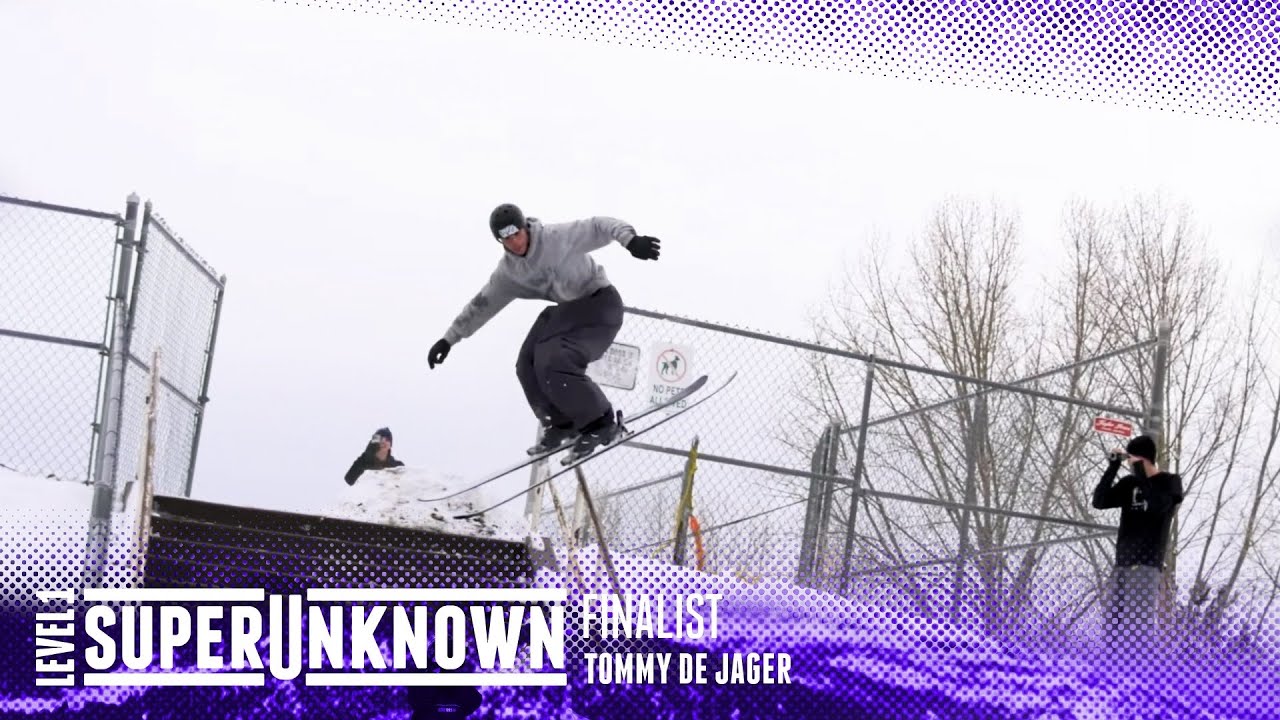
There is also an important second signal. Level 1 has presented him as a SuperUnknown 23 finalist, which matters because SuperUnknown is not built around formal judging sheets alone. It tends to reward skiers who can make park skiing look natural, confident, and watchable when the setting becomes more creative and less strictly contest-shaped. That does not automatically make someone an urban/street skiing specialist, and there is not enough reliable public information to label de Jager that way. But it does suggest that his skiing is being noticed in a culture-facing environment, not only inside result PDFs.
Resilience, filming, and influence
De Jager’s public profile is still much more developmental than legendary, and that distinction is important. There is not yet enough high-level results history to frame him as a major international competitive force, and there is not enough verified public filmography to present him as an already established urban or street figure either. What is visible instead is the early-stage resilience that matters in modern freeski: contest participation on demanding Nor-Am courses, adaptation across different venues, and then a separate kind of recognition through the SuperUnknown ecosystem. That combination is often how emerging athletes begin to separate themselves. Results create credibility, while a filmed platform hints at style, confidence, and the ability to stand out when the format becomes more expressive.
That is why his current influence is best understood as local-to-regional rather than global. He represents the kind of skier younger park riders pay attention to because the path looks real. It is not built on giant marketing claims. It is built on getting into serious events, absorbing the standard of the field, and gradually earning visibility in places that matter to freeski culture.
Geography that built the toolkit
The geography attached to de Jager helps explain the shape of his profile. His FIS affiliation to Park City Ski and Snowboard ties him to the larger Park City Mountain environment, one of the strongest development zones in U.S. freestyle skiing. From there, his record runs through competition venues that each test a different part of a skier’s park toolkit. Copper Mountain is a classic progression stop in the U.S. system. Mammoth Mountain is a major terrain-park reference point. Aspen Snowmass, through Buttermilk’s parks and pipes, carries the weight of one of the sport’s best-known contest venues. Stoneham adds a Canadian Nor-Am stop that often reveals where a rider stands when the field deepens. Put together, those places describe a skier trained by serious park infrastructure, not by casual one-off appearances.
Equipment and partners: practical takeaways
There is not enough reliable public information to claim a defined sponsor package for Tommy de Jager, and the official FIS equipment fields are blank. That is worth saying directly, because emerging-athlete bios often become inaccurate the moment they start guessing about skis, boots, or commercial partners. The practical takeaway is simpler and more useful: judge the public record that actually exists. In de Jager’s case, that means a real FIS identity, a measurable slopestyle-heavy contest season, a transatlantic license history, and recognition from Level 1. For readers, that points to a skier whose value currently sits in progression and visibility rather than in brand storytelling.
Why fans and progressing skiers care
Fans and progressing skiers should care about Tommy de Jager because he represents a believable stage of modern freeski development. He is not being over-sold as a superstar, and that is exactly why his profile is useful. The verified facts show a young park skier moving through slopestyle and big air contests, testing himself at respected venues, and beginning to show up in a style-conscious filming lane through SuperUnknown. That makes him relevant to anyone who wants to understand how competitive freeski and culture-facing freeski often overlap before a rider becomes widely famous. Right now, Tommy de Jager matters less as a finished product than as a credible emerging athlete whose next steps will determine whether strong park foundations turn into a bigger freeski story.