Mathias Høgås
Profile and significance
Mathias Høgås is a Norwegian freeskier from the generation that grew up inside modern park skiing’s mixed ecosystem of federation events, school-based development, filmed edits, and style-driven invitationals. Publicly verifiable competition records place him in Norwegian freeski events under the banner of Normal SK, and later coverage connects him with NTG Lillehammer, one of Norway’s best-known development environments for ambitious freeski athletes. That combination matters. It places Høgås in a lane where slopestyle and big air results still count, but where recognition also comes from how a skier looks, adapts, and survives in projects that are judged by feel as much as score. He is not an Olympic or X Games name, and that is exactly why he is interesting for a site focused on real freeski progression. His profile is that of an emerging rider whose importance comes from continuity: he built a base in formal competition, stayed visible through video culture, and later reappeared in one of freeski’s most respected talent-search formats.
Competitive arc and key venues
Høgås’s documented competitive arc begins in the Norwegian junior and national scene and shows real range across disciplines. Norwegian Ski Federation materials place him prominently in junior ranking contexts, and result sheets from 2015 and 2016 show him appearing in slopestyle, big air, and halfpipe settings. He was fifth in junior competition at Drammen in 2015, seventh in the men’s FIS slopestyle result at Hafjell in April 2015, and present in halfpipe at the Wyller venue inside Skimore Oslo. Additional federation result sheets place him in events at Vassfjellet, Hemsedal, and Snowstock. A Norwegian club-season report from 2016 adds an important junior marker: third place in both junior slopestyle and junior big air at NM freeski on Hovden. Taken together, those results do not describe a one-week wonder. They describe a skier who kept entering different formats, held his place in solid domestic fields, and built the sort of resume that can later translate into invites, edits, and broader recognition beyond the start list.
How they ski: what to watch for
The safest and most accurate way to describe Høgås’s skiing is to start with the formats in which he keeps appearing. Slopestyle rewards rhythm, jump control, rail accuracy, and the ability to build a convincing run under pressure. Big air isolates takeoff timing, aerial awareness, and landing discipline. Halfpipe demands comfort on transition and edge precision. Later in his career, his appearances in Level 1’s SuperUnknown ecosystem and in SLVSH-style head-to-head park skiing suggest a rider whose value is not limited to raw score sheets. For viewers, that means Høgås is best watched as an all-around park skier rather than as a specialist pinned to one feature type. The key question is not whether he owns a single signature result, but whether he can keep style and composure intact as the setting changes. That is a useful lens for freeski fans: look for clean takeoffs, deliberate trick choice, and a sense that the skier is solving the terrain rather than just surviving it. Høgås’s record points toward that kind of adaptable park intelligence.
Resilience, filming, and influence
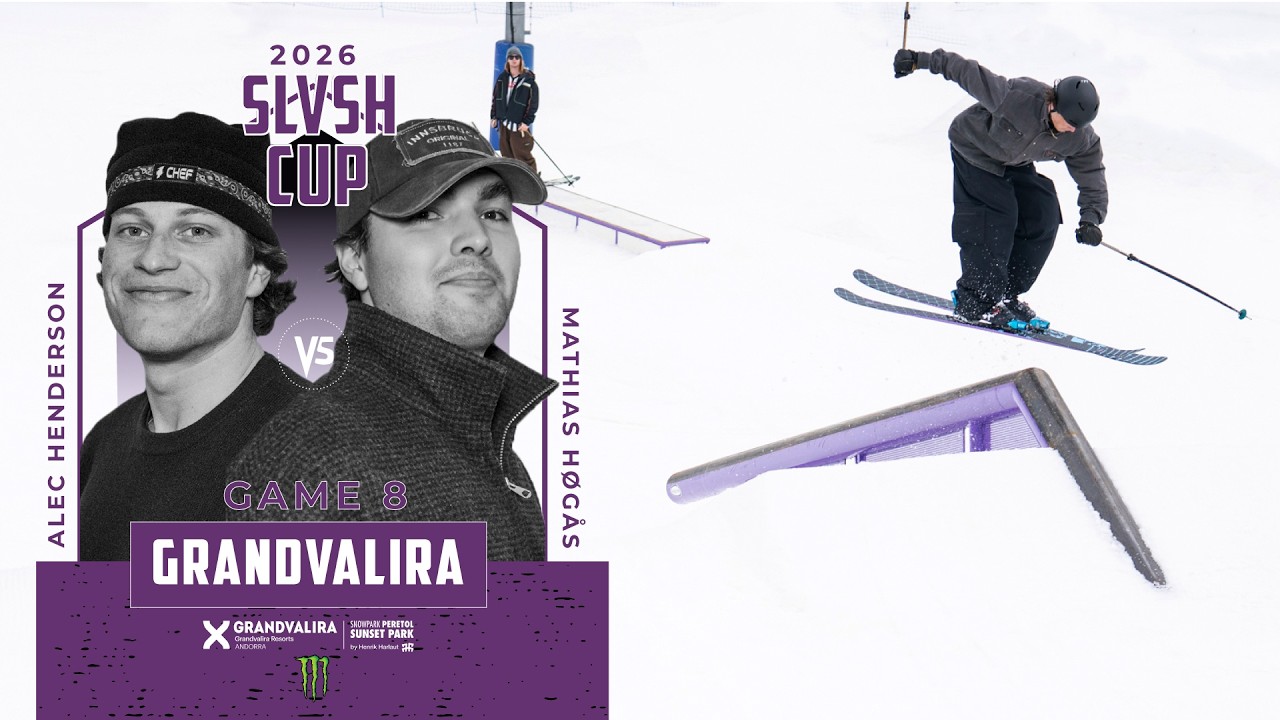
One of the strongest signals in Høgås’s public story is persistence. In 2020, he appeared in Level 1’s SuperUnknown XVII wildcard poll, which already placed him inside a respected international pipeline for up-and-coming freeski talent. Four years later, he returned at a higher level as a finalist for SuperUnknown 21 at Mammoth Unbound, and the post-event recap singled him out as one of the finalists who continuously stood out during the week. That detail matters more than a simple finalist label, because SuperUnknown is as much about how a skier carries their skiing in a shared creative environment as it is about one isolated clip. His name also appears in later coverage around “Pink Eden,” Gavin Rudy’s look back at the 2024 event. By spring 2026, Høgås was again visible in a different format, appearing in SLVSH Cup coverage from Grandvalira Peretol. For an emerging athlete, that sequence says a lot. He did not flash once and disappear. He kept moving between competition culture, filming culture, and playful head-to-head formats that test both skill and personality.
Geography that built the toolkit
The places attached to Høgås help explain the kind of skier he became. Skimore Oslo publicly describes Wyller and its connected park infrastructure as one of Norway’s best park destinations, with a halfpipe and big-air-focused training options. Hafjell has long been a dependable Norwegian venue for freestyle competition, while Hovden highlights its own terrain parks as part of a larger alpine setup. Add NTG Lillehammer’s structured training environment and it becomes easier to see why Høgås’s early record spans several competition formats instead of one. Later, the scale changes. Mammoth Unbound is a huge progression platform with multiple parks and halfpipes, while Grandvalira markets Peretol as a major freestyle meeting point in the Pyrenees. That geography matters because freeski development is never abstract. Park athletes are shaped by the jumps they repeat, the rails they trust, the light they train in, and the travel jumps they are willing to make when local status is no longer enough.
Equipment and partners: practical takeaways
With Høgås, the public record is much clearer on venues, events, and projects than on any long-term sponsor package, and that is an important practical point in itself. Too many athlete profiles become less accurate the moment they start guessing about skis, boots, or commercial partners. In Høgås’s case, the verifiable story is that his career has been defined publicly by where he has skied and what kinds of sessions he has earned, not by a loudly marketed brand identity. For readers and progressing skiers, that makes the right takeaway simple: trust confirmed information and pay attention to performance context. A skier who has moved through Norwegian federation events, school-supported development, SuperUnknown finals, and a SLVSH-style matchup is showing a toolkit built around repeatability, confidence, and adaptation. Those qualities are more useful to study than an unverified sponsor rumor. In practical terms, Høgås is a reminder that park credibility is still won on snow, with clean skiing in demanding setups, long before it is packaged into a polished gear narrative.
Why fans and progressing skiers care
Fans should care about Mathias Høgås because he represents a believable freeski path. Not every worthwhile athlete bio needs Olympic medals, World Cup podiums, or a giant urban/street skiing filmography to matter. Sometimes the value is in the pattern. Høgås shows what it looks like when a skier develops through Norwegian grassroots and junior systems, proves capable across slopestyle, big air, and halfpipe contexts, and then earns visibility in culture-shaping projects where style and staying power are everything. For progressing skiers, that is a useful model. It says that growth in freeski is rarely linear, and that a career can gain meaning through persistence, versatility, and the ability to remain relevant when the judging criteria change. Høgås’s current significance is not that he has already reached the sport’s highest commercial tier. It is that he has assembled a body of evidence showing he belongs in the conversation whenever people talk about emerging Norwegian park skiers with real depth and long-term promise.