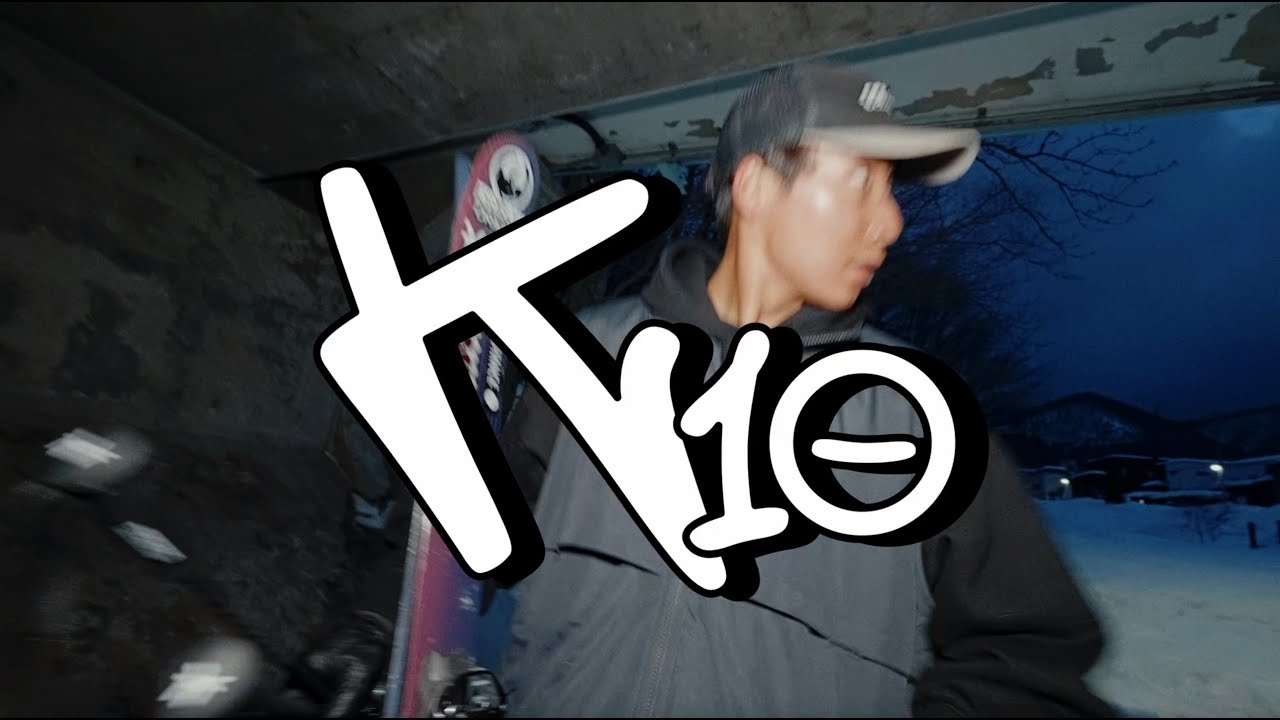
Koga Hoshino
Minamiuonuma, Niigata, Japan | Active: 2010s-present | Known for: street skiing, freeride, Faction films, FWQ wins | Current: Faction and Arc'teryx athlete
Niigata Snow Around Concrete
In Niigata, the snow does not only sit on the mountain. It climbs over sidewalks, buries railings, softens stair sets, and turns ordinary streets into temporary ski terrain. Koga Hoshino’s best video work begins in that white space between resort and town.
His skiing moves across categories without treating them as separate worlds. He can film in deep Japanese snow, hit urban rails, compete in freeride qualifiers, and shape a street part around local buildings. That range explains why his public profile has grown beyond Japan. Hoshino is not simply a park skier or a freeride athlete. His identity sits in the overlap between terrain reading, filming, street creativity, and mountain confidence.
Ishiuchi Maruyama Before The Cameras
Hoshino grew up in Minamiuonuma, Niigata Prefecture, with Ishiuchi Maruyama Ski Resort at the center of his childhood. In his own writing for From The Athlete, he says he started skiing around age two, influenced by parents who worked at a ski resort and grandparents who ran an inn at the foot of Ishiuchi Maruyama.
That background gave him an unusually dense relationship with snow. As a child, he raced alpine and played baseball, while also using park features after training. The mountain was not a destination reached a few weekends per year. It was part of the rhythm of family, work, school, and local culture.
Team YBI And The First Film Lessons
The freestyle shift came through Team YBI, a local freeski group he saw skiing the park at Ishiuchi Maruyama during junior high school. Hoshino has written that their skiing made a strong impression on him, and that Kyohei Miyata later invited him to join the team while he was in high school.
Team YBI mattered because it gave him more than tricks. He began skiing with older riders, filming sessions, and learning how footage is made. That early education shows in his later work. His clips rarely feel like isolated stunts. They are built around approach speed, takeoff shape, landing texture, camera angle, and how a spot reads on screen.
Whistler Changed The Scale
After high school, Hoshino worked for a local sake brewery, then left after a year because skiing remained the thing he wanted most. He went to Whistler, Canada, for a season, a move that gave him daily contact with a bigger international freeski environment.
Faction’s athlete profile also notes that he spent a season in Whistler at age 19 before starting in the Freeride World Qualifiers. That sequence is important. Whistler widened his scale, but he did not abandon Niigata after returning. Instead, he brought a broader sense of possibility back to his home mountains, streets, and crews.
Arai And Hakuba Put Results Beside Style
Hoshino’s profile is film-heavy, but he also has verified freeride results. In 2022, the Freeride World Tour listed him as the Ski Men winner at the Toyo Tires Arai Freeride Qualifiers, held from February 28 to March 2. Two weeks later, the FWT Hakuba page also listed him as Ski Men winner at Toyo Tires Freeride Hakuba, held from March 15 to 18.
Those results give structure to the freeride side of his skiing. A FWQ venue asks for speed, control, line choice, air awareness, and snow judgment in terrain where the landing is not shaped like a park jump. Hoshino’s street work and freeride competition history meet through that same skill: reading natural consequences quickly.
Abstract Brought Niigata To The Faction Screen
Faction’s feature film Abstract: A Freeski Exhibition gave Hoshino a wider international platform. The later RAW Series episode MIND was described by Faction and Downdays as a return to settings familiar from the Japanese segment of Abstract, again using snow-laden urban surroundings in Niigata.
That continuity matters. Hoshino was not flown into a random city to collect street clips. His strongest film material comes from terrain that belongs to his own geography. Niigata’s snowpack, buildings, banks, walls, and resort culture all become part of the same visual language. The place is not background. It is the subject with him.
MIND And The Hometown Workshop
MIND, released as RAW Series Season 1 Episode 4, is one of the clearest documents of Hoshino’s creative identity. Faction describes the project as Hoshino making his hometown an outdoor workshop, hangout, and unrestricted space for expression. Downdays lists him as the star, with Tim Harty and Nobuyuki Takai producing and Yuki Murayama filming and editing.
The crew credits also connect the part to a local network: Shota Murayama, Daisuke Takano, Reiji Kobayashi, Shizo Mov, Daigo Onozuka, Nanaya Nagumo, and KZTK are thanked on the Downdays listing. That detail keeps the film from reading as a solo myth. Hoshino’s skiing is individual, but the work around it comes from a town, a crew, and people willing to shape sessions in heavy snow.
Off The Leash And The Street Ski Audience
In 2024, Hoshino entered Phil Casabon’s B-DOG Off The Leash Online Video Contest, a street-focused format built around short video parts. Newschoolers later reported that the first edition had Koga Hoshino take the Most Viewed award, with Tchad Lemay winning Fan Favorite and Juho Kilkki earning the Golden Dog.
That result is different from a judged podium. It points to audience reach inside a core street-skiing space. Off The Leash was created around the kind of skiing where style, filming, music, spot choice, and trick selection all matter together. Hoshino’s success there shows that his Niigata street language can travel outside Japan without being translated into a standard contest format.
Prodigy 3 Koga And A Ski With Local Art
Faction’s athlete page lists the Prodigy 3 Koga among Hoshino’s current ride options, and STEEP reported that the limited edition model launched on November 8, 2025. The ski uses a 133-106-125 mm shape, a 19 m radius at 178 cm, and lengths of 172 and 178 cm.
The model also carries a local art story. STEEP reports that the design was created with KENGO, an artist Hoshino respects, and frames the collaboration as a Minamiuonuma-made project connected to a global ski brand. For a skier whose film identity is tied closely to home, a signature ski carrying local visual language fits the wider arc.
MAYPRIL, TASK, And The 2025 Trail
Arc’teryx Japan lists Hoshino as a professional skier from Ishiuchi, Minamiuonuma, and says he released two films in 2025: MAYPRIL and TASK. The same Arc’teryx page describes TASK as filmed mainly around Ishiuchi Maruyama, directed, shot, and edited by Yuki Murayama, and named for a close friend who died in February.
That current output keeps Hoshino’s profile active on both sides of his skiing. MAYPRIL points outward, with European spring footage. TASK returns inward, toward Ishiuchi Maruyama and personal meaning. Together they show the shape of his career now: not a single contest path, not a single film category, but a skier building projects from memory, place, travel, and snow conditions.
How Hoshino Connects Street And Freeride
Hoshino’s technical identity comes from crossover. In freeride, he needs edge hold, sluff awareness, takeoff judgment, and the ability to land in variable snow. In street skiing, he needs pop, rail balance, speed control, switch confidence, and enough creativity to make a building edge or buried staircase look intentional.
That combination gives his skiing its tension. He does not look like a pure contest athlete borrowing street spots for an edit. He also does not look like a street skier avoiding big mountain terrain. His strongest work sits between those poles, using freeride power to make urban features feel heavier and using street precision to make natural terrain feel sharper.
The Next Line Is Already Scheduled
The most current public record points to a skier still expanding his range. STEEP reported his 2024 Arc’teryx sponsorship, the 2025 Prodigy 3 Koga release, and his planned participation in the first FIS freeride competition in 2026. For Hoshino, the next step is not a clean move from film to competition or competition to film. It is both, carried from Ishiuchi Maruyama into a wider freeski map.