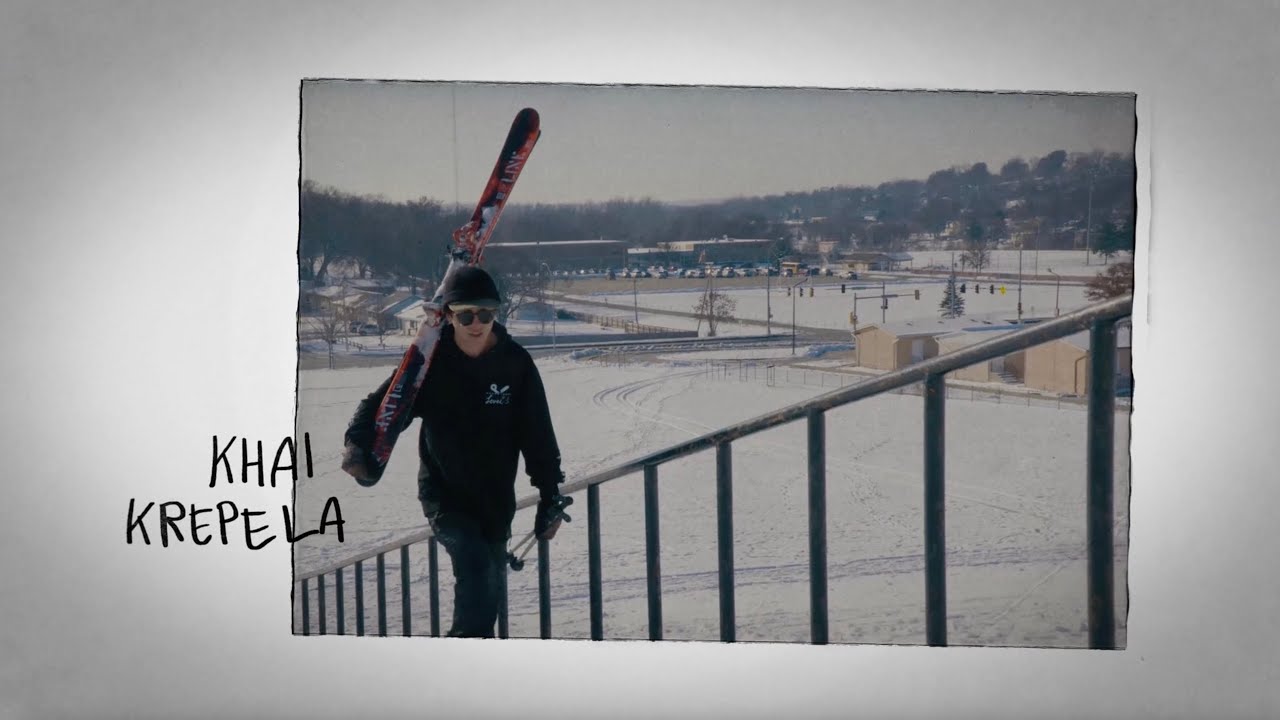
Khai Krepela
Profile and significance
Khai Krepela is a Park City–raised freeski original whose name became synonymous with rail mastery before he shifted into shaping ski culture from the brand side. A product of Utah’s scene around Park City Mountain, he broke through as a street-and-park specialist in the early 2010s, stacking clips with rider-led crews and winning marquee rail events. His profile jumped again with an invitation to X Games Real Ski in 2017, and he later served on the Real Ski judging panel in 2020. Along the way he hosted a summer rail jam at Mount Hood, filmed parts with Level 1 and Good Company, and built a reputation for making high-consequence urban features look calm and readable at full speed. In the 2020s he pivoted toward industry roles—first with K2 in Seattle’s ski/boot ecosystem and now in a leadership post at Utah-based builder Hinterland Skis—while continuing to ski and mentor within the community.
Krepela’s significance comes from two lanes that reinforce each other. On snow, he turned “rail god” difficulty into runs that anyone can follow in real time, relying on early commitments, functional grabs, and centered landings. Off snow, he brought athlete sensibilities into product and storytelling, helping translate what skiers value—predictability, durability, and feel—into the way brands talk and build.
Competitive arc and key venues
Before the film-first era took over, Krepela proved himself under the lights. He won Killington’s Rails 2 Riches rail jam in 2013, a result that mattered in a period when the East’s most prestigious rail event set the tone for a winter. The next act centered on filmed output and invite-only showcases: a 2017 X Games Real Ski appearance, hosting “Khai Krepela’s Summer Classic” at Oregon’s year-round training hub on Mt. Hood (Timberline Lodge), and consistent presence in project-based edits that traveled well. Those years also included park blocks at Woodward Copper and a Good Company shoot at Seven Springs, venues that reward composure on dense rail panels and exact jump timing.
Venue context explains the toolkit. Park City laps built edge honesty and approach discipline on firm winter nights; Timberline gave him a long spring/summer runway to refine speed management and grabs; Woodward Copper condensed decision-making into short in-runs and quick outruns; Seven Springs offered creative rail geometry and classic park flow; and Killington put it all under contest pressure. The consistency across those places—calm inputs, tidy exits—made his clips easy to read and hard to forget.
How they ski: what to watch for
Krepela skis with deliberate economy. On rails he squares the approach early, centers mass on contact, and locks in decisively. Surface swaps resolve completely; presses carry visible shape instead of wobble; exits protect enough speed that the next setup arrives naturally. On jumps he manages spin speed with deep, functional grabs—safety, tail, or blunt depending on axis—arriving early enough to calm rotation and keep the landing stacked over his feet. Directional variety—forward and switch, left and right—appears because it serves the line, not to pad a checklist.
If you want to “read” a Krepela clip in real time, track two cues. First, spacing: he leaves room between moves so each trick sets angle and cadence for the next one, making full runs feel like sentences rather than disconnected words. Second, grab discipline: the hand finds the ski early and stays long enough to influence rotation, not just decorate the frame. That habit is why his heaviest spins look unhurried and why editors can present his shots at normal speed without slow-motion rescue.
Resilience, filming, and influence
Street skiing demands patience and judgment—shovel and salt, rebuilds after busts, and the nerve to walk away when the approach won’t hold. Krepela leaned into that rhythm with film segments for Level 1, including the “less / Habit / Zig Zag / Romance” era, and with Tom Wallisch’s Good Company in “Guest List.” Hosting a rail jam at Timberline showed another facet: he could curate features and energy so other riders shined too. Later, his Real Ski judging role reinforced that he understands how to evaluate difficulty that still reads cleanly.
His influence spreads because it’s teachable. Younger skiers copy early grab timing, subtle speed checks that don’t spill into landings, and choices that use an obstacle end to end. Shops and resorts value his clarity for the same reason: it turns “style” into repeatable technique and makes parks look honest on camera.
Geography that built the toolkit
Place is the skeleton of Krepela’s skiing. Park City’s parks built repetition under firm, exacting conditions at Park City Mountain. Oregon’s Palmer Snowfield at Timberline delivered the long laps and consistent lips that refine patience on takeoff and centered finishes on landing. Colorado’s Woodward Copper compressed the game into short, high-frequency approaches that punish late decisions. Pennsylvania’s Seven Springs added creative rail geometry and classic flow, while East Coast nights at Killington brought the contest crowd and pressure. Thread those environments together and you get skiing that stays itself—calm, centered, momentum-forward—on any surface.
Equipment and partners: practical takeaways
Krepela’s partner arc mirrors his priorities. As an athlete he rode for LINE Skis, a brand with deep urban DNA. He later worked behind the scenes at K2, a period that coincided with K2 absorbing the beloved three-piece boot heritage into its FL3X program. Today he helps steer messaging and product storytelling at Hinterland Skis, a Salt Lake City builder focused on craftsmanship and durability. For skiers translating this into their own choices, the lesson is category fit over model names: pick a symmetrical or near-symmetrical park ski mounted so presses feel natural without compromising takeoff stability, keep bases fast so cadence doesn’t depend on perfect weather, and detune contact points just enough to avoid surprise bites on swaps—while keeping edges sharp where you actually need grip.
Why fans and progressing skiers care
Khai Krepela matters because he made elite street difficulty legible and then carried that sensibility into building and brand work that serves skiers. The résumé—Rails 2 Riches winner, X Games Real Ski competitor and later judge, host and mentor at Mount Hood, film parts with Level 1 and Good Company—backs up the influence. The skiing itself is a blueprint you can practice on your next lap: square the approach, treat the grab as a control input, finish the movement early enough to ride out centered, and protect speed so the line keeps its shape from first feature to last.