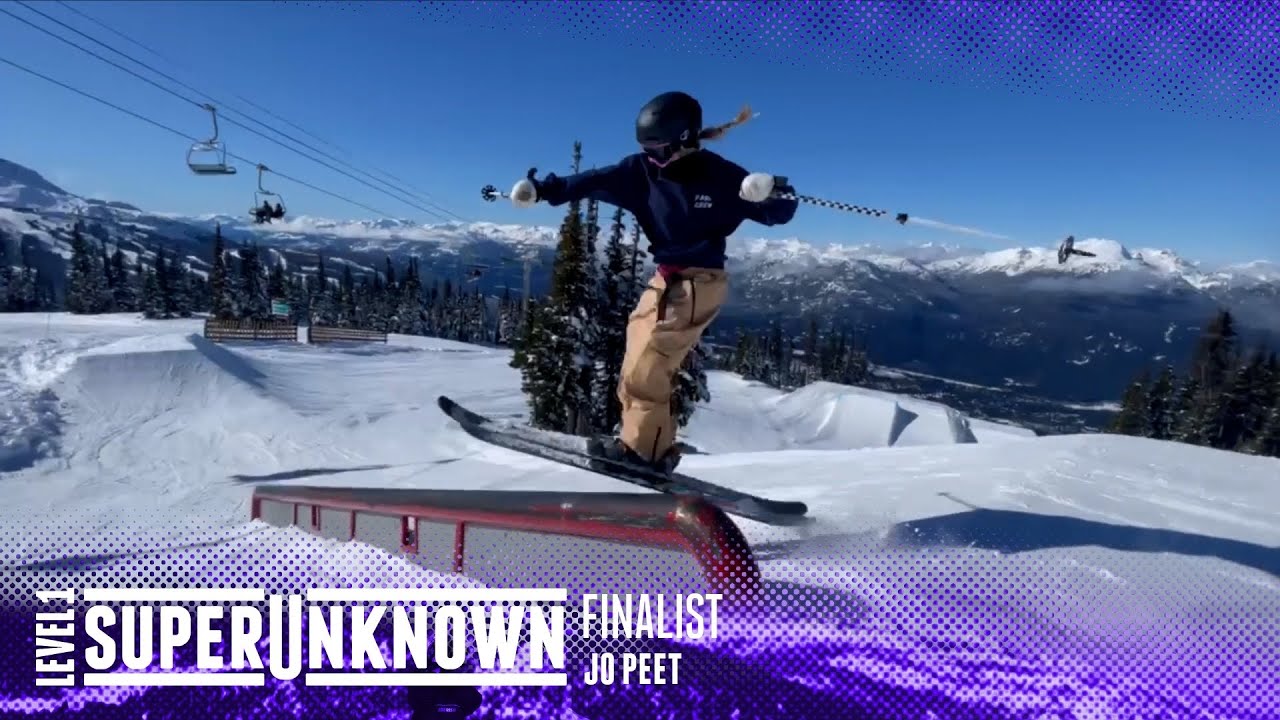
Jordan Peet
Profile and significance
Jordan Peet is a Canadian freeskier whose public record shows a clear and credible rise through the North American development pipeline. Official results identify her as a 2004-born athlete competing for the BC Freestyle Team, while the 2023 Canada Winter Games athlete page lists her hometown as Canmore and her club as Whistler Freestyle. That combination already says a lot about her profile: she belongs to the generation of park skiers who develop through club structure, summer camps, Southern Hemisphere training blocks, and a steady run of FIS and Nor-Am events rather than through one viral breakthrough alone. She is not yet an Olympic or X Games headline name, but she is absolutely a real athlete worth tracking. Her importance comes from being an emerging freeski competitor with verified wins and medals, visible progression in both slopestyle and big air, and enough recent depth to suggest that her best competitive seasons may still be ahead.
Competitive arc and key venues
Peet’s competition arc is already more substantial than a quick glance might suggest. In October 2022 she was part of the FIS Australia New Zealand Cup stop at Cardrona Alpine Resort, where official FIS coverage and results place her second in big air and first in women’s slopestyle. That matters because Cardrona is not a casual local hill in freeski terms; it is one of the Southern Hemisphere’s most important training and competition environments, and success there usually reflects real technical readiness before the northern winter begins. The next major marker came at the 2023 Canada Winter Games at Mark Arendz Provincial Ski Park at Brookvale, where she won gold in women’s big air and added bronze in women’s slopestyle for Team British Columbia. Those are exactly the kinds of results that move an athlete from promising club skier to credible national-development name.
Her more recent results show that the progression did not stop there. In 2025 she was still active on the domestic and continental circuit, posting results such as seventh in slopestyle and fifth in big air at Whistler Blackcomb, seventh in slopestyle at WinSport Calgary, and thirteenth in a deeper Nor-Am field at Aspen on a course associated with the X Games venue at Buttermilk. By early 2026 she had added another important line to the resume, taking third in Nor-Am big air at Stoneham, then backing it up with sixth-place slopestyle finishes at Copper Mountain and Mammoth Mountain. That is the profile of a skier who keeps showing up in meaningful events and is learning how to stay competitive across different course builds and field strengths.
How they ski: what to watch for
The safest way to evaluate Peet’s skiing is through the balance of her results. Publicly available scores suggest an athlete who is particularly comfortable when the jump line matters. Her Canada Winter Games big air gold, Cardrona big air podium, and Stoneham Nor-Am big air podium all point in that direction. At the same time, her slopestyle record is too strong to dismiss as secondary. She has a Cardrona slopestyle win, a Canada Games slopestyle bronze, and several recent top-ten slopestyle finishes, which means she can manage full-course pressure rather than only a single-jump format.
For fans watching her in competition, the useful question is not whether she is a pure aerial specialist or a pure rail technician. It is whether she can continue turning jump confidence into more complete slopestyle runs as the level rises. One clue comes from the 2026 Stoneham sequence, where she was third in big air, tenth in slopestyle, and much lower in the rail-only event. Public results therefore suggest that her strongest competitive edge currently comes from amplitude, takeoff timing, and landing control rather than from rail-focused scoring alone. That is not a weakness so much as a development snapshot. Many advancing freeski athletes build exactly this way, using big air confidence as the foundation before refining the small details that separate a good slopestyle run from a podium slopestyle run.
Resilience, filming, and influence
Peet’s public footprint is still much more competition-based than film-based, so it would be wrong to invent a major urban or video-project legacy that is not clearly documented. What is visible, however, is resilience through continuity. She did not produce one good junior season and vanish. She won in Cardrona in 2022, medaled at the Canada Winter Games in 2023, remained present on FIS and Nor-Am start lists through 2025, and then stepped onto a Nor-Am podium in 2026. That kind of persistence matters in freeski, where many talented athletes fall out of the public record long before they reach stable continental-level form.
Her influence right now is best understood as developmental rather than cultural. She represents a realistic pathway for progressing Canadian freeskiers: build a base through a strong club, travel when possible, use Southern Hemisphere opportunities, convert youth-event success into Nor-Am starts, and keep pushing until top tens become podiums. That is not yet superstar status, but it is the kind of trajectory coaches, younger athletes, and dedicated park fans pay attention to because it is believable, repeatable, and grounded in actual results.
Geography that built the toolkit
Peet’s geography is one of the most interesting parts of her profile. Her Canada Games bio places her in Canmore, while her competitive affiliation runs through Whistler Freestyle, linking her to the broader park culture around Whistler Blackcomb. That matters because those environments shape different parts of a skier’s toolkit. Canmore speaks to mountain-athlete culture and all-season training discipline, while Whistler adds a deeper freestyle ecosystem with stronger terrain-park tradition and regular exposure to competitive freeski progression. Then the map expands outward: Wānaka and Cardrona for pre-season development, Brookvale for national multi-sport championship pressure, Stoneham for Nor-Am progression, and Copper and Mammoth for comparison against deeper North American fields. You can read her growth directly through the venues attached to her name.
Equipment and partners: practical takeaways
There is not enough reliable public information to claim a clear personal sponsor package for Peet, and that is worth stating plainly. Official FIS biography fields for equipment are blank, and the stronger public record around her comes from results, club affiliations, and event recaps rather than from brand marketing. For readers, that is actually useful. It keeps the focus where it belongs: on the skiing itself. The practical takeaway is that Peet’s career has been built in visible steps through team structure, competition repetition, and venue quality. When evaluating an emerging athlete like this, that tells you more than an unverified gear rumor ever could. Her results suggest a rider whose jump game is already good enough to matter and whose long-term ceiling will depend on how fully she can turn that strength into polished slopestyle completeness.
Why fans and progressing skiers care
Jordan Peet matters because she is a credible example of how modern freeski development actually looks below the superstar tier. She has an official international win at Cardrona, national multi-sport medals from the Canada Winter Games, and recent Nor-Am results that show she can stay relevant as the level gets tougher. For fans, that makes her interesting as a watch-list athlete rather than a nostalgia subject. For progressing skiers, she is even more useful: her record shows that big air success, slopestyle consistency, travel experience, and patience all matter, and that improvement often arrives as a series of stronger finishes rather than a single dramatic breakthrough. That is a very real freeski story, and it is exactly why Jordan Peet deserves attention now.