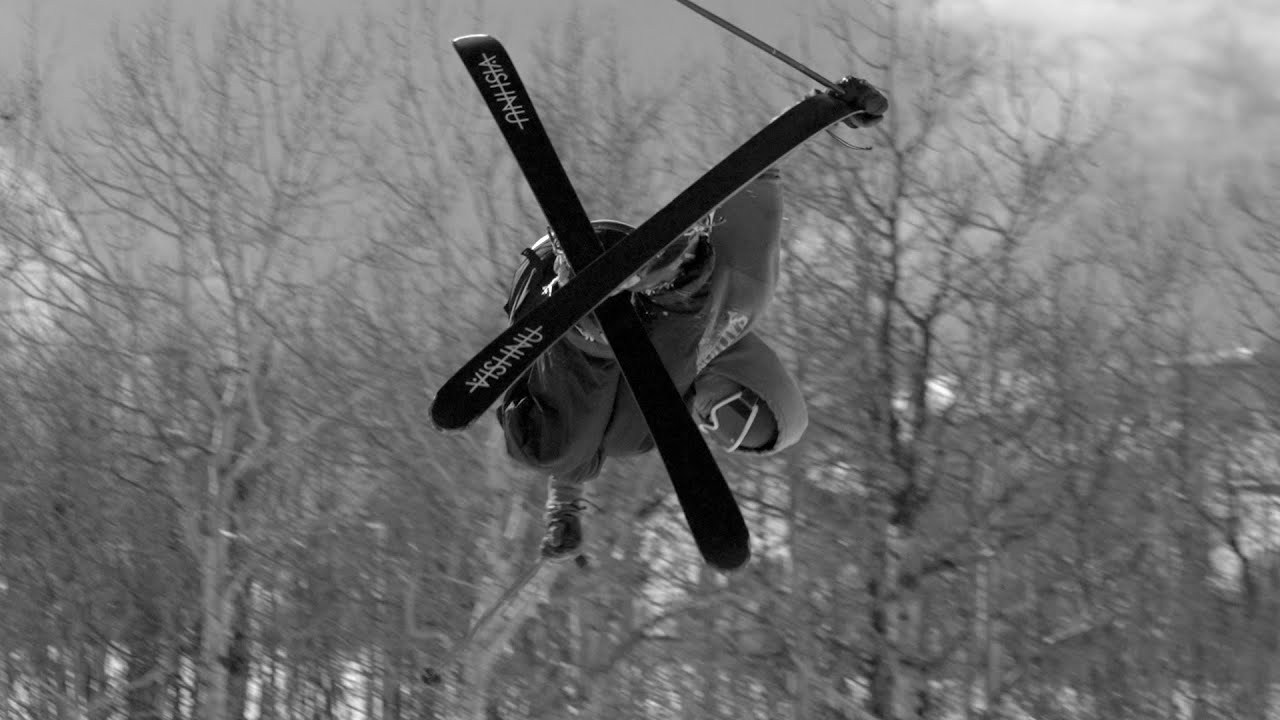
Christian Shackelford
Profile and significance
Christian Shackelford is a Colorado park and street skier whose name has been quietly circulating in the core freeski scene for over a decade. Based out of Evergreen, Colorado, he came up lapping the parks at Breckenridge and Keystone and spending summers on the snow at Woodward at Copper, stacking clips long before most skiers knew his face. Early Vimeo and Newschoolers uploads introduced him as a driven park skier from Summit County, while a steady stream of edits with filmer friends built a small but dedicated following around his name. Over the years he has evolved from “local kid with a strong rail game” into a recognizable figure in the underground rail and urban world, especially among skiers who follow independent films and web projects.
Shackelford’s significance is tied less to contest podiums and more to the culture of park and urban skiing. Edits like “Summertime Sadness,” “Summer Vibes,” Woodward public-session videos and a long-running collaboration with filmer Andrew Mildenberger documented his progression through Colorado’s big-name parks. Later, his full urban part “Street Animations” captured attention well beyond the Rockies, earning a dedicated write-up on a European freeski site and circulating widely through Newschoolers and crew playlists. More recently, his name has appeared in the credits of projects curated by Browser Ski Magazine, where segments like “TETRIS presented by Christian Shackelford” underline his standing as a skiers’ skier whose work sits comfortably alongside respected contemporary crews.
Competitive arc and key venues
Unlike many athletes with long online résumés, Christian Shackelford’s story is not built on FIS calendars or major slopestyle circuits. His “competitive arc” is mostly the informal one of online edits, brand-amateur years and crew projects, with occasional rail jams or local events forming the background rather than the headline. Early descriptions from park edits highlight him as a park skier who spends winters and summers at Breckenridge and Keystone, and he appears in multiple Colorado-based videos that document life as an up-and-coming skier in the Summit County ecosystem. Those parks, with their deep jump lines and technical rail setups, were his proving grounds long before his name showed up on film-tour posters.
Key venues in his trajectory are the Colorado resorts where his style was forged. At Breckenridge, he logged countless laps through jump and rail lines, including well-documented sessions filmed by Mildenberger and other longtime Colorado creators. Nearby Keystone Resort appears in his promo edits and in collaborative projects shot for small brands and local crews. Summer and early-season footage from Woodward Copper shows him riding the foam pits, dryslope setups and public park sessions that many modern park skiers use to test tricks when snow is thin. As his focus shifted toward street skiing, the “venue” became urban architecture: handrails, close-out rails and improvised gaps that formed the backbone of “Street Animations,” a part filmed despite a brutal run of injuries that would have kept most riders off snow entirely.
How they ski: what to watch for
Shackelford’s skiing is best understood through his edits. Across his park and urban work, the thread that ties everything together is a smooth, measured approach to features that many riders hit with far more panic. On rails, he favors clean entrances and exits, taking the time to square up his approach line before locking onto the feature. Even on more intimidating handrails or close-outs, his body position tends to stay centered; shoulders quiet, eyes forward and small, deliberate movements from his feet and ankles to maintain balance. The effect is that rails which look sketchy when other skiers hit them suddenly appear manageable when he slides them.
On jumps, both in the park and in the streets, his style leans toward classic, fully grabbed spins rather than number-chasing. Edits from Breckenridge, Keystone and Woodward Copper show a consistent preference for spins that read clearly on camera, with grabs brought up early and held long enough to define the trick. In “Street Animations,” similar habits carry over to urban drops and step-downs: he takes the speed he needs, pops cleanly and keeps his movement compact in the air, making landings into tight, beat-up trannies look more controlled than they have any right to be. For viewers, the key details to watch are how early he locks in his stance before takeoff and how quickly he returns to a solid, centered position upon landing.
Resilience, filming, and influence
Resilience is central to Christian Shackelford’s story. The description of “Street Animations” notes that he put the part together during a season in which he suffered a fractured tailbone, a torn rotator cuff, a torn ACL and MCL, and a fractured tibia—an injury list that would spell the end of filming for many athletes. Instead, he kept stacking clips whenever his body allowed, piecing together enough footage for a full urban segment by the end of the winter. That willingness to return to the streets after repeated setbacks speaks to a stubborn commitment to skiing that goes far beyond any single project.
His influence can be felt most strongly in the way core freeski media and crews treat his work. Being featured in a Browser Ski Magazine lineup alongside major modern ski films, and appearing in multi-rider projects like “Ciderseason” and “Half Sprite: Half Bastard,” places him firmly within the network of skiers and filmmakers who shape the underground side of the sport. Many of those videos are not about one star but about a crew, and Shackelford’s role in them is as the consistently reliable presence: stylish rail lines, sturdy jump clips and the kind of urban shots that make editors reach for his name when they need to balance a montage. For younger riders who watch independent web edits as closely as big-budget movies, his persistence and steady output create a different kind of influence than contest results ever could.
Geography that built the toolkit
Geography has played a clear role in shaping how Shackelford skis. Growing up in Evergreen placed him within striking distance of multiple Colorado resorts, but his skiing gravitated most strongly toward Summit County. At Breckenridge, he gained access to some of the most renowned park lines in North America, testing his rail balance and air awareness on jumps and rails that are reworked constantly through the season. The park crew’s emphasis on progressive features meant that as his skiing evolved, the terrain under his feet evolved with it.
At Keystone Resort, he logged day after day on tighter, rail-heavy setups that encouraged creativity and fine-tuned edge control. Summers and shoulder seasons at Woodward Copper added a different dimension altogether: foam pits, airbags and plastic ramps that allowed him to rehearse tricks in a low-consequence environment before taking them to snow. As he grew more comfortable in the streets, the geographical map expanded beyond the resort boundaries to the stairs, ledges and handrails of Colorado’s towns and cities—the sort of environments that demand a new skill set entirely, from scouting and winching to understanding run-outs and impact zones. Together, these locations built the toolkit that now appears in his urban parts and crew edits.
Equipment and partners: practical takeaways
Public information about Shackelford’s sponsors is limited compared to higher-profile contest skiers, but his edits give a few clear clues. At one point he is described as an amateur rider for RMU, suggesting a partnership with RMU Outdoors during his Summit County park years. That relationship fits well with the image presented in his videos: a skier focused on durable, park-oriented skis that can take repeated impacts on rails, urban drops and slushy spring landings. Beyond that, most projects list filmer and location rather than a long sponsor roll, underlining his status as a rider whose image is built around the skiing itself more than the branding wrapped around it.
For skiers looking to learn from his approach rather than his exact setup, the practical takeaways are straightforward. First, his career shows the value of equipment that can survive both resorts and street: skis with strong edges and resilient bases, bindings adjusted carefully enough to hold through hard impacts without locking dangerously, and boots that offer enough support to absorb flat or over-rotated landings. Second, his edits highlight how important familiarity with your gear is; the confidence he shows when stepping to rails and drops comes from many seasons on setups he clearly trusts. For progressing park and street skiers, emulating that consistency—rather than chasing frequent, trendy gear changes—is often the fastest path to more stable tricks and cleaner style.
Why fans and progressing skiers care
Fans care about Christian Shackelford because he represents a version of skiing that many riders recognise from their own lives: no big federation profile, no Olympic storyline, just years of edits, injuries, comebacks and winter after winter of trying to make the next shot cleaner than the last. His urban part “Street Animations,” filmed through a punishing injury-plagued season, captures both the risk and the satisfaction of that commitment. Earlier park edits from Breckenridge, Keystone and Woodward Copper, along with his presence in crew projects and Browser-curated lineups, show an athlete whose progression has been documented in real time from grom years into full-fledged street skier.
For progressing skiers, especially those who spend more time filming with friends than chasing ranking points, Shackelford’s story offers a realistic path. He built his name through consistent presence in edits, collaborations with respected filmers and a willingness to keep skiing creatively even when the season did not go to plan. His work reinforces a simple idea: you do not need a start bib to matter in freeskiing. If you care about rails, urban spots and the crew-driven side of the sport, following Christian Shackelford’s parts is a way to see how far dedication to parks, streets and small projects can take you.