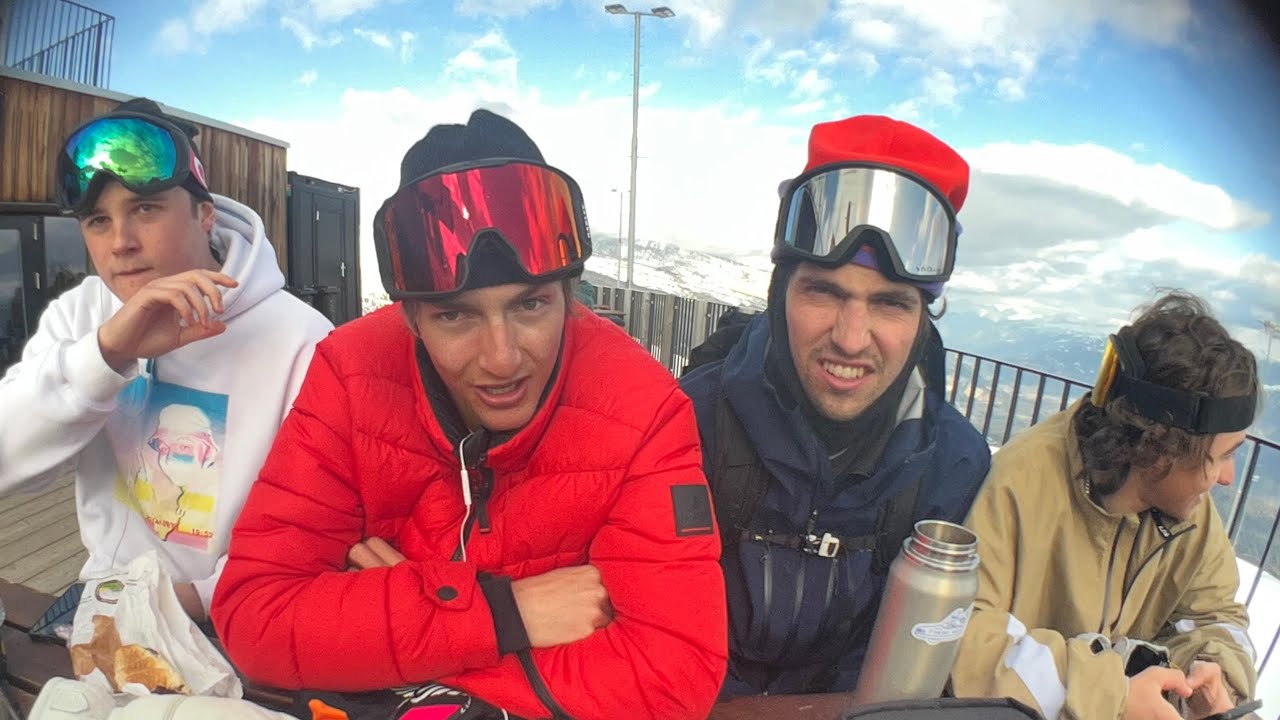
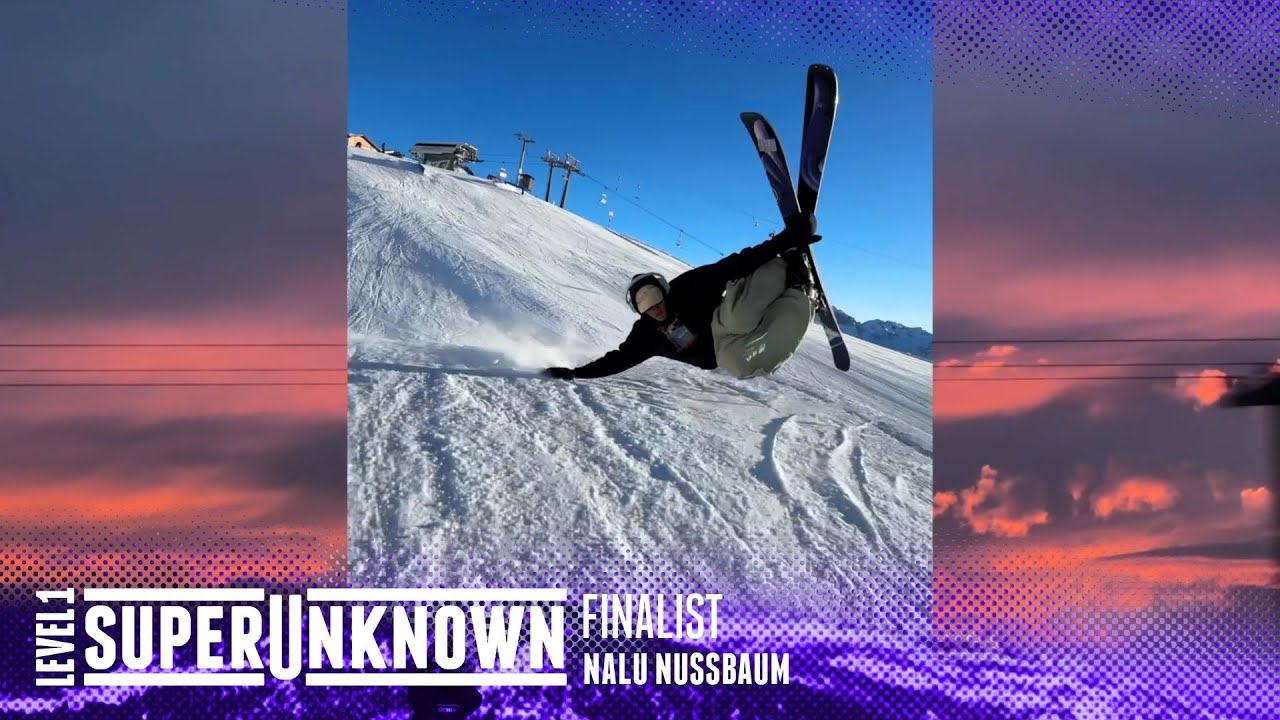
Nalu Nussbaum
Profile and significance
Nalu Nussbaum is a Swiss freeski athlete from the Engadin region, competing in freestyle events under the FIS system. Born in 2001 and affiliated with Freestyle Engadin through his FIS athlete profile, he represents a very specific kind of modern European freeski pathway: a home base built around a top-tier snowpark culture, paired with steady starts on the European Cup circuit and select World Cup appearances.
His significance is rooted in where he comes from as much as what he scores. The Upper Engadin has a long-standing freestyle identity, and Nussbaum’s story is often framed as a family continuum within that scene. The result is an athlete who is closely tied to the local park that helped shape him, while also showing up in the wider contest landscape where slopestyle and big air are judged on repeatable execution under pressure.
Competitive arc and key venues
Nussbaum’s competitive record is concentrated in freeski slopestyle and big air, with European Cup and European Cup Premium starts forming the backbone of his résumé and several World Cup entries punctuating the timeline. In the World Cup arena, he has competed at LAAX in slopestyle and at Chur in big air, with his Chur World Cup big air start in October 2023 standing out as an important benchmark because city-style big air asks athletes to deliver high-difficulty spins in a compact, high-exposure setting.
On the European Cup side, his results show the profile of an athlete working upward through depth-heavy fields rather than popping up for a single outlier. A sixth place in European Cup slopestyle at La Clusaz in February 2025 is one of his strongest finishes at that level, and a fourth place in European Cup big air at Davos Klosters in February 2023 sits just off the podium in a discipline where small execution differences can move an athlete multiple places. He has also logged multiple top-ten style data points across the circuit, including big air and slopestyle appearances at venues that regularly draw strong European fields.
Earlier in his career, he posted notable development results, including a third-place finish in a FIS-level slopestyle event at Glacier 3000 in December 2019 and a second-place result at a national junior championship slopestyle in March 2019. Taken together, the pattern is clear: early contest competence, followed by sustained attempts to translate that foundation into higher-level consistency.
How they ski: what to watch for
Nussbaum is best understood as a park-first freeski athlete whose skiing sits in the overlap between slopestyle logic and big air priorities. In slopestyle, the most revealing traits are not just the “headline” spin, but the way a rider manages tempo between features: speed control into rails, cleanliness of takeoffs, and the ability to land with enough composure to keep flow through the next section. In big air, the tell is whether the trick looks premeditated and calm at full height, with a stable axis and an assertive landing that does not bleed speed or confidence.
Because his home scene is closely connected to Corvatsch Park, it makes sense to watch for the kind of riding that park cultures reward over time: predictable pop, controlled rotations, and an emphasis on style that holds up even when conditions are not perfect. That “park craft” matters when trying to climb the European Cup ranks, because judges tend to reward athletes who can repeat their intended run shape cleanly rather than those who merely flirt with high difficulty.
There is also a visible cultural crossover in his public footprint. He has been referenced by Faction Skis as appearing in the “Magma” project “TKO,” described as a mix of mountain and street-oriented segments. That context suggests a freeski identity that is not limited to contest runs: the kind of rider who can appreciate how tricks look and feel in filming environments, where creativity and feature selection can matter as much as the scoreboard.
Resilience, filming, and influence
Progressing through high-level freestyle skiing is as much about resilience as it is about talent. Slopestyle and big air are unforgiving to “almost” landings: a slight under-rotation or a small loss of balance can erase a season’s worth of training in a single run. Nussbaum’s record shows years of starts across multiple seasons, which is often the quiet indicator of persistence: showing up, rebuilding, and continuing to test the ceiling in environments where fields are deep and margins are thin.
His influence is also locally cultural. In the Engadin, the Nussbaum family is described as having deep roots in the freestyle scene, and Nalu is often positioned as a next-generation continuation of that culture. That matters for viewers because it frames his skiing as something shaped by place and community, not only by contest schedules. In a sport where progression can be isolating, riders who are closely tied to a scene often help keep that scene visible and aspirational for the next wave.
Geography that built the toolkit
The Upper Engadin is a high-alpine environment that tends to produce technically sharp park skiers: colder snow, reliable winter seasons, and a rhythm of park laps that encourages repetition. Nussbaum’s identity is frequently connected to Corvatsch and to Corvatsch Park in particular, a venue known for hosting competitions and for drawing serious freestyle attention in the Alps. That kind of home terrain is a powerful teacher because it keeps the skill loop tight: learn a trick, repeat it until it looks clean, then carry it into contests.
At the same time, his competition venues show a broader Swiss and European circuit education. LAAX represents a globally recognized freestyle hub, while Davos Klosters and Chur add variety in how features are built and how pressure feels. Layer in the cultural center of St. Moritz and the local identity of Silvaplana, and you get a geography that reinforces both skill and story: a rider shaped by a specific place, yet measured against a wider field.
Equipment and partners: practical takeaways
Nussbaum’s FIS athlete profile does not list specific equipment, and public-facing partner details are not consistently verifiable. The most useful approach, then, is to focus on what his disciplines require from gear and setup. For slopestyle and big air, predictability is king: skis and boots that feel consistent on takeoff and stable on landing, bindings that deliver a reliable platform, and a tune that holds edge without feeling grabby when snow changes texture across a day.
For progressing freeskiers who look at his pathway as a template, the practical takeaway is to match equipment to the job. If your season is built around parks like Corvatsch Park, you benefit from a setup that supports centered balance and repeatable pop. If you travel to different venues, you need enough stability to handle unfamiliar snow and faster in-runs without losing the calm posture that judges reward. The gear is not the story by itself, but the right setup makes it easier to show your actual skiing on the day it counts.
Why fans and progressing skiers care
Nalu Nussbaum is a name to know for fans who care about the “middle engine” of freeskiing: the athletes building careers through European Cup circuits, home-scene legitimacy, and occasional World Cup appearances while aiming to turn potential into higher-tier results. His strongest markers are consistency of participation and credible finishes in competitive fields, paired with a clear home identity in the Engadin freestyle ecosystem.
For skiers trying to progress, his story highlights an honest truth about modern freeski development. Big air and slopestyle success is rarely a straight line. It is built from repeatable fundamentals, patient season-to-season refinement, and the willingness to keep showing up until the execution matches the ambition. Watch him with that lens, and you are not only tracking an athlete’s results—you are watching the process of becoming better at freeski, one start at a time.