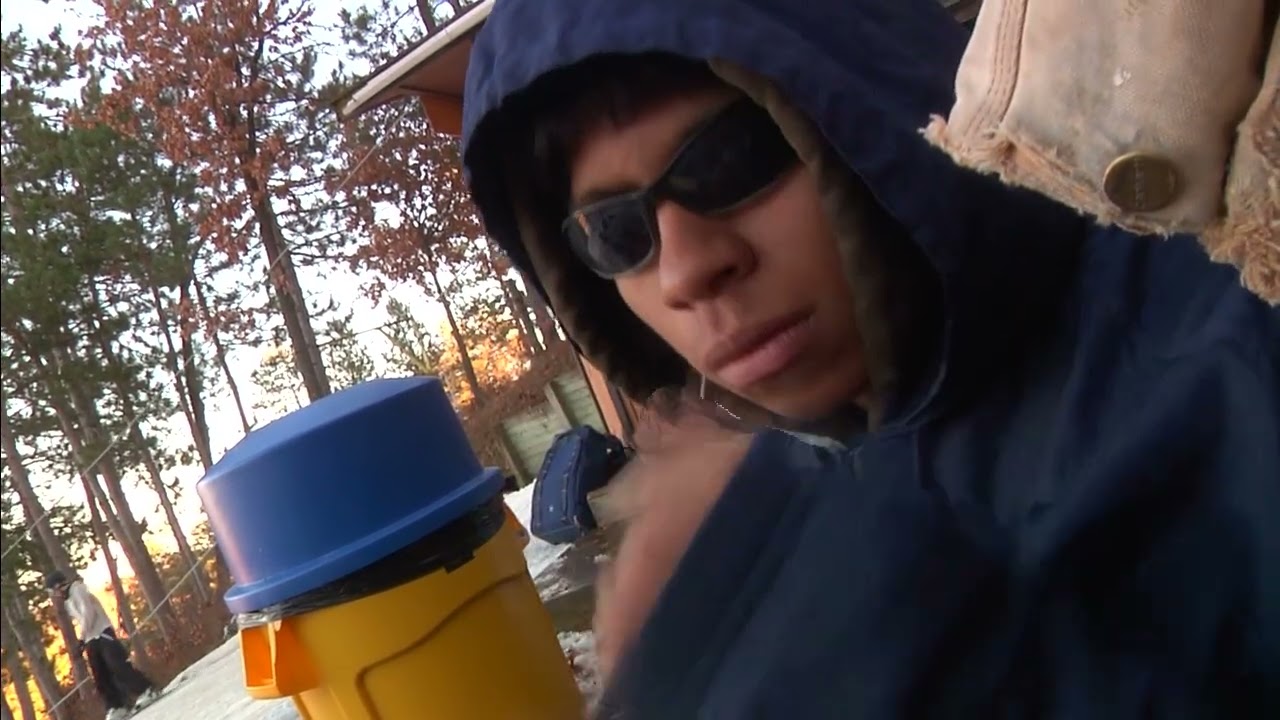
Kian Barret
Profile and significance
Kian Barrett is a North American freeski park rider and filmer whose name has become tightly linked with the rope-tow culture of Trollhaugen in Wisconsin and the wider Midwest jib scene. Through a long run of season edits under the handle “BianKarrett” on core platforms and recurring appearances in Trollhaugen’s Human Being web series, he has grown into one of those riders you keep seeing whenever Midwest park skiing shows up on screen. His early edits from the mid-2010s, filmed almost entirely at Trollhaugen and nearby JCK Terrain Park, documented his progression from “freeskiing for one year only” to a fully formed park skier with a distinct style and a clear understanding of how to make small hills look big.
As his skiing matured, Barrett moved from one-off uploads to being a regular name in crew projects. Season cuts like his 2015–2016 and 2016–2017 edits, a 2017–2018 “Eastcoast shredder” feature highlighted by a German ski magazine, and his 2020 compilation all show the same pattern: dense rail lines, consistent jumps and constant shout-outs to Trollhaugen, the JCK crew and brands like J Skis that support his scene. Meanwhile, Human Being episodes list him both as a featured skier and as part of the extended Trollhaugen family, reinforcing that he is not just passing through but part of the resort’s park identity. Add in his name on multi-resort edits filmed from the Midwest to Alta and Jackson Hole, and Barrett’s significance becomes clear: he is one of the riders quietly stitching together small-hill park laps and western trips into a recognizable, core freeski story.
Competitive arc and key venues
Barrett’s “competitive arc” runs more through videos and session recaps than through formal start lists and FIS points. His resume is built in front of park cameras rather than judges’ clipboards. Trollhaugen is the central venue: midseason edits list the resort as the sole location, and Human Being episodes from 2016 onward repeatedly feature him as a main skier when the park line is truly firing. Those videos effectively serve as an ongoing park showcase, highlighting not only the work of the Trollhaugen park crew but also the riders, like Barrett, who give the features meaning.
Beyond his home hill, Barrett shows up in wider regional projects that function like unofficial “tours.” One prominent Midwest edit credits him among the skiers filmed at Big Sky in Montana, multiple Minnesota hills including Elm Creek, Buck Hill, Welch Village and Lutsen, and then farther afield at Mount Bohemia in Michigan and the frontcountry glades of northern Minnesota. The same project lists Alta and Snowbird in Utah and Jackson Hole in Wyoming among its locations, confirming that Barrett’s skiing has moved well beyond local-only status and onto classic western destinations. Even when there is no podium at stake, these edits are treated inside the community as proof of who can hang on a variety of parks and natural terrain, and Barrett’s repeated presence in their credits underlines his role as a reliable, versatile jib skier.
How they ski: what to watch for
Watching Kian Barrett ski is a good way to understand how modern rope-tow park skiing works. His style is compact, centred and rail-focused, built for hitting long lines of features without wasting time or energy. Approaches are calm: he sets speed early, keeps his upper body quiet and lets the skis do the work as he locks onto tubes, down rails and creative side features. Surface swaps, quick front and back swaps and spin-on, spin-off tricks appear frequently, but they are rarely thrown in just for shock value. Instead, they are placed where they keep the line moving, allowing him to exit each rail already pointed toward the next feature.
On jumps, Barrett favours clean, medium-sized tricks that look good on camera and work in real life. Season edits and Human Being segments show corked spins, switch hits and solid grabs done at a speed and height that are sustainable over long nights on the rope tow. Landings are typically well-stomped and often set up to flow into a follow-up trick or into the rail section below, reinforcing the sense that every run is designed as a continuous line rather than a series of isolated moves. For progressing park skiers, the key things to watch are his speed control and his commitment: he rarely checks speed at the last second or wavers on the takeoff, which is a big reason why his skiing looks both stylish and repeatable.
Resilience, filming, and influence
Barrett’s influence extends beyond his own tricks because he has been documenting his skiing and his crews for years. Under the BianKarrett account, his timeline of edits forms a kind of personal archive of the mid-2010s to early-2020s Trollhaugen era: midseason cuts, end-of-year compilations, B-roll releases and quick side projects like “Dad-O-Licious” that show a looser, behind-the-scenes side of the same riders who appear in more polished edits. In several Human Being volumes he is credited not only as a skier but also for additional filming, proving that he is as willing to stand behind the lens as he is to drop first into the set.
That consistency is a form of resilience. Even in seasons where snow conditions limit street missions, Barrett and his friends turn their attention to the park, producing heavy rail content and creative lines rather than disappearing until the next big winter. His 2020 season compilation, for example, merges clips from a long list of sessions and publicly thanks everyone who pointed a camera or hyped him up, as well as Trollhaugen and the brands that keep the park scene alive. For younger skiers studying these edits, the message is clear: meaningful influence in freeskiing is built slowly, session after session, by showing up for your local crew, contributing footage and helping tell the story of a place.
Geography that built the toolkit
The geography behind Barrett’s skiing is a tight but surprisingly rich network of hills and mountains. Trollhaugen in Dresser, Wisconsin is the unquestioned anchor. The resort’s terrain parks, rope tows and famously late-night hours have long been a laboratory for jib-heavy skiing, and Barrett’s early edits explicitly shout out Trollhaugen for keeping the parks prime. Human Being episodes shot there show him and a rotating cast of local skiers making use of every line the park crew can build, from simple down rails to elaborate multi-feature sets. Spending winters in that environment means hitting hundreds of rail features per night, dialing muscle memory and creativity in equal measure.
Surrounding hills in Minnesota and the wider Midwest deepen the toolkit. Edits that list him as a skier are filmed at places like Buck Hill, Wild Mountain, Elm Creek, Mount Bohemia and Lutsen, each with its own park layout, snow texture and rhythm. Those trips force even the most dialed Trollhaugen rider to adapt quickly to new features and slightly different speeds. Western segments, especially those filmed at Alta and Snowbird in Utah or Jackson Hole in Wyoming, add natural terrain into the mix: sidecountry pillows, in-resort cliffs and long groomers where he can stretch out his turns between park days. Together, this map explains why Barrett looks at home whether he is threading a dense rope-tow line, popping side hits on a powder day or joining a multi-state road trip crew.
Equipment and partners: practical takeaways
Barrett’s gear choices, visible across multiple years of edits, match the demands of his terrain. He often rides modern twin-tip park skis from independent brands, and his 2020 season edit includes explicit thanks to J Skis, the rider-driven company whose playful, durable park and all-mountain models fit his mix of rails and jumps. For most of his skiing, the key is a symmetrical or near-symmetrical ski mounted close to true center, with enough flex to butter and press on rails but enough backbone to land confidently when a trick goes bigger than planned.
Bindings and boots in this style of skiing need to be equally tuned for repetition. Center-mounted setups put a premium on boot fit that allows both support and ankle mobility, while edges are often detuned at the tips and tails to avoid hang-ups on metal. Outerwear in his clips tends to come from core, rider-oriented brands and local shops that understand the reality of night skiing in the Midwest: lots of standing around between laps in cold, humid air, then explosive bursts of movement. For skiers looking to follow his path, the practical takeaway is straightforward. If your winter revolves around parks like Trollhaugen and occasional trips to mountains such as Alta, gear that supports constant rail laps and all-day park comfort will do more for your progression than equipment designed solely for high-speed big-mountain lines.
Why fans and progressing skiers care
Fans and progressing skiers care about Kian Barrett because he represents the everyday, hard-working core of freeskiing. He is not in the headlines for World Cup slopestyle podiums or X Games medals; instead, he is in the credits and rider lists of the edits that shape how park skiing actually looks and feels for most skiers. His long-running relationship with Trollhaugen, his role in Human Being episodes and his contributions to multi-resort Midwest and Utah projects all show a skier who has quietly built a substantial body of work, trick by trick and winter by winter.
For riders lapping small hills with rope tows or short chairs, Barrett’s trajectory offers a very concrete blueprint. Film your seasons, even when you are just starting out. Learn to make every line in your park interesting rather than chasing only the biggest features. Support your local park crew and the independent brands that support them. Use trips to places like Alta or Jackson Hole as opportunities to test the skills you honed on small terrain, not as escapes from it. Watching Kian Barrett’s edits through that lens turns them from simple highlight reels into a playbook for how a dedicated park skier can help define a scene and contribute meaningfully to freeski culture without ever needing a bib number to prove their worth.