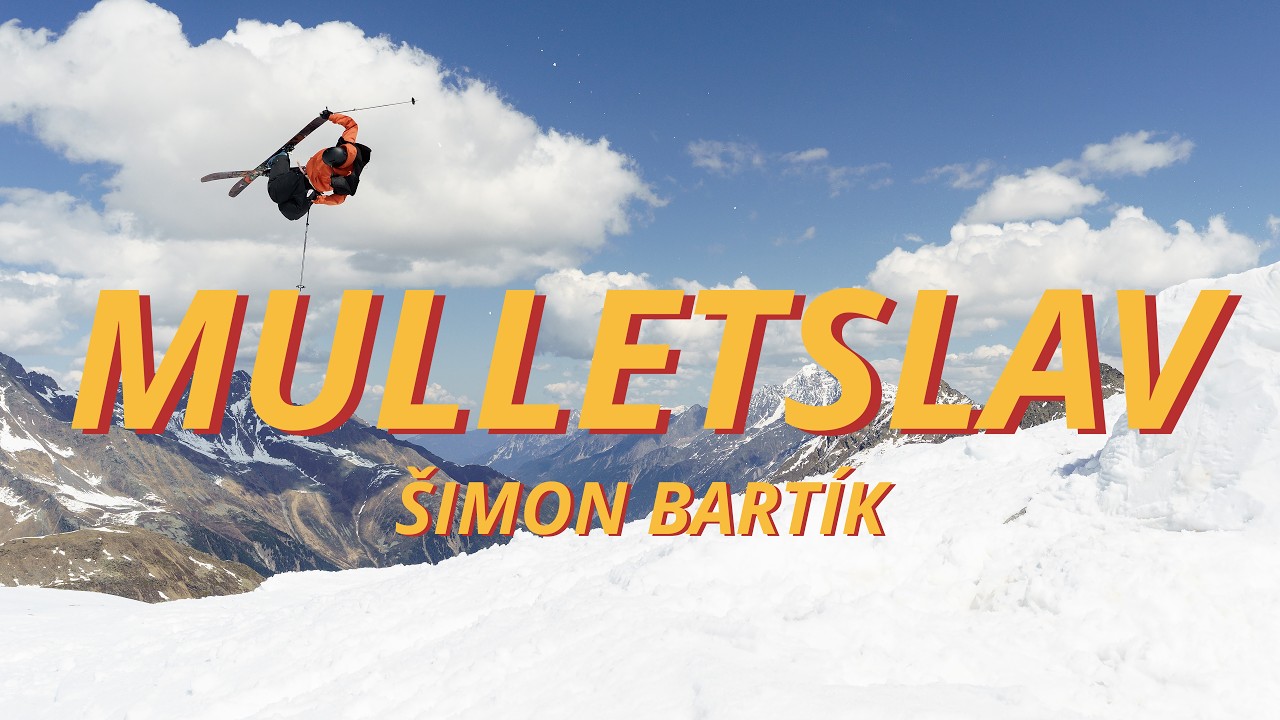
Šimon Bartík - Simba
Profile and significance
Šimon Bartík is a real and well-documented Czech freeski athlete whose career sits above the “promising local rider” tier and clearly inside the serious European contest-and-project lane. Official FIS records identify him as a Czech skier born in 1994, competing in slopestyle and big air, while the Czech Freeski Team profile and his own athlete site add important context: multiple Czech national titles, a third-place overall finish in the European Cup standings, and Level 1 SuperUnknown finalist status. That combination matters because it shows more than one path to relevance. Bartík was not only a competition skier chasing points. He also built a visible project side through films and web edits, which gives his profile more depth than a simple results page.
He does not belong in the highest global tier because there is no Olympic medal, X Games medal, or World Cup podium on the public record. But a 3/5 score fits well. He has a real World Cup and World Championships history, strong European Cup results, repeated domestic success, and enough film output to make him meaningful to readers who care about how freeski culture works beyond the very top names. In practical terms, Bartík represents a type of skier that matters a lot in European freeski: strong enough to earn World Cup starts, experienced enough to become a national reference point, and creative enough to stay relevant through filming as well as competition.
Competitive arc and key venues
Bartík’s competitive record is centered on slopestyle, with big air appearing as a secondary but important part of the story. His best official World Cup result came in slopestyle at Seiser Alm in 2018, where he finished 23rd. That result matters because it shows he could do more than merely qualify for elite events. He could reach a respectable level inside genuine top-field competition. The FIS record also shows repeated World Cup starts at Stubai, Seiser Alm, Livigno, Silvaplana, and Modena, along with World Championships appearances in 2015 and 2019.
The European Cup side of his career is even more revealing. FIS results show runner-up finishes at Vogel, Pec pod Sněžkou, and Deštné v Orlických horách, plus additional top-12 results at La Clusaz and Livigno. His own athlete site describes him as third overall in the Europa Cup, and the Czech Freeski Team page presents him as a four-time Czech national champion with multiple European Cup podiums. That kind of résumé is important because it shows breadth and staying power. He was not a one-weekend surprise. He spent several seasons operating at a level where World Cup qualification, European Cup podiums, and domestic titles all overlapped.
How they ski: what to watch for
The safest way to understand Bartík’s skiing is to start with slopestyle discipline and then add creativity. His contest profile says a lot. A skier who spends years in European Cup and World Cup slopestyle is learning more than one trick. He has to build complete runs, manage rail sections, stay calm on jumps, and keep rhythm under judged pressure. That foundation is visible in the public way he talks about himself as well. In a Czech Ski interview before a World Cup big air in 2020, he openly described himself as more of a slopestyle skier than a pure big air specialist. That honesty actually helps define the profile. It suggests a skier built around full-run control rather than only one oversized jump trick.
At the same time, Bartík’s public image never stayed locked inside bibs and result sheets. FIS itself highlighted one of his stylish Stubai Zoo clips in 2020, and that is a useful clue. The skill set here is not only technical. It is expressive. Readers watching him should look for a skier whose value comes from smooth park movement, rail timing, and the ability to make contest-trained skiing still look loose. He is not primarily known as a pure urban/street skiing icon in the way some North American film stars are, but he clearly carries enough style and filming instinct that his skiing translates well outside official courses.
Resilience, filming, and influence
Bartík’s public record becomes more interesting once the film side is included. Czech Ski reported in 2020 that he was already planning fresh filming in the Orlické mountains and talking openly about balancing contest season with video projects. That matters because many athletes at his level eventually split in one of two directions: all-in on points, or all-in on filming. Bartík’s value comes from trying to keep both alive. His own projects such as Slav in America, Slav 2, and Slav and Friends give him a visible identity beyond start lists, while the official Horsefeathers feature on Czech Mate confirms that he and Daniel Hanka were building recurring web-series content as well.
That dual lane adds real influence, especially in a country where freeski culture is smaller and every credible national-level athlete carries extra weight. Bartík became the kind of skier younger Czech riders could follow not only for results, but for how to build an actual freeski life: contests in winter, spring trips, movie projects, edits with friends, and a visible role in keeping the local scene active. He was also good enough to become a two-time Level 1 SuperUnknown finalist, which matters because that platform has long been one of the clearest gateways between contest-trained freeskiing and film-based recognition.
Geography that built the toolkit
Bartík’s skiing makes the most sense when seen through Central European geography. His competitive story is rooted in the Czech scene, but his development clearly widened through frequent trips into the Alpine contest circuit. Stubai and Seiser Alm are important because they sit at the center of modern European slopestyle progression. Livigno matters because it remains one of the most important terrain-park hubs in Europe. La Clusaz matters because it tested him against increasingly deep European Cup fields. Park City belongs in the story too, because World Championships appearances there showed that his career reached beyond Europe when needed.
This geography helped shape a versatile toolkit. Czech freeski has never had the luxury of endless domestic depth compared with the biggest ski nations, so athletes like Bartík had to build themselves by traveling, adapting, and finding opportunities wherever they existed. That usually produces skiers who are flexible rather than one-dimensional. His record suggests exactly that: a rider formed by the Czech scene, sharpened in the Alps, and experienced enough to move between competition venues and filming environments without losing identity.
Equipment and partners: practical takeaways
The public sponsor trail around Bartík is visible, but his exact current hardgoods setup is not fully documented in official FIS equipment fields. That means it would be wrong to present a locked-in ski, boot, and binding package with confidence. The stronger and more reliable picture is partner ecosystem. The Czech Freeski Team page publicly linked him with brands including Big Shock, Out Of, Armada Skis, and Snowpanic, while later official video coverage clearly connected him with Horsefeathers.
For readers, the useful takeaway is not to copy a supposed exact setup. It is to notice the logic of the support around him. Bartík’s partner history fits a skier who lives in the overlap between contest freeski and project-based freeski. Energy-drink support, eyewear, outerwear, skis, and local scene brands all make sense for that kind of profile. The practical lesson for progressing skiers is simple: a credible freeski career often becomes valuable to partners when the athlete is active in more than one lane. Bartík’s public record shows exactly that balance.
Why fans and progressing skiers care
Šimon Bartík matters because he is a strong example of the serious middle and upper-middle layer of European freeski: the athlete who does not become a global superstar, but still builds a résumé that is too strong to ignore. He has a verified World Cup and World Championships history, a best World Cup finish inside the top 25, multiple European Cup runner-up results, a third-place overall European Cup standing, several Czech national titles, and enough project work to stay relevant outside competition. That is more than enough to justify real attention.
For fans, he is useful because he shows what freeski success looks like outside the narrow lens of Olympic medals and X Games podiums. For progressing skiers, he is even more useful. His path says that full-run slopestyle skills still matter, that European depth is real, and that film projects can strengthen an athlete’s identity instead of distracting from it. Bartík’s career is not a legend-level story, but it is a very credible and instructive freeski story, and that is exactly why a 3/5 score fits.