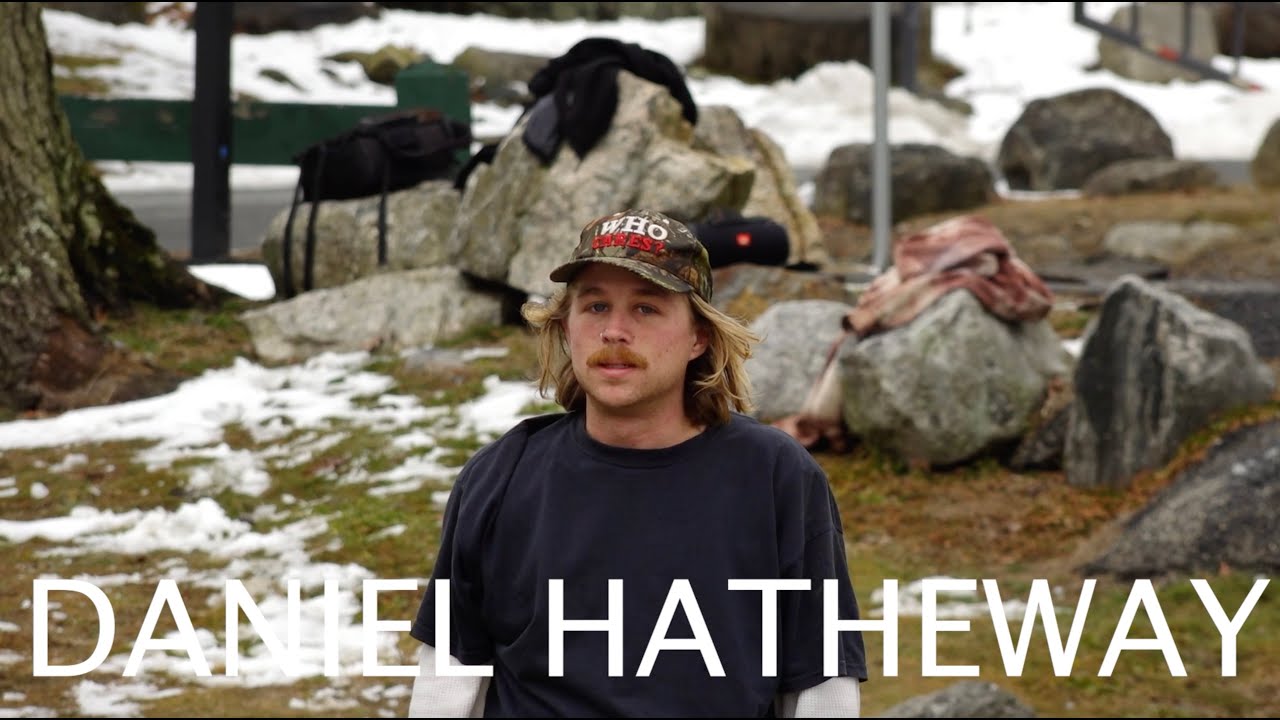
Daniel Hatheway
Profile and significance
Daniel Hatheway is a Vermont-bred freeski rider whose reputation comes from film-first street and park projects more than from start lists. He grew up in southern Vermont’s scene, cutting his teeth at Magic Mountain where he came through the resort’s freeride program as a junior. In the 2020s he helped anchor the Keep Standing crew’s output—first with “STAND,” then “hypertunnel,” and most visibly the 2024 street film “STAND CORRECTED.” That last project brought broader attention across core media and confirmed what East Coast skiers already knew: Hatheway’s clips read clearly at full speed because the rails are locked, grabs are held, and line speed stays intact from first feature to last. He isn’t chasing rankings; he’s shaping how modern East Coast street skiing looks and feels on camera.
Competitive arc and key venues
Hatheway’s “arc” lives on screen. Early winters around Magic Mountain gave him repetitions on firm snow, short in-runs, and honest speed—habits you can see in every urban segment he releases. The Keep Standing catalog marks the milestones: “STAND” introduced the crew’s Vermont flavor; “hypertunnel” refined trick pacing and spot selection; and “STAND CORRECTED” (2024) scaled the ambition with bigger features and tighter editing, earning a “Movie Monday” showcase from a major ski outlet. The 2024 film also spotlighted the wider community backing the project, with support from brands like Arsenic Anywhere, Vishnu Skis, Icelantic Skis, and Burlington’s Foam Brewers. Along the way, published photography from powder days at Magic Mountain underscored that he’s as comfortable reading natural snow as he is solving city rails.
How they ski: what to watch for
Hatheway skis with deliberate economy. Approaches are squared early; lock-ins look decisive rather than dramatic; and exits protect momentum so the next feature arrives on time. On rails you’ll notice surface swaps that finish cleanly and presses with shape instead of wobble. On jumps, his spin speed is measured and grabs are held long enough to stabilize the axis, which keeps outruns quiet and centered. Directional variety—forward and switch, left and right—appears without breaking cadence. If you rewatch his clips, study the spacing between tricks: each move creates room for the next one instead of stealing from it. That pacing is why his segments remain legible without slow motion.
Resilience, filming, and influence
The influence comes from consistency. Season after season, Hatheway’s name shows up in crew films and community spotlights, and resorts tied to his development publicly celebrate his work. The Keep Standing projects prioritize honest speed and real-world spot choice, a template that resonates with younger riders who don’t have a contest pathway but do have a camera and a crew. In 2024 he also turned up in a video-edition contest entry, reinforcing that his skiing translates when style is judged in the edit bay, not in a corral. The thread through it all is resilience: East Coast winters demand patience, and his output shows the ability to filter missed tries and variable surfaces into composed, repeatable lines.
Geography that built the toolkit
Place explains the feel of his skiing. Southern Vermont’s Magic Mountain supplied firm snowpacks and compact approaches that punish sloppy edge angles and late decisions. Nearby towns offered classic East Coast architecture for urban missions—closeouts, down-flats, wallrides, and quick redirects that force accuracy. When projects step beyond Vermont, the same habits travel: early edge commitment, deep grabs on short landings, and speed checks that never spill into the next feature. Even on storm days at home, laps in the trees keep balance and timing sharp; that comfort on natural snow bleeds back into street where takeoffs and outruns often exist in whatever weather the night served up.
Equipment and partners: practical takeaways
Hatheway’s recent projects have been supported by culture-first brands like Arsenic Anywhere and ski makers known for durable, park-ready shapes such as Vishnu Skis and Icelantic Skis, with hometown energy from Foam Brewers. For skiers reading this as a gear lesson, the takeaway is category fit over model names: pick a symmetrical or near-symmetrical park ski with reinforced edges and a mount point that supports presses without sacrificing takeoff stability; keep edges tuned enough to hold on steel but detuned at contact points to avoid surprise bites on swaps; and maintain fast bases so cadence doesn’t depend on perfect weather. None of this replaces technique, but it enables the repeatability his skiing depends on.
Why fans and progressing skiers care
Daniel Hatheway matters because he represents an increasingly common pathway in modern freeskiing: build fundamentals at a community resort, prove them on East Coast streets, and let thoughtful edits carry the story. His best work is a case study in readable difficulty—tight rail decisions, held grabs, and line speed protected from first feature to last—which makes the segments enjoyable for casual viewers and instructive for dedicated park riders. If you track freeski for clean trick shape and real-world spot choice, his films belong on your list; if you’re progressing, borrow the blueprint of early edge commitment, calm outruns, and spacing that lets every trick breathe.